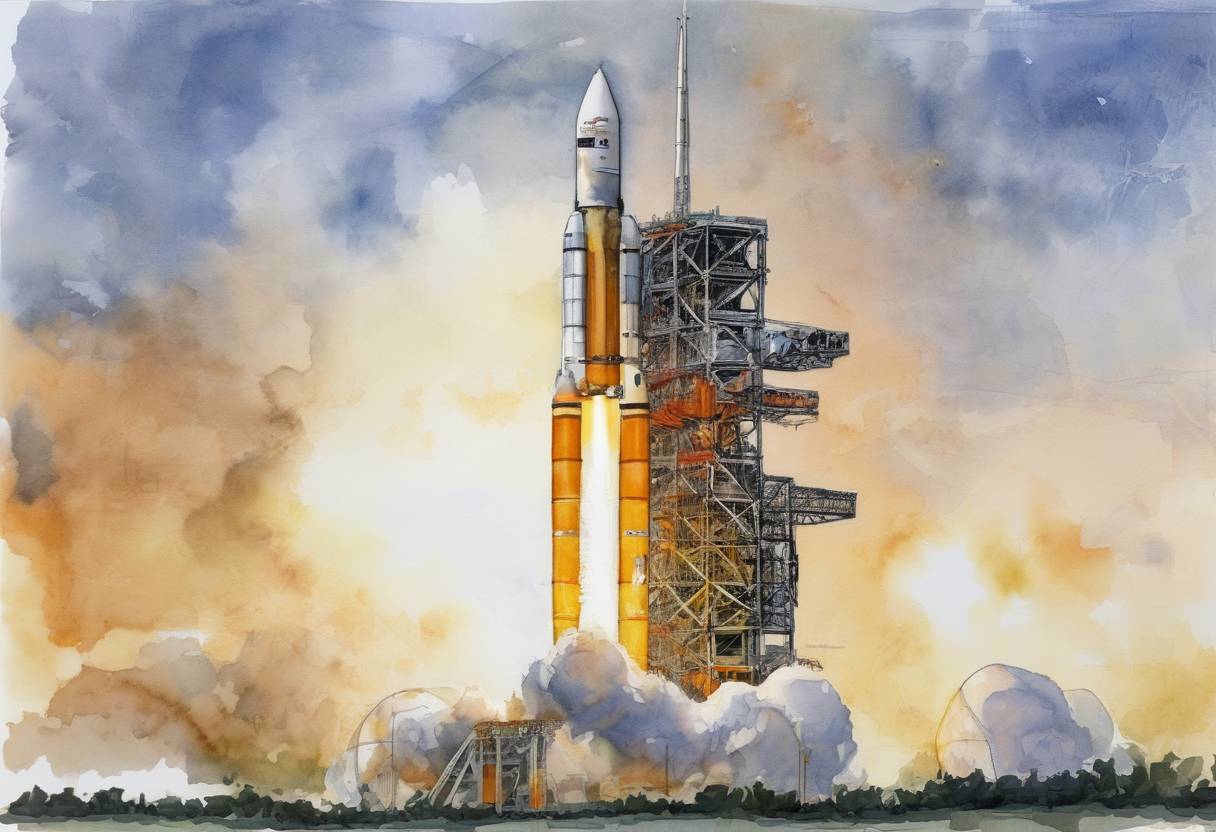
The First Successful Launch of the Boeing Delta IV Heavy Rocket
On July 19, 2005, the Boeing Delta IV Heavy rocket achieved its first successful launch, marking a significant milestone in space exploration technology. This event took place at Cape Canaveral Air Force Station in Florida and represented a pivotal advancement in the capabilities of heavy-lift launch vehicles.
Background
The Delta IV Heavy is part of the Delta IV family of rockets, developed by Boeing’s Integrated Defense Systems division, which later became part of United Launch Alliance (ULA), a joint venture with Lockheed Martin. The Delta IV Heavy was designed to carry large payloads into orbit, making it a crucial asset for both military and scientific missions.
Key Features
- Configuration: The Delta IV Heavy consists of three Common Booster Cores (CBCs) strapped together, each powered by an RS-68 engine. This configuration allows it to lift heavier payloads compared to its predecessors.
- Payload Capacity: It can deliver payloads of up to 28,790 kg (63,470 lbs) to low Earth orbit (LEO) and 14,220 kg (31,350 lbs) to geostationary transfer orbit (GTO).
- Purpose: The rocket was designed to support a variety of missions, including launching satellites for national defense, scientific research, and interplanetary exploration.
The July 19, 2005 Launch
The launch on July 19, 2005, was a demonstration flight intended to validate the design and performance of the Delta IV Heavy. The mission carried a payload of two instrumented mass simulators and a boilerplate satellite to simulate the conditions of an actual mission.
Challenges and Successes
- Initial Challenges: The first attempt to launch the Delta IV Heavy in December 2004 ended in partial success due to a premature shutdown of the rocket’s engines. This setback led to further analysis and modifications to ensure the reliability of the vehicle.
- Successful Launch: The July 2005 launch successfully demonstrated the rocket’s ability to reach orbit, confirming its readiness for operational missions.
Significance and Impact
The successful launch of the Delta IV Heavy was a significant achievement for Boeing and the broader aerospace industry. It provided the United States with a powerful tool for launching heavy payloads, enhancing the country’s capabilities in space exploration and national security.
- Military and Scientific Missions: The Delta IV Heavy has since been used for a variety of important missions, including launching classified payloads for the National Reconnaissance Office (NRO) and scientific missions such as NASA’s Parker Solar Probe.
- Technological Advancements: The development and success of the Delta IV Heavy contributed to advancements in rocket technology, influencing future designs and innovations in the field.
In summary, the first successful launch of the Delta IV Heavy on July 19, 2005, was a landmark event in space exploration, demonstrating the potential of heavy-lift launch vehicles and paving the way for future missions that require the delivery of substantial payloads into space.