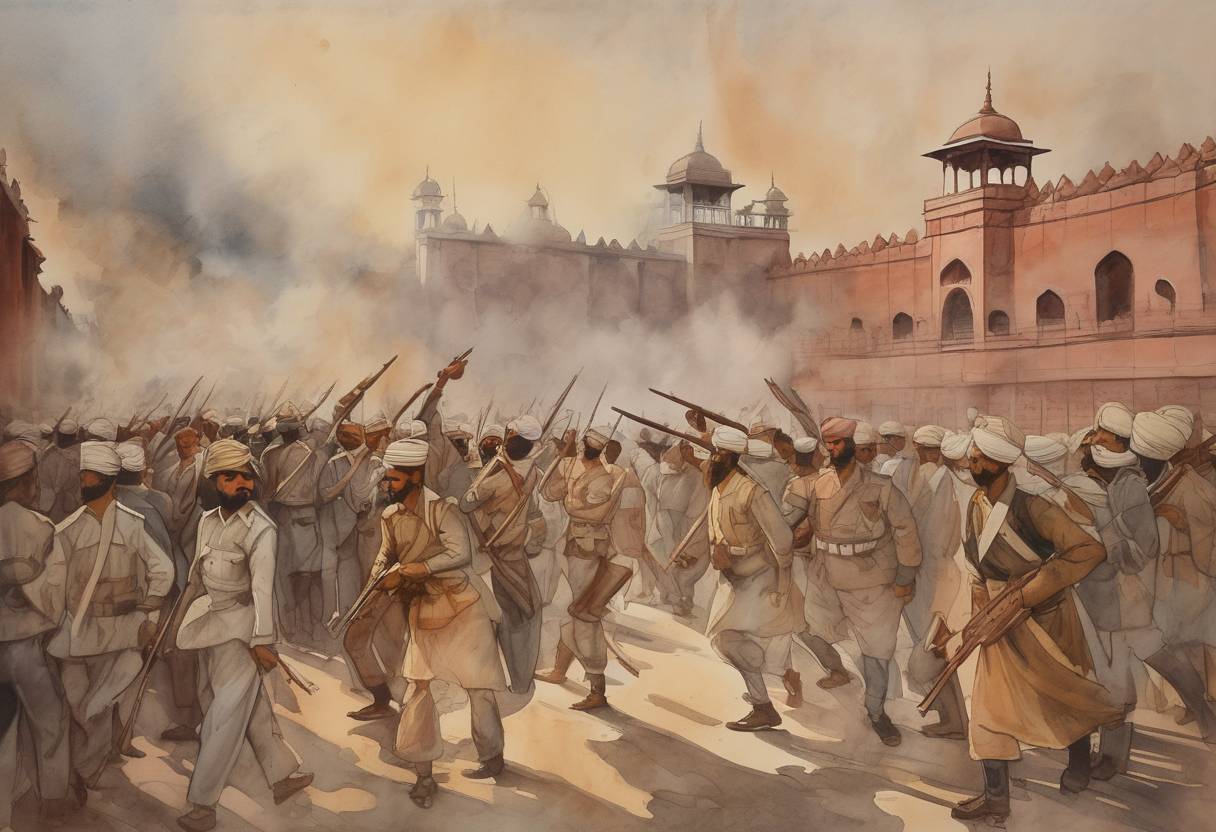
The Jallianwala Bagh Massacre: April 13, 1919
Context and Background
The Jallianwala Bagh massacre, also known as the Amritsar massacre, was a pivotal event in the Indian struggle for independence from British colonial rule. The massacre occurred in the context of widespread unrest in India, fueled by the repressive Rowlatt Act of 1919. This legislation allowed the British colonial government to imprison any Indian suspected of sedition without trial, leading to widespread protests and strikes across the country.
The Event
On April 13, 1919, a large crowd gathered at Jallianwala Bagh, a public garden in Amritsar, Punjab, to peacefully protest against the Rowlatt Act and to celebrate the Punjabi festival of Baisakhi. The gathering included men, women, and children.
Brigadier General Reginald Dyer, the acting military commander in Amritsar, perceived the assembly as a violation of the prohibitory orders he had issued. Without warning the crowd to disperse, Dyer ordered his troops to open fire on the unarmed civilians. The firing lasted for about ten minutes, during which approximately 1,650 rounds were discharged.
The massacre resulted in significant casualties, with official British reports citing 379 dead and over 1,200 wounded. However, Indian sources and other estimates suggest that the death toll was much higher. The narrow exits of the garden were blocked, preventing people from escaping the gunfire, which contributed to the high number of casualties.
The brutality of the massacre shocked the world and led to widespread condemnation. In India, it intensified the demand for independence and marked a turning point in the Indian nationalist movement. The massacre galvanized leaders like Mahatma Gandhi to call for non-cooperation and civil disobedience against British rule.
Broader Historical Significance
The Jallianwala Bagh massacre had profound implications:
Escalation of the Independence Movement: The event unified Indians across different regions and communities in their struggle for freedom. It fueled widespread anger and resentment against British rule, leading to increased support for the Indian National Congress and the independence movement.
Impact on British Policy: The massacre led to a reevaluation of British policies in India. Although the British government initially supported Dyer’s actions, the Hunter Commission was later established to investigate the incident. Dyer was relieved of his command, but he faced no legal consequences, which further inflamed Indian sentiments.
Global Reaction: The massacre drew international attention and criticism, highlighting the oppressive nature of British colonial rule. It also influenced public opinion in Britain, with many questioning the morality of the empire’s actions in India.
Conclusion
The Jallianwala Bagh massacre remains a symbol of colonial oppression and the struggle for Indian independence. It is commemorated annually in India, serving as a reminder of the sacrifices made in the pursuit of freedom and justice. The site of the massacre has been preserved as a national memorial, honoring those who lost their lives on that fateful day.