Hosni Mubarak's Resignation: February 11, 2011
2011 · Cairo, Egypt
Egyptian President Hosni Mubarak resigned after 18 days of mass protests, ending his 30-year rule.
July 3, 2013
The Egyptian military ousted President Mohamed Morsi following mass protests against his rule. This event marked a significant turning point in Egypt's political landscape, leading to a period of military-led governance.
Cairo, Egypt | Egyptian Armed Forces
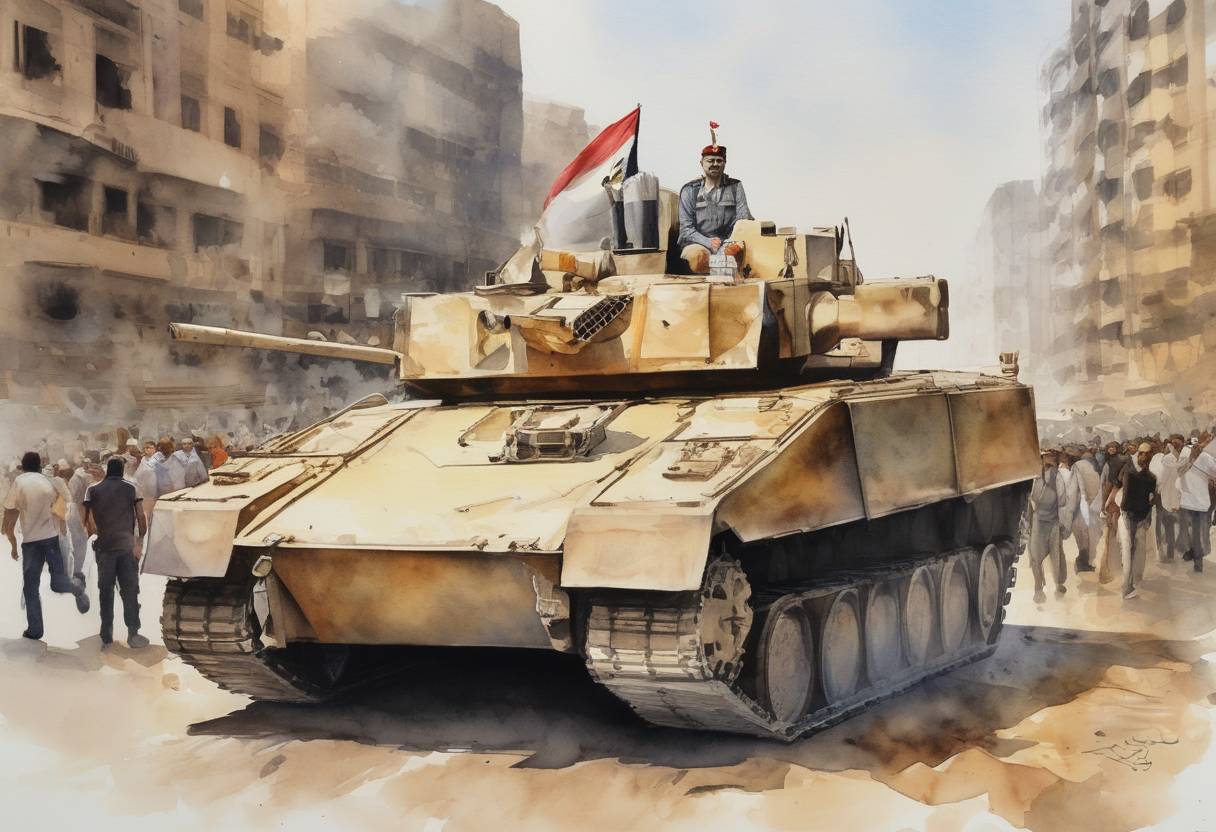
On July 3, 2013, the Egyptian military ousted President Mohamed Morsi, marking a pivotal moment in Egypt’s political history. This event followed a series of mass protests against Morsi’s rule, which had been characterized by increasing public discontent and political polarization.
Mohamed Morsi, a member of the Muslim Brotherhood, was elected as Egypt’s first democratically elected president in June 2012, following the 2011 revolution that ended Hosni Mubarak’s 30-year rule. Morsi’s presidency, however, was fraught with challenges:
By mid-2013, widespread discontent culminated in mass protests. On June 30, 2013, millions of Egyptians took to the streets demanding Morsi’s resignation. The protests were organized by the Tamarod movement, which accused Morsi of betraying the revolution’s democratic ideals.
In response to the escalating crisis, the Egyptian military, led by General Abdel Fattah el-Sisi, issued an ultimatum to Morsi on July 1, demanding that he resolve the political impasse within 48 hours. Morsi’s failure to meet these demands led to the military’s intervention:
The ousting of Morsi had significant repercussions:
The removal of Morsi highlighted the fragility of Egypt’s nascent democracy and underscored the military’s powerful role in Egyptian politics. It also sparked debates about the balance between democratic governance and stability in post-revolutionary societies.
This event remains a critical reference point in understanding the complexities of Egypt’s political landscape and the challenges of democratic transitions in the region.
Source: www.reuters.com