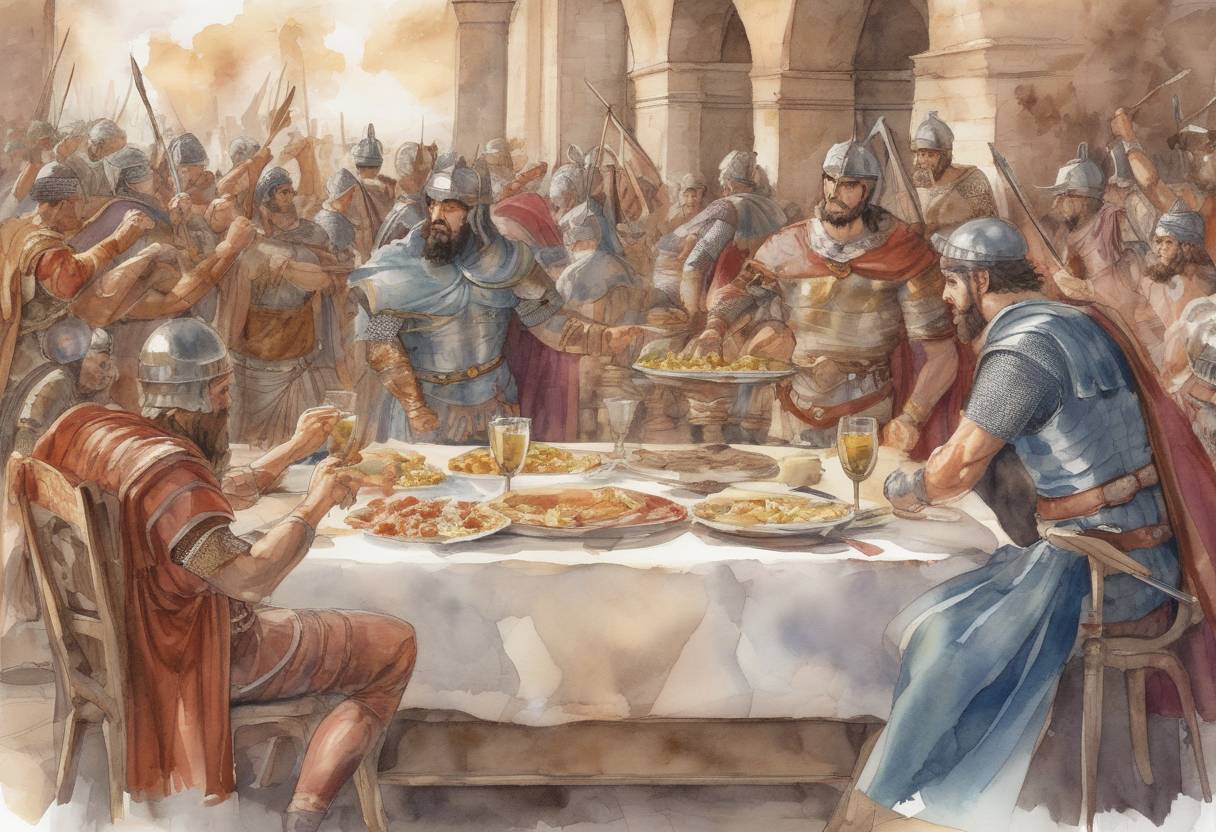
Theodoric the Great and the Assassination of Odoacer
On March 5, 493, a pivotal event in the history of Italy and the broader transition from Roman to medieval Europe occurred. Theodoric the Great, King of the Ostrogoths, assassinated Odoacer, the first barbarian King of Italy, during a banquet. This act marked the consolidation of Theodoric’s rule over Italy and had significant implications for the region’s future.
Background
Odoacer’s Rise: Odoacer, a Germanic chieftain, deposed the last Roman emperor of the West, Romulus Augustulus, in 476 AD. This event is often cited as the end of the Western Roman Empire. Odoacer declared himself King of Italy, ruling as a client of the Eastern Roman Empire (Byzantium).
Theodoric’s Arrival: Theodoric, leader of the Ostrogoths, was initially sent by the Eastern Roman Emperor Zeno to reclaim Italy from Odoacer. Theodoric’s mission was part of a broader strategy by Zeno to manage the various barbarian groups that had settled in the former Western Roman territories.
The Conflict
Struggle for Power: Theodoric and Odoacer engaged in a prolonged conflict for control over Italy. Theodoric’s forces invaded Italy in 488, leading to a series of battles and sieges.
Ravenna Siege: The conflict culminated in a three-year siege of Ravenna, Odoacer’s stronghold. In 493, a truce was negotiated, ostensibly allowing both leaders to rule jointly.
The Assassination
- The Banquet: On March 5, 493, a banquet was held to celebrate the peace agreement. During this event, Theodoric assassinated Odoacer. According to historical accounts, Theodoric personally killed Odoacer with a sword, reportedly saying, “There can be no faith with tyrants.”
Aftermath and Significance
Theodoric’s Rule: With Odoacer’s death, Theodoric became the sole ruler of Italy. He established a period of relative stability and prosperity, maintaining Roman administrative systems and promoting cultural integration between the Goths and Romans.
Cultural and Political Impact: Theodoric’s reign is often seen as a bridge between the ancient Roman world and the medieval European kingdoms. He maintained diplomatic relations with both the Eastern Roman Empire and other barbarian kingdoms, positioning Italy as a significant power in the post-Roman world.
Legacy: Theodoric’s rule is remembered for its efforts to preserve Roman traditions while accommodating the Gothic presence in Italy. His reign laid the groundwork for the eventual emergence of the medieval European states.
The assassination of Odoacer by Theodoric the Great was a decisive moment in the transformation of Italy from a Roman province to a kingdom under Gothic rule, shaping the region’s historical trajectory for centuries to come.