Queen Victoria Ascends to the British Throne
1837 · London, United Kingdom
Queen Victoria ascends to the British throne following the death of her uncle, King William IV, beginning a reign that would last over 63 years.
January 22, 1901
Queen Victoria of the United Kingdom dies, marking the end of the Victorian Era.
Osborne House, Isle of Wight, United Kingdom | British Monarchy
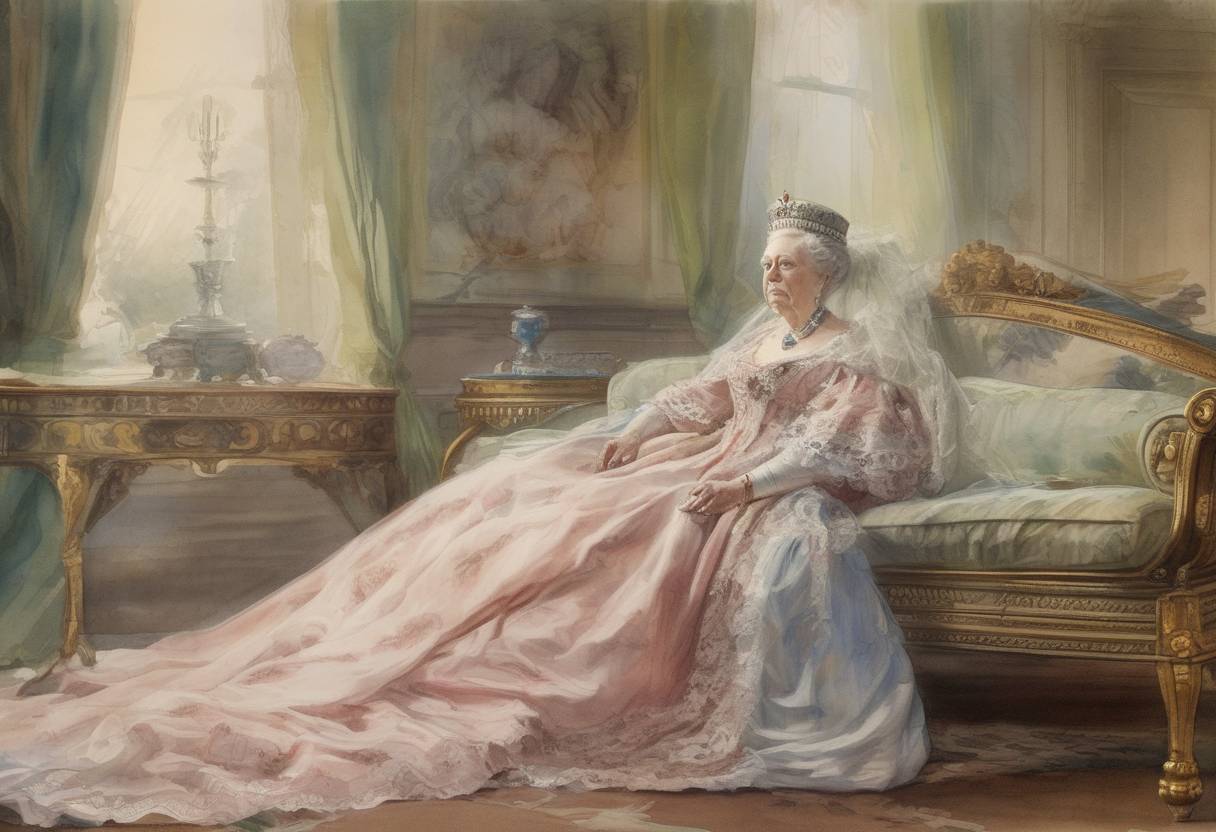
On January 22, 1901, Queen Victoria of the United Kingdom passed away at the age of 81, marking the end of the Victorian Era. Her death concluded a reign that lasted 63 years and 216 days, making her the longest-reigning British monarch at the time. Her passing signified not only the end of an era but also the beginning of significant changes in British society and the world.
Ascension to the Throne: Victoria became queen on June 20, 1837, following the death of her uncle, King William IV. Her reign began during a period of significant political, social, and economic change in Britain.
The Victorian Era: This period was characterized by the expansion of the British Empire, industrial advancements, and significant cultural shifts. It was a time of great innovation, with developments in technology, science, and the arts.
Personal Life: Victoria married her cousin, Prince Albert of Saxe-Coburg and Gotha, in 1840. Their marriage was a partnership that greatly influenced her reign. After Albert’s death in 1861, Victoria entered a prolonged period of mourning, which affected her public role.
Declining Health: In the final years of her life, Queen Victoria’s health began to deteriorate. She suffered from rheumatism and cataracts, which limited her mobility and vision.
Final Days: In early January 1901, Victoria’s health took a turn for the worse. She spent her last days at Osborne House on the Isle of Wight, surrounded by her family.
Succession: Upon her death, Victoria was succeeded by her son, Edward VII, marking the beginning of the Edwardian Era. This transition represented a shift in cultural and political attitudes, as well as changes in international relations.
End of an Era: The Victorian Era was known for its strict social mores and a strong sense of British identity. The end of this era paved the way for modernity and the challenges of the 20th century, including the lead-up to World War I.
Legacy: Queen Victoria’s reign left a lasting impact on the British monarchy and the world. Her influence extended beyond politics into culture, with the Victorian Era being remembered for its distinctive architecture, literature, and social norms.
Queen Victoria’s death was a pivotal moment in history, closing a chapter that had seen the transformation of Britain into a global power. Her legacy continues to be studied and remembered for its profound influence on the modern world.
Source: www.britannica.com