The Beginning of the Syrian Civil War: March 21, 2011
2011 · Daraa, Syria
The Syrian Civil War began with nationwide protests against President Bashar al-Assad's government, part of the wider wave of the Arab Spring.
February 17, 2011
The Libyan Civil War began with protests in Benghazi against Muammar Gaddafi's government, leading to a full-scale conflict and international intervention.
Benghazi, Libya | Libyan Government
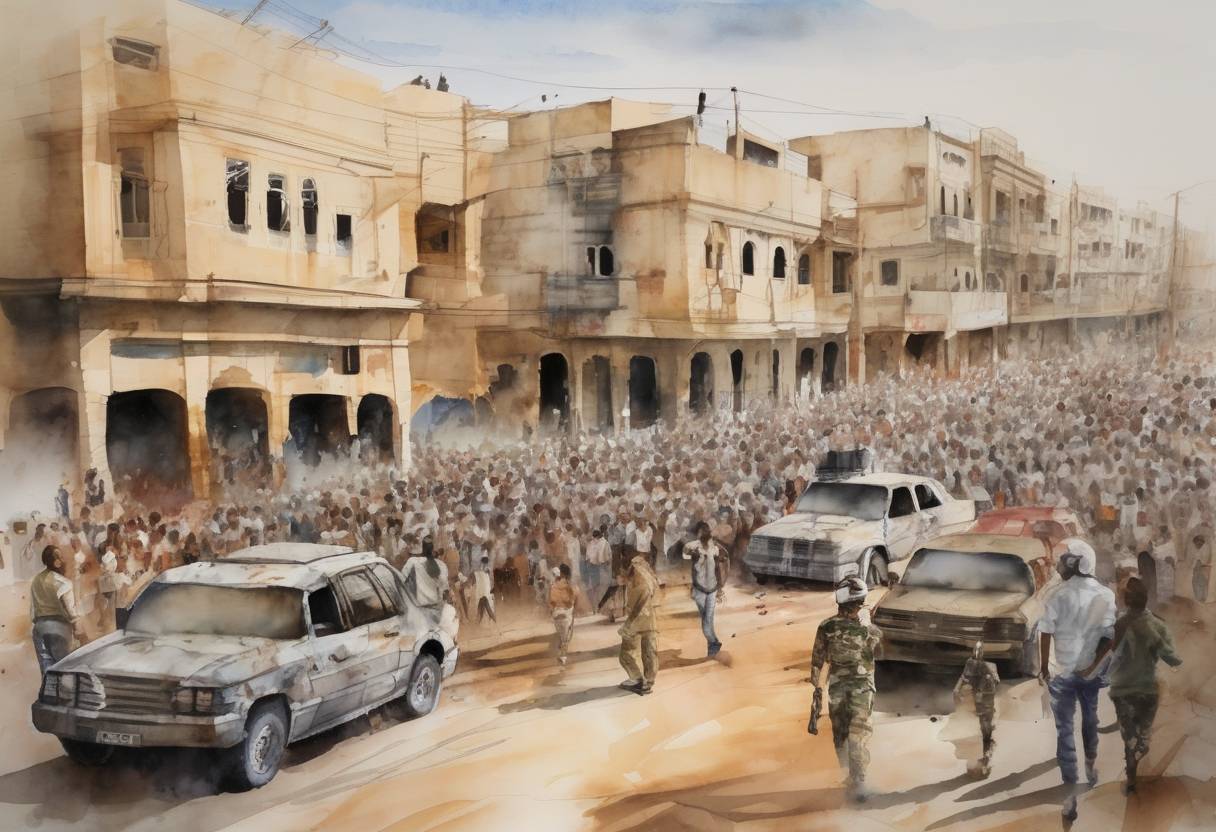
On February 17, 2011, the Libyan Civil War began with widespread protests in Benghazi, marking a significant moment in the broader context of the Arab Spring. This uprising was a response to the oppressive regime of Muammar Gaddafi, who had ruled Libya since 1969. The protests quickly escalated into a full-scale conflict, drawing international attention and intervention.
Gaddafi’s Regime: Muammar Gaddafi had maintained a tight grip on Libya through a combination of authoritarian rule, suppression of dissent, and a complex system of patronage. His government was characterized by human rights abuses, lack of political freedom, and economic mismanagement despite Libya’s oil wealth.
Arab Spring Influence: The protests in Libya were part of the wider Arab Spring movement, which saw a wave of demonstrations and uprisings across the Arab world, beginning in Tunisia in late 2010. The success of these movements in neighboring countries inspired Libyans to challenge Gaddafi’s rule.
Protests in Benghazi: The initial protests in Benghazi, Libya’s second-largest city, were sparked by the arrest of a human rights lawyer, Fathi Terbil. Demonstrators called for political reforms, greater freedoms, and an end to Gaddafi’s regime.
Escalation of Violence: The government’s harsh response to the protests, including the use of live ammunition against demonstrators, quickly escalated the situation. This brutal crackdown only fueled further unrest and galvanized opposition groups.
UN and NATO Involvement: As the conflict intensified, the United Nations Security Council passed Resolution 1973 on March 17, 2011, authorizing a no-fly zone over Libya and the use of “all necessary measures” to protect civilians. This led to a NATO-led intervention, which played a crucial role in the conflict.
Support for Rebels: The international community, including countries like France, the United Kingdom, and the United States, provided support to the rebel forces. This support was instrumental in shifting the balance of power against Gaddafi’s forces.
Fall of Gaddafi: The civil war ultimately led to the fall of Gaddafi, who was captured and killed by rebel forces in October 2011. His death marked the end of his 42-year rule.
Ongoing Instability: Despite the overthrow of Gaddafi, Libya has faced ongoing instability and conflict. The power vacuum left by his departure led to a fragmented political landscape, with various factions vying for control, resulting in a protracted civil conflict.
Humanitarian Impact: The war had a severe humanitarian impact, with thousands of casualties and widespread displacement. The conflict also disrupted Libya’s economy and infrastructure, leading to long-term challenges for the country.
The Libyan Civil War of 2011 was a pivotal event in the Arab Spring, highlighting both the potential for change and the complexities of post-revolutionary governance. The international intervention underscored the global community’s role in conflict resolution, though the enduring instability in Libya remains a testament to the challenges of nation-building in the aftermath of authoritarian rule.
Source: www.britannica.com