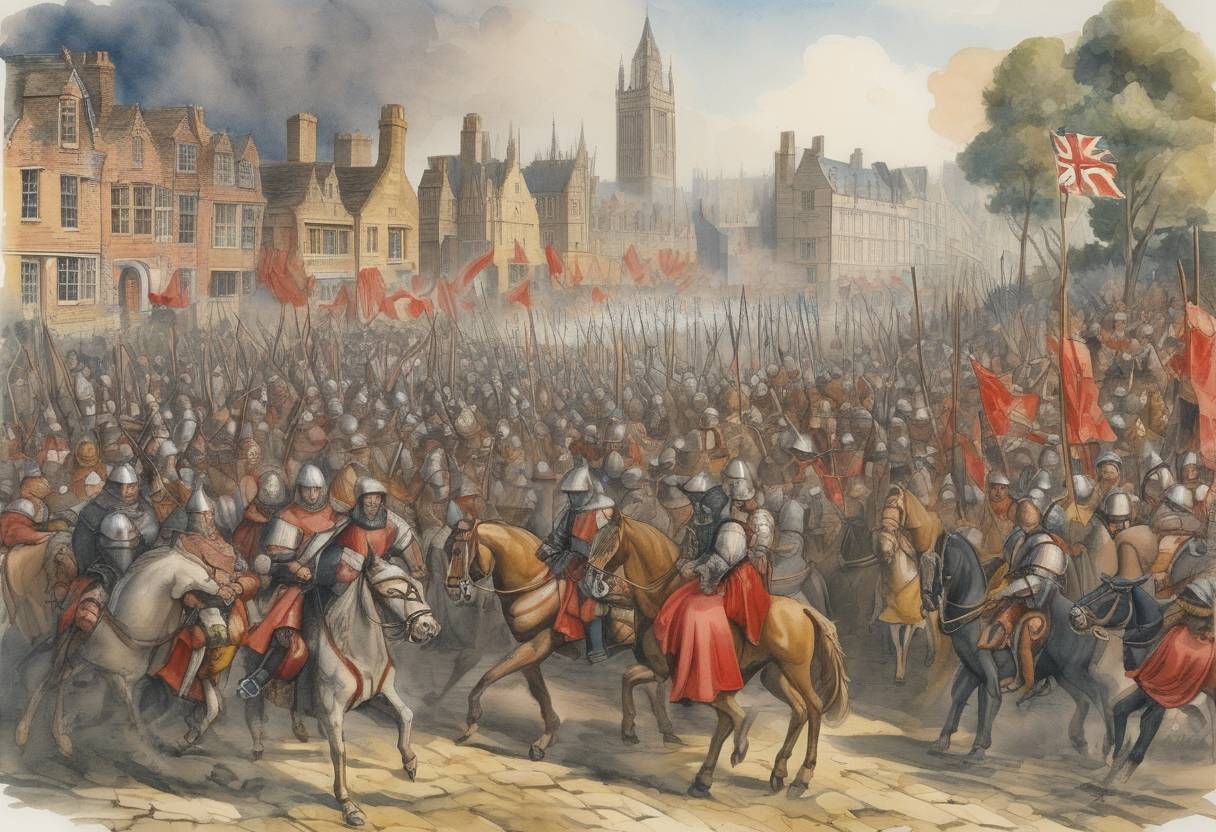
The Peasants’ Revolt: Entry into London on June 12, 1381
The Peasants’ Revolt of 1381, also known as Wat Tyler’s Rebellion, was a major uprising across large parts of England. It was driven by economic and social grievances that had been building for decades, exacerbated by the socio-economic impacts of the Black Death and the imposition of poll taxes. On June 12, 1381, the rebels, led by Wat Tyler and the radical priest John Ball, entered London, marking a pivotal moment in the revolt.
Context Leading to the Revolt
Economic Strain: The Black Death (1347-1351) had drastically reduced the population, leading to labor shortages and increased bargaining power for peasants. However, the Statute of Labourers (1351) attempted to freeze wages at pre-plague levels, causing widespread discontent.
Poll Taxes: The government imposed a series of poll taxes in the late 1370s to fund military campaigns in France. The third poll tax in 1380 was particularly burdensome and unpopular, sparking widespread anger.
Social Unrest: The rigid feudal system and the harsh living conditions of peasants fueled demands for reform. Radical ideas, often spread by figures like John Ball, called for social equality and the abolition of serfdom.
Key Events on June 12, 1381
Entry into London: On June 12, 1381, the rebels, numbering in the thousands, entered London. They were initially welcomed by some of the city’s poorer residents who shared their grievances.
Demands for Reform: The rebels demanded the abolition of serfdom, the reduction of taxes, and the removal of corrupt officials. They sought an audience with King Richard II to present their demands.
Symbolic Acts: The rebels targeted symbols of oppression and corruption. They attacked the Savoy Palace, the residence of John of Gaunt, a powerful noble associated with the unpopular poll taxes, and destroyed legal records.
Aftermath and Consequences
Meeting with the King: On June 14, 1381, King Richard II met with the rebels at Mile End, where he agreed to their demands, including the abolition of serfdom. However, these promises were not intended to be kept.
Wat Tyler’s Death: On June 15, during a subsequent meeting at Smithfield, Wat Tyler was killed under contentious circumstances, leading to the collapse of the revolt’s leadership.
Repression and Retraction: In the aftermath, the government quickly reasserted control. The promises made to the rebels were revoked, and many participants were executed or punished.
Historical Significance
The Peasants’ Revolt was a significant event in English history, highlighting the deep social and economic tensions of the time. Although it failed to achieve its immediate goals, it marked a turning point in the relationship between the ruling classes and the peasantry. The revolt demonstrated the potential power of popular uprisings and contributed to the gradual erosion of the feudal system in England.
The events of June 12, 1381, serve as a reminder of the enduring struggle for social justice and the complex interplay between economic pressures and political change.