Background
The Football War, also known as the Soccer War, was a brief but intense conflict between El Salvador and Honduras that erupted on July 14, 1969. Despite its name, the war was not solely about football; it was rooted in longstanding socio-economic tensions between the two nations.
Socio-Economic Tensions
- Land and Immigration Issues: In the decades leading up to the conflict, a significant number of Salvadorans had migrated to Honduras due to land scarcity and economic hardship in El Salvador. By the late 1960s, tensions over land ownership and immigration policies had escalated, as Honduran land reforms threatened Salvadoran settlers.
- Nationalism and Political Pressure: Both countries experienced rising nationalism, with governments using external conflicts to divert attention from internal issues.
The Trigger: World Cup Qualifiers
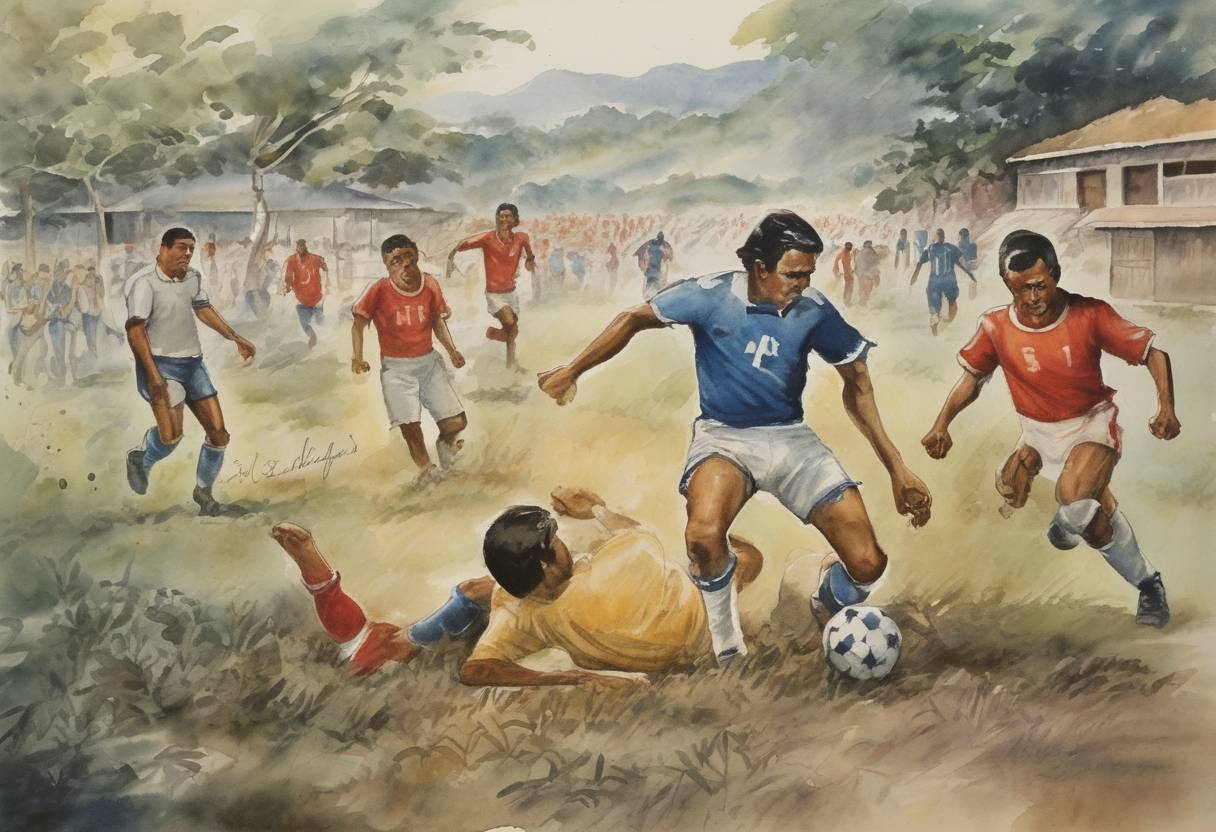
The immediate trigger for the conflict was a series of World Cup qualifying matches between El Salvador and Honduras in June 1969:
- First Match (June 8, 1969): Held in Tegucigalpa, Honduras won 1-0. The match was marred by violence and hostility towards the visiting Salvadoran team and fans.
- Second Match (June 15, 1969): Played in San Salvador, El Salvador won 3-0. Similar violence occurred, this time directed at Honduran players and supporters.
- Decisive Playoff (June 27, 1969): A third match took place in Mexico City, where El Salvador emerged victorious with a 3-2 win, securing a spot in the 1970 FIFA World Cup.
The matches exacerbated existing tensions, with media in both countries fueling nationalist sentiments.
The War
- Outbreak: On July 14, 1969, following the breakdown of diplomatic relations, El Salvador launched a military offensive against Honduras.
- Duration: The conflict lasted for approximately 100 hours, hence its other name, the “100 Hour War.”
- Military Engagements: El Salvador’s military advanced into Honduran territory, targeting key locations. However, logistical challenges and international pressure quickly halted further escalation.
Resolution and Aftermath
- Ceasefire: A ceasefire was brokered by the Organization of American States (OAS) on July 18, 1969, leading to the withdrawal of Salvadoran troops.
- Casualties and Impact: The war resulted in around 2,000 casualties and significant displacement of civilians. It further strained relations between the two countries and highlighted the need for addressing underlying socio-economic issues.
- Long-term Consequences: The conflict delayed the implementation of the Central American Common Market and left a legacy of mistrust between the nations. It wasn’t until 1980 that a formal peace treaty was signed.
Broader Historical Significance
While the Football War was brief, it underscored the volatile mix of sports, nationalism, and political tensions. It remains a poignant example of how deeply rooted socio-economic issues can manifest in unexpected ways, influencing international relations and regional stability.