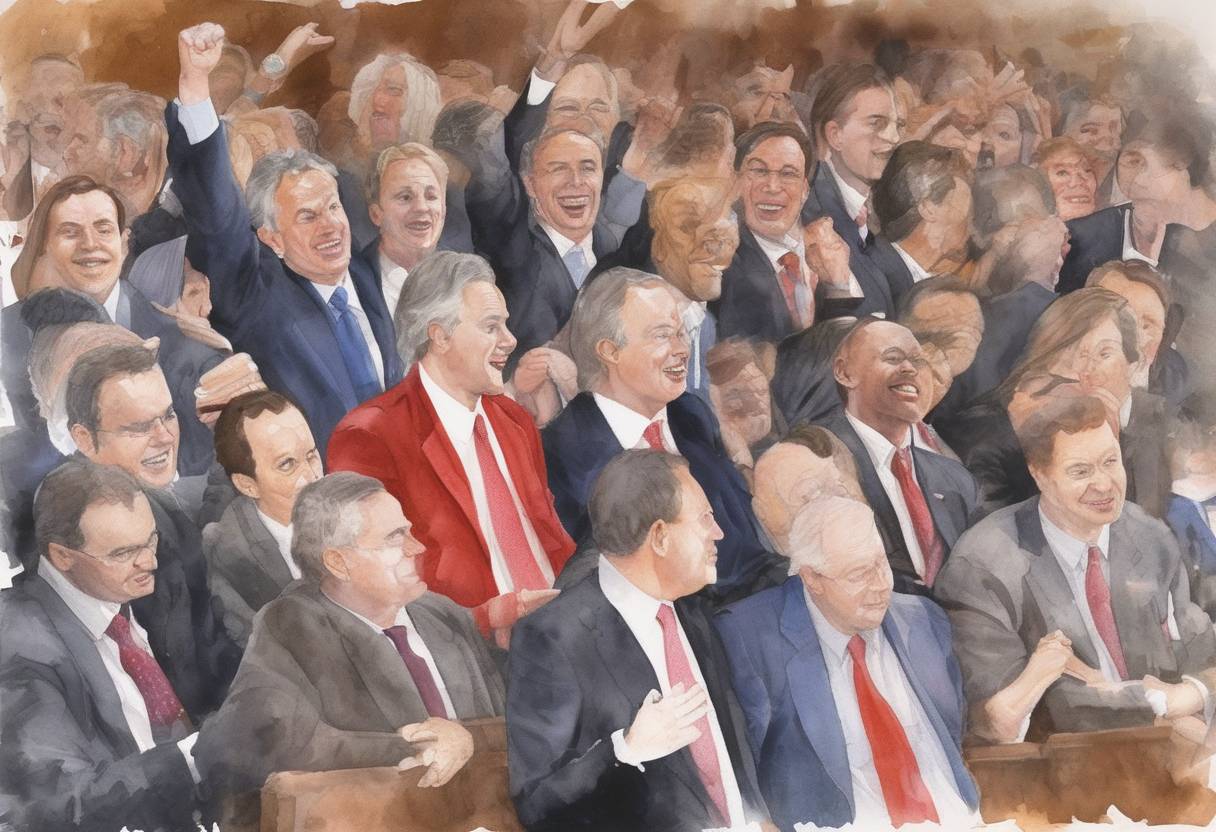
UK General Election of June 7, 2001: Tony Blair’s Labour Party Victory
On June 7, 2001, the United Kingdom held a general election that resulted in a significant victory for the Labour Party, led by Prime Minister Tony Blair. This election marked Blair’s second consecutive term as Prime Minister, following his initial landslide victory in 1997.
Context Leading Up to the Election
Tony Blair’s First Term (1997-2001): Blair’s first term was characterized by a series of reforms and policies under the “New Labour” banner, which aimed to modernize the party and appeal to a broader electorate. Key initiatives included constitutional reforms, such as devolution for Scotland and Wales, and the introduction of the minimum wage.
Economic Conditions: The UK experienced a period of economic stability and growth during Blair’s first term, which contributed to the Labour Party’s popularity. Low unemployment and inflation rates bolstered public confidence in the government’s economic management.
Opposition Parties: The Conservative Party, led by William Hague, struggled to regain its footing after the 1997 defeat. The party faced internal divisions and challenges in presenting a cohesive alternative to Labour’s policies. The Liberal Democrats, under Charles Kennedy, aimed to increase their influence by capitalizing on discontent with the two major parties.
Election Results
Labour Party: Tony Blair’s Labour Party won a decisive victory, securing 413 seats in the House of Commons, albeit with a slightly reduced majority compared to 1997. This result reaffirmed Labour’s dominant position in British politics at the time.
Conservative Party: The Conservatives gained only one additional seat, bringing their total to 166. The result was disappointing for the party, which had hoped to make significant gains.
Liberal Democrats: The Liberal Democrats increased their representation, winning 52 seats, which was an improvement from their previous standing.
Significance and Aftermath
Continued Reforms: Blair’s second term allowed him to continue with his reform agenda, focusing on public services, particularly education and healthcare. The government also pursued foreign policy initiatives, including a controversial decision to support the United States in the Iraq War in 2003.
Political Landscape: The election solidified Labour’s position as the dominant political force in the UK, while the Conservative Party faced ongoing challenges in redefining its platform and leadership.
Impact on Future Elections: The 2001 victory set the stage for Labour’s continued governance until 2010, although the party’s popularity would eventually wane due to various domestic and international issues.
In summary, the 2001 general election reinforced Tony Blair’s leadership and the Labour Party’s influence in British politics, allowing them to pursue their policy agenda with a strong parliamentary majority.