German Forces Occupy Brussels during World War I - August 20, 1914
1914 · Brussels, Belgium
German forces occupy Brussels during World War I.
March 21, 1918
The German Spring Offensive, also known as the Kaiserschlacht, began during World War I. It was a series of German attacks along the Western Front, marking the last major German offensive of the war.
Western Front, France | German Army
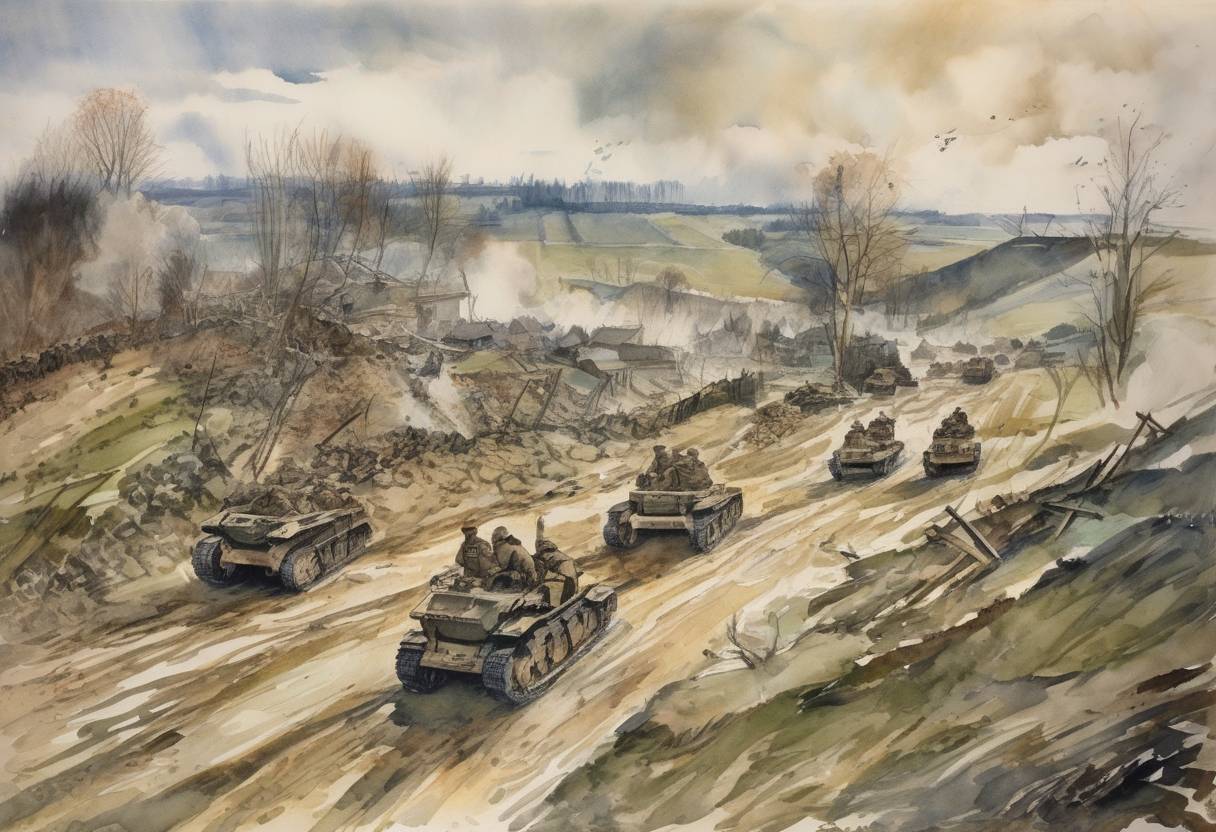
The German Spring Offensive, also known as the Kaiserschlacht (“Kaiser’s Battle”), commenced on March 21, 1918, during World War I. This series of German attacks along the Western Front represented the last major German offensive of the war, aiming to decisively break the stalemate and secure victory before American forces could fully deploy in Europe.
Strategic Situation: By early 1918, Germany faced a deteriorating situation. The entry of the United States into the war in 1917 promised to tip the balance against the Central Powers. The German High Command, led by General Erich Ludendorff, sought a decisive victory on the Western Front before American troops could arrive in significant numbers.
Russian Withdrawal: The Treaty of Brest-Litovsk in March 1918 ended the war on the Eastern Front, allowing Germany to transfer approximately 500,000 troops to the Western Front, bolstering their forces for the planned offensive.
Objective: The offensive aimed to split the British and French armies, capture the vital railway junction at Amiens, and force the Allies into a negotiated peace.
Operation Michael: The first phase of the offensive, Operation Michael, began on March 21, 1918. It targeted the British Fifth Army and parts of the Third Army in the Somme region.
Tactics: The Germans employed new infiltration tactics, using stormtroopers to bypass strong points and disrupt enemy rear areas. This approach, combined with a massive artillery bombardment, initially achieved significant breakthroughs.
Initial Success: The Germans advanced up to 40 miles in some areas, capturing vast swathes of territory and inflicting heavy casualties on the Allies. The rapid advance created a sense of crisis among the Allied commanders.
Allied Response: Despite initial successes, the German offensive eventually stalled due to logistical challenges, overextended supply lines, and fierce Allied resistance. The Allies, under the unified command of French General Ferdinand Foch, coordinated a more effective defense.
Exhaustion and Attrition: The German forces suffered heavy casualties and could not sustain the momentum. The offensive failed to achieve its strategic objectives, and the German army was left weakened and vulnerable to subsequent Allied counterattacks.
Turning Point: The failure of the Spring Offensive marked a turning point in the war. It depleted German resources and morale, setting the stage for the Allied Hundred Days Offensive, which began in August 1918 and ultimately led to the Armistice on November 11, 1918.
The German Spring Offensive of 1918 was a bold but ultimately unsuccessful attempt to end World War I on favorable terms for Germany. It demonstrated the limitations of offensive operations in trench warfare and underscored the importance of logistics and coordination in modern military strategy. The offensive’s failure accelerated the end of the war and highlighted the growing strength and coordination of the Allied forces.
Source: en.wikipedia.org