Queen Victoria Marries Prince Albert
1840 · London, United Kingdom
Queen Victoria of the United Kingdom marries Prince Albert of Saxe-Coburg and Gotha.
June 28, 1838
Queen Victoria was crowned at Westminster Abbey in London, beginning her reign as the monarch of the United Kingdom, which would last until 1901.
London, United Kingdom | British Monarchy
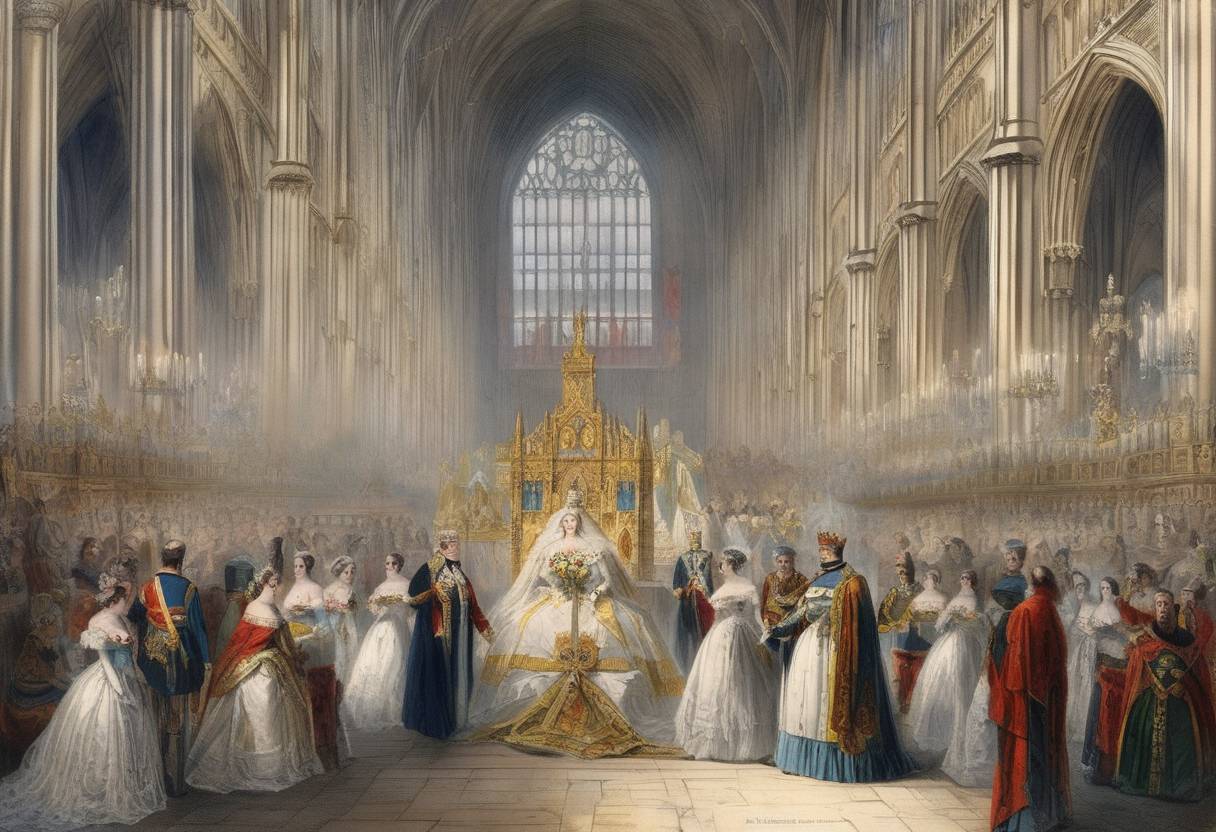
On June 28, 1838, Queen Victoria was crowned at Westminster Abbey in London, marking the official commencement of her reign as the monarch of the United Kingdom. Her reign would become one of the longest in British history, lasting until her death in 1901.
Victoria ascended to the throne on June 20, 1837, following the death of her uncle, King William IV. At just 18 years old, she became queen at a time when the British Empire was expanding rapidly, and the country was undergoing significant social and economic changes due to the Industrial Revolution.
The coronation ceremony was a grand affair, attended by dignitaries, nobles, and representatives from across the British Empire. It took place at Westminster Abbey, a traditional site for English and British coronations since 1066. The event was meticulously planned to reflect the grandeur and tradition of the British monarchy.
Queen Victoria’s reign, known as the Victorian Era, was a period of significant transformation for Britain and the world. It was marked by:
Queen Victoria’s reign left a profound impact on the United Kingdom and the world. Her era was characterized by a strict moral code, known as Victorian morality, and significant social reforms, including the expansion of the electoral franchise and improvements in workers’ rights.
Victoria’s legacy continues to influence British culture and the monarchy. Her long reign and the stability it provided helped shape modern Britain, and she remains a pivotal figure in the nation’s history.
In summary, the coronation of Queen Victoria on June 28, 1838, was not just a ceremonial event but the beginning of a transformative era that would leave an indelible mark on history.
Source: en.wikipedia.org