The Release of *The Freewheelin' Bob Dylan*
1963 · New York City, United States
The Freewheelin' Bob Dylan, the second studio album by American singer-songwriter Bob Dylan, is released, featuring the hit song 'Blowin' in the Wind'.
January 13, 1968
Johnny Cash performs live at Folsom State Prison, California; the recording becomes one of the most famous live albums in music history.
Folsom, United States | Columbia Records
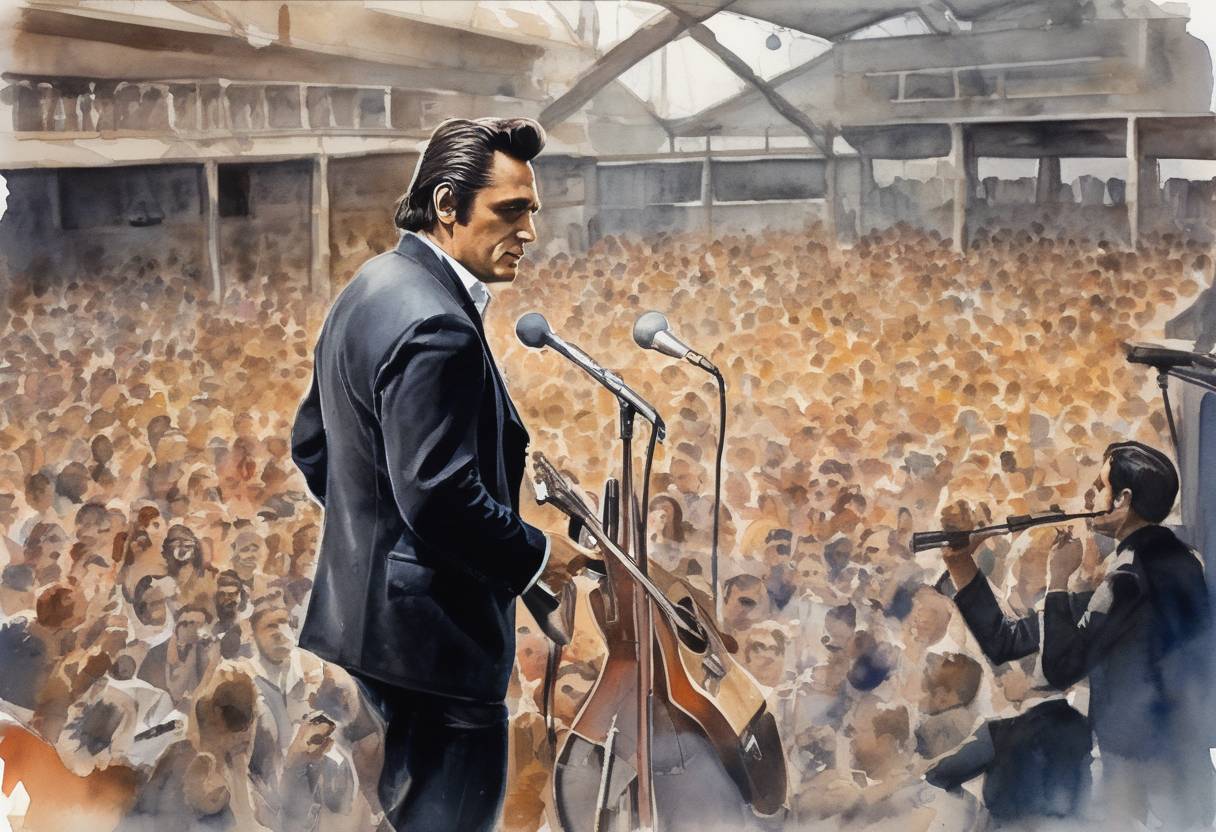
On January 13, 1968, Johnny Cash performed a live concert at Folsom State Prison in California, an event that would become one of the most iconic moments in music history. This performance was recorded and later released as the album “At Folsom Prison,” which played a significant role in revitalizing Cash’s career and solidifying his image as a champion of the downtrodden and marginalized.
Johnny Cash’s Career: By the mid-1960s, Johnny Cash was experiencing a decline in his career due to personal struggles, including issues with addiction. Despite these challenges, Cash maintained a strong connection with his audience, particularly those who felt disenfranchised.
Interest in Prison Performances: Cash had a longstanding interest in performing for prison audiences, having previously played at various correctional facilities. His empathy for prisoners was reflected in his music, with songs like “Folsom Prison Blues” resonating deeply with inmates.
Columbia Records: Cash’s label, Columbia Records, was initially hesitant about the project. However, Cash’s persistence and the potential for a unique live album eventually convinced them to support the recording.
The Venue: Folsom State Prison, located in Represa, California, was chosen for its historical significance and its connection to Cash’s song “Folsom Prison Blues.”
The Audience: The concert was attended by approximately 1,000 inmates, who were eager to see Cash perform live. The atmosphere was electric, with the prisoners’ enthusiasm adding to the intensity of the performance.
The Setlist: Cash’s setlist included a mix of his classic hits and prison-themed songs, such as “Folsom Prison Blues,” “I Still Miss Someone,” and “The Long Black Veil.” The performance also featured June Carter, Carl Perkins, and the Statler Brothers.
Album Release: “At Folsom Prison” was released in May 1968 and received critical acclaim. It reached number one on the country charts and was a commercial success, revitalizing Cash’s career.
Cultural Impact: The album is credited with bringing attention to the conditions within the American prison system and highlighting the humanity of inmates. It also reinforced Cash’s image as a voice for the underrepresented.
Legacy: “At Folsom Prison” is considered one of the greatest live albums in music history. It has influenced countless artists and remains a testament to Cash’s unique ability to connect with diverse audiences.
Johnny Cash’s performance at Folsom State Prison stands as a powerful example of music’s ability to transcend barriers and speak to universal human experiences.
Source: en.wikipedia.org