February 7, 1904

The Great Baltimore Fire began, lasting for over 30 hours and destroying over 1,500 buildings in Baltimore, Maryland.


Baltimore, United States | City of Baltimore
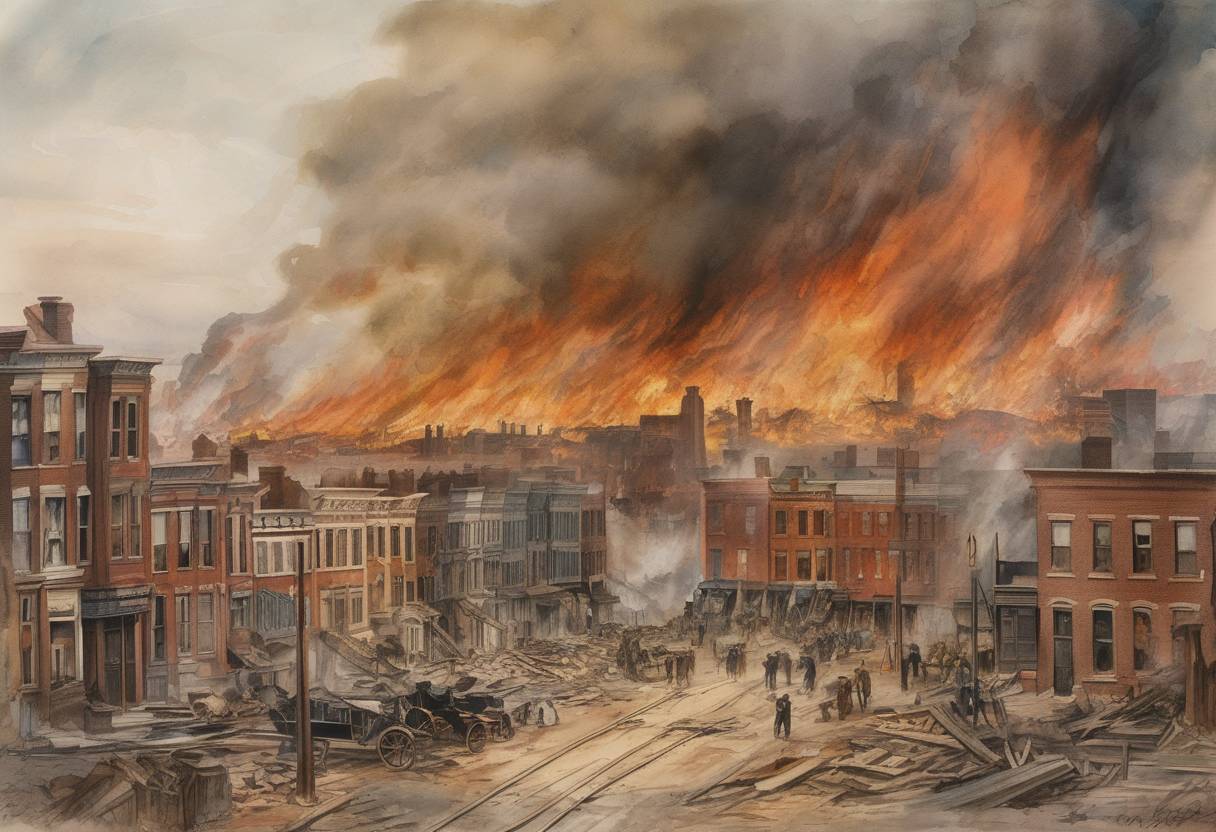
Watercolor painting based depiction of The Great Baltimore Fire began, lasting for over 30 hours and destroying over 1,500 buildings in Baltimore, Maryland. (1904)

The Great Baltimore Fire of 1904

Overview

On February 7, 1904, a devastating fire broke out in Baltimore, Maryland, marking one of the most catastrophic urban fires in American history. The blaze lasted for over 30 hours, ultimately destroying more than 1,500 buildings and causing an estimated \(100 million in damages (equivalent to over \)3 billion today).

Key Events Leading Up to the Fire

  • Location of Origin: The fire began in the John E. Hurst & Company building, a dry goods firm located at the intersection of German (now Redwood) and Sharp Streets.
  • Initial Response: Despite the quick response from local fire departments, the fire rapidly spread due to strong winds and the close proximity of wooden structures.

The Fire’s Progression

  • Spread and Intensity: The fire quickly engulfed the central business district. Efforts to contain it were hampered by incompatible fire hose couplings, which prevented assistance from neighboring cities.
  • Extent of Destruction: Over 70 city blocks were consumed by the fire, leaving a significant portion of Baltimore’s downtown in ruins.

Aftermath and Consequences

  • Rebuilding Efforts: The aftermath saw a massive rebuilding effort, with new building codes and fire safety regulations implemented to prevent future disasters.
  • Impact on Firefighting Standards: The fire highlighted the need for standardized firefighting equipment across cities, leading to the adoption of national standards for fire hose couplings.
  • Economic Impact: The economic impact was profound, with many businesses and livelihoods affected. However, the rebuilding process also spurred modernization and growth in the city’s infrastructure.

Broader Historical Significance

The Great Baltimore Fire of 1904 is a pivotal event in urban planning and fire safety history. It underscored the importance of building codes and the need for cooperation and standardization in emergency response efforts. The lessons learned from this disaster have had lasting impacts on fire safety regulations and urban development practices across the United States.