British Occupation of the Cape Colony - January 19, 1806
1806 · Cape Town, South Africa
The United Kingdom occupied the Cape Colony in South Africa, marking the beginning of British rule.
April 6, 1652
Dutch sailor Jan van Riebeeck established a resupply camp that eventually became Cape Town, marking the beginning of European colonization in South Africa.
Cape Town, South Africa | Dutch East India Company
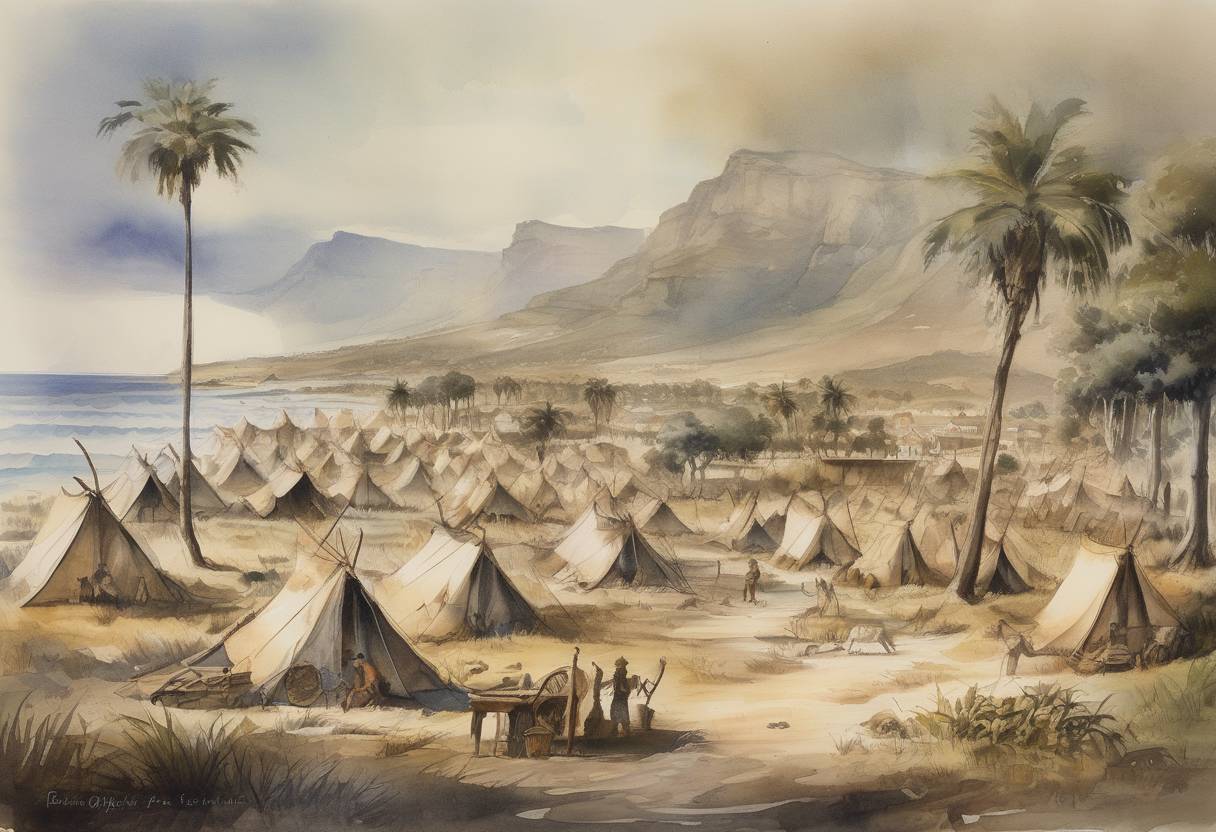
On April 6, 1652, Dutch sailor and colonial administrator Jan van Riebeeck established a resupply camp at the Cape of Good Hope, which would eventually grow into the city of Cape Town. This event marked a significant moment in the history of South Africa, as it laid the foundation for European colonization in the region.
Dutch East India Company (VOC): The establishment of the camp was initiated by the Dutch East India Company (Vereenigde Oostindische Compagnie, or VOC), which was a powerful trading company in the 17th century. The VOC sought to create a halfway station for its ships traveling between the Netherlands and the East Indies (present-day Indonesia).
Strategic Location: The Cape of Good Hope was chosen for its strategic location along the maritime route. It provided a vital stopover for ships to restock supplies, particularly fresh water and food, and to make necessary repairs.
Jan van Riebeeck’s Role: Jan van Riebeeck, a Dutch merchant and former surgeon, was appointed by the VOC to lead the expedition to establish the resupply station. He arrived at the Cape with three ships: the Dromedaris, the Reijger, and the Goede Hoop.
Initial Settlement: Upon arrival, van Riebeeck and his crew began constructing a fort and planting gardens to produce fresh vegetables. The fort, known as the Fort de Goede Hoop, served as the initial structure around which the settlement grew.
Growth of the Settlement: Over time, the settlement expanded as more Dutch settlers arrived. The fertile land and favorable climate allowed for successful agriculture, which supported the growing community and passing ships.
Interactions with Indigenous Peoples: The establishment of the camp led to interactions with the indigenous Khoikhoi people. Initially, these interactions involved trade, but tensions eventually arose over land and resources, leading to conflicts.
Legacy of Colonization: The resupply camp laid the groundwork for further European colonization in South Africa. It became a pivotal point for the Dutch and later British colonial endeavors, significantly impacting the region’s demographic, cultural, and political landscape.
Colonial Expansion: The establishment of Cape Town marked the beginning of a long period of European influence and control in South Africa, which would have lasting effects on the region’s history.
Cultural and Demographic Changes: The arrival of European settlers introduced new cultural dynamics and led to significant demographic changes, including the displacement and marginalization of indigenous populations.
Economic Development: The settlement became a crucial hub for trade and commerce, contributing to the economic development of the region and establishing Cape Town as a major port city.
In summary, the establishment of a resupply camp by Jan van Riebeeck on April 6, 1652, was a pivotal event in South African history, marking the beginning of European colonization and setting the stage for profound changes in the region.
Source: en.wikipedia.org