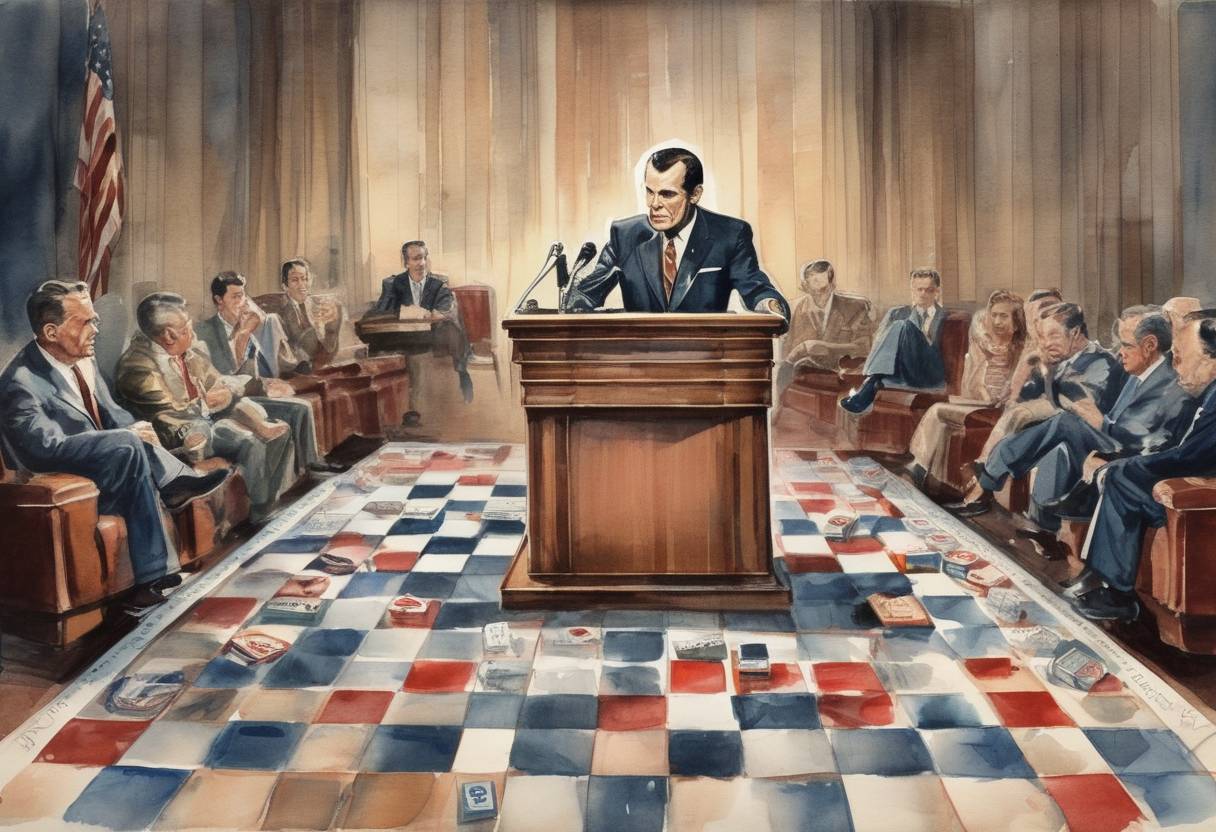
Richard Nixon’s “Checkers Speech” - September 23, 1952
On September 23, 1952, Richard Nixon, then the Republican vice-presidential candidate, delivered a televised address that would become famously known as the “Checkers Speech.” This pivotal moment in American political history was a response to allegations that Nixon had improperly used a political expense fund for personal gain.
Context and Background
- Political Climate: In 1952, Dwight D. Eisenhower was the Republican nominee for President, with Richard Nixon as his running mate. The campaign was gaining momentum when Nixon faced accusations of financial impropriety.
- The Accusations: Reports surfaced alleging that Nixon had a secret fund, financed by a group of his supporters, which he used for personal expenses. This raised ethical concerns and threatened his position on the Republican ticket.
The Speech
- Broadcast Medium: Nixon’s address was broadcast on national television and radio, reaching an estimated 60 million Americans. This was a significant audience, considering the era’s media landscape.
- Content and Strategy: Nixon meticulously detailed his financial history, aiming to demonstrate transparency and integrity. He disclosed his personal finances, including his salary, debts, and assets.
- The Emotional Appeal: The speech is best remembered for Nixon’s mention of a gift his family received—a dog named Checkers. He stated that regardless of the political fallout, his family intended to keep the dog, which endeared him to many viewers.
Impact and Aftermath
- Public Reaction: The speech was a resounding success in terms of public relations. Nixon’s emotional and direct approach resonated with the American public, garnering widespread sympathy and support.
- Political Consequences: Nixon’s performance helped solidify his place on the Republican ticket. Eisenhower decided to retain Nixon as his vice-presidential candidate, and they went on to win the 1952 election.
- Legacy: The “Checkers Speech” is often cited as a pioneering moment in political communication, showcasing the power of television as a tool for political persuasion. It also set a precedent for how politicians could use media to directly address and sway public opinion.
Broader Significance
- Media and Politics: Nixon’s speech highlighted the growing importance of television in American politics, foreshadowing its role in future campaigns and political discourse.
- Public Trust and Transparency: The event underscored the necessity for politicians to maintain public trust through transparency and direct communication, a principle that remains relevant in contemporary politics.
In summary, Richard Nixon’s “Checkers Speech” not only salvaged his political career at a critical juncture but also marked a transformative moment in the relationship between media and politics in the United States.