The Introduction of the Star of David Badge in Nazi Germany on September 6, 1941
1941 · Berlin, Germany
The requirement for Jews to wear the Star of David with the word 'Jew' inscribed, is introduced in Nazi Germany.
November 15, 1943
The Holocaust: Heinrich Himmler orders that Gypsies and 'part-Gypsies' be put 'on the same level as Jews and placed in concentration camps.'
Berlin, Germany | Nazi Germany
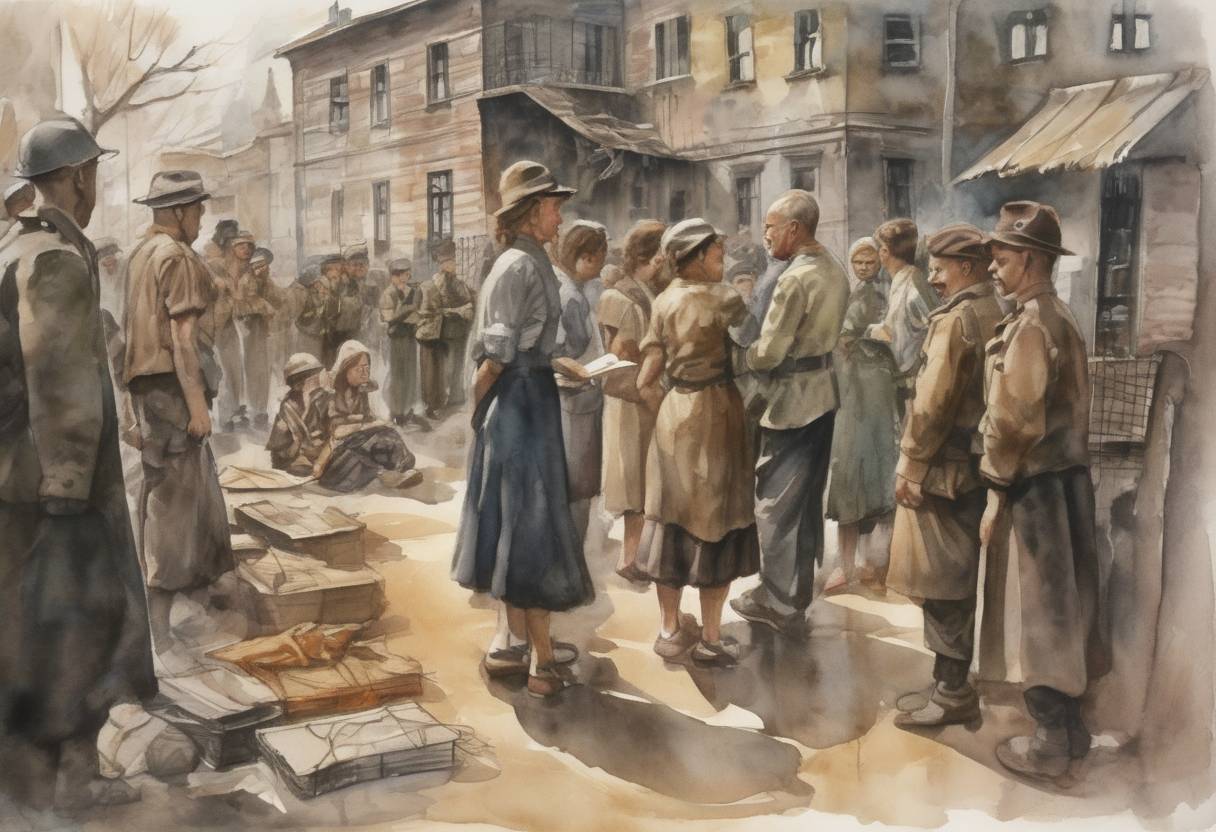
On November 15, 1943, Heinrich Himmler, one of the leading figures of Nazi Germany and head of the SS, issued a chilling directive that further entrenched the genocidal policies of the Nazi regime. This order mandated that Romani people, derogatorily referred to as “Gypsies” by the Nazis, and those of mixed Romani descent, be treated “on the same level as Jews” and consequently be deported to concentration camps. This decision marked a significant escalation in the systematic persecution and extermination of the Romani people during the Holocaust.
Nazi Racial Ideology: The Nazi regime, under Adolf Hitler, pursued a racially motivated agenda that sought to create a “pure” Aryan race. This ideology deemed Jews, Romani people, and other groups as “racially inferior” and targeted them for extermination.
Previous Persecution: Prior to the 1943 order, Romani people in Nazi-occupied Europe faced severe discrimination, forced sterilizations, and were subjected to various forms of persecution. The Nuremberg Laws of 1935 had already marginalized them legally and socially.
Early Measures: From the late 1930s, the Nazis implemented policies that restricted the rights of Romani people, including forced relocations and internment in labor camps.
Wannsee Conference: In January 1942, the Wannsee Conference formalized the “Final Solution,” which outlined the plan for the systematic extermination of Jews. The Romani people were also implicitly included in this genocidal policy.
Himmler’s Directive: The November 15, 1943, order was a formal acknowledgment of the regime’s intent to treat Romani people with the same lethal policies applied to Jews. This included deportation to concentration camps such as Auschwitz-Birkenau, where many were murdered.
Impact: The order led to the intensified round-up and deportation of Romani people across Nazi-occupied territories. Thousands were sent to concentration camps, where they faced inhumane conditions, forced labor, medical experiments, and mass executions.
Genocide of the Romani People: It is estimated that between 220,000 and 500,000 Romani people were killed during the Holocaust, a tragedy known as the Porajmos or “Devouring.”
Post-War Recognition: For decades after World War II, the genocide of the Romani people received little recognition compared to the Jewish Holocaust. It wasn’t until later in the 20th century that broader acknowledgment and commemoration efforts began.
Legacy: The persecution of the Romani people during the Holocaust remains a critical reminder of the destructive power of racial hatred and the importance of remembering all victims of Nazi atrocities.
Himmler’s order on November 15, 1943, stands as a stark example of the Nazi regime’s brutal policies and the devastating impact of their racial ideology, underscoring the need for ongoing education and remembrance to prevent such atrocities in the future.
Source: encyclopedia.ushmm.org