Lech Wałęsa Elected President of Poland - December 9, 1990
1990 · Warsaw, Poland
Lech Wałęsa is elected President of Poland, becoming the first democratically elected president of the country after the fall of communism.
December 22, 1990
Lech Wałęsa is sworn in as the first democratically elected President of Poland since the 1920s, marking a significant moment in the country's transition from communism to democracy.
Warsaw, Poland | Polish government
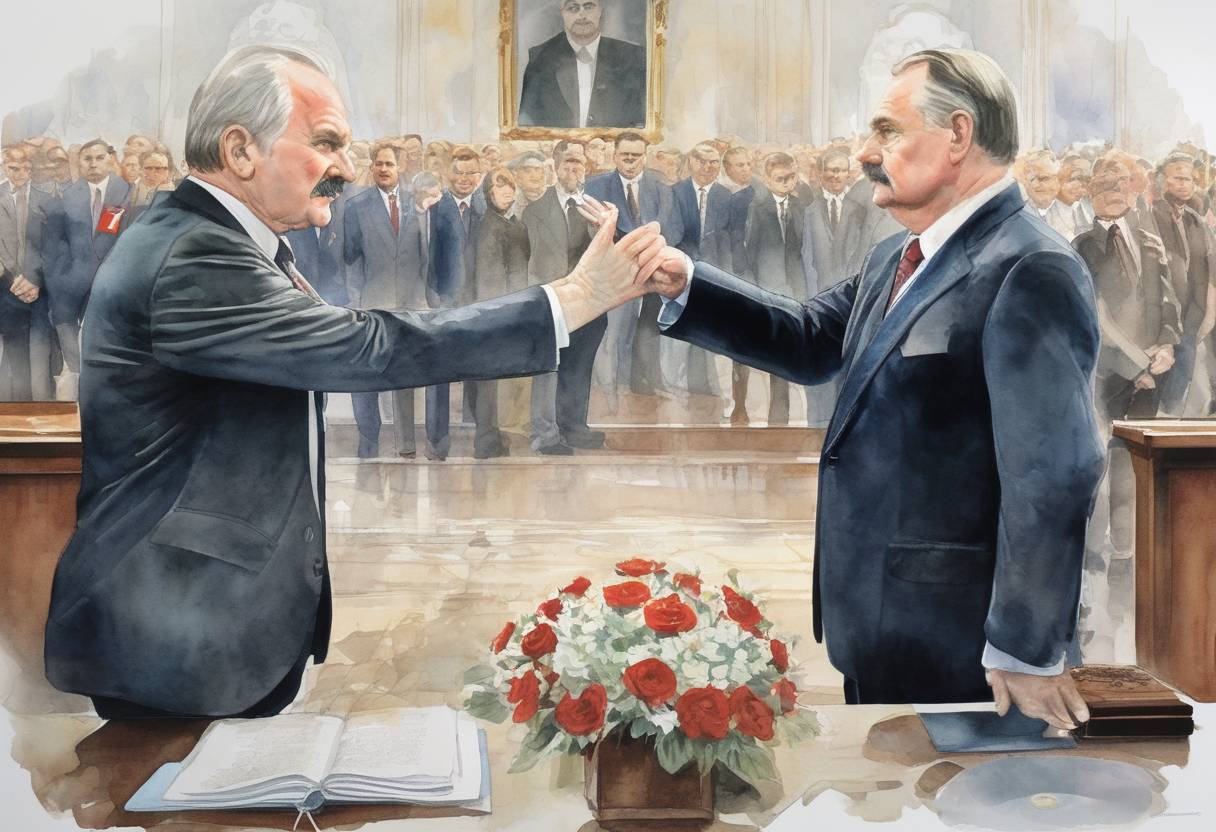
On December 22, 1990, Lech Wałęsa was sworn in as the President of Poland, marking a pivotal moment in the country’s transition from a communist regime to a democratic government. This event was not only significant for Poland but also symbolized a broader shift in Eastern Europe as nations moved away from Soviet influence.
Communist Rule in Poland: After World War II, Poland fell under Soviet influence and became a communist state. The Polish United Workers’ Party (PZPR) dominated the political landscape, suppressing opposition and controlling the economy.
Solidarity Movement: In the 1980s, the Solidarity movement, led by Lech Wałęsa, emerged as a powerful force against the communist regime. It began as a trade union but quickly grew into a broader social movement advocating for political reform and workers’ rights.
Round Table Talks: In 1989, the Polish government and opposition leaders, including Solidarity, engaged in the Round Table Talks. These negotiations led to semi-free elections in June 1989, where Solidarity achieved a significant victory, setting the stage for further democratic reforms.
First Democratic Election: The 1990 presidential election was the first fully democratic election in Poland since the 1920s. It was a landmark event in the country’s history, reflecting the successful dismantling of the communist system.
Lech Wałęsa’s Candidacy: As a prominent leader of the Solidarity movement and a Nobel Peace Prize laureate, Wałęsa was a symbol of resistance against communism. His candidacy represented hope for a new democratic era.
Election Victory: Wałęsa won the presidency with a decisive majority, defeating his main opponent, Prime Minister Tadeusz Mazowiecki. His victory was seen as a triumph for the democratic aspirations of the Polish people.
Democratic Transition: Wałęsa’s presidency marked the consolidation of democratic governance in Poland. It was a crucial step in the country’s transition from a centrally planned economy to a market-oriented one.
Impact on Eastern Europe: Poland’s successful transition inspired other Eastern European countries undergoing similar transformations. It demonstrated the possibility of peaceful change and the establishment of democratic institutions.
Challenges Ahead: Wałęsa’s presidency faced numerous challenges, including economic reforms, political instability, and the need to build new democratic institutions. Despite these difficulties, his leadership was instrumental in guiding Poland through a critical period of change.
Lech Wałęsa’s inauguration as President of Poland on December 22, 1990, remains a significant milestone in the history of Poland and the broader post-Cold War era, symbolizing the triumph of democracy over authoritarianism in Eastern Europe.
Source: en.wikipedia.org