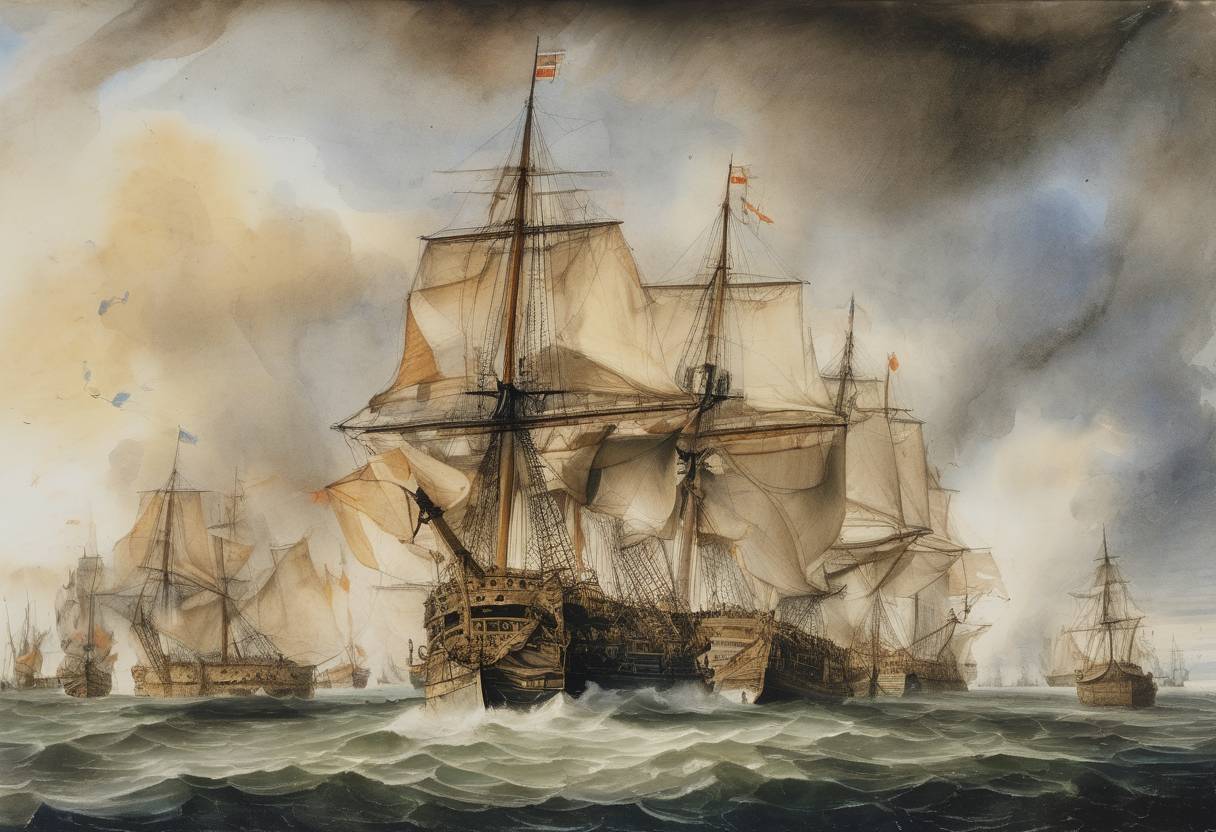
Battle of North Foreland - August 19, 1666
The Battle of North Foreland, fought on August 19, 1666, was a pivotal naval engagement during the Second Anglo-Dutch War (1665–1667). This conflict was primarily driven by commercial rivalry and maritime dominance between England and the Dutch Republic. The battle marked a significant victory for the English fleet, contributing to their temporary control over the seas.
Context Leading to the Battle
The Second Anglo-Dutch War was characterized by a series of naval battles as both nations vied for supremacy in trade and colonial expansion. The war had seen fluctuating fortunes, with both sides achieving victories. Prior to North Foreland, the Four Days’ Battle in June 1666 had been a costly engagement for both fleets, with no decisive victor. The English, under the command of Prince Rupert of the Rhine and the Duke of Albemarle, sought to reassert their dominance.
The Battle
- Location: The battle took place off the coast of North Foreland, near the southeastern tip of England.
- English Commanders: The English fleet was led by the Duke of Albemarle and Prince Rupert.
- Dutch Commanders: The Dutch fleet was commanded by Admiral Michiel de Ruyter, a highly respected and skilled naval leader.
Key Events
Tactical Maneuvers: The English fleet, taking advantage of favorable winds, engaged the Dutch fleet with aggressive tactics. The English ships were well-prepared and strategically positioned to exploit the weaknesses in the Dutch formation.
Intense Combat: The battle was marked by intense and close-quarter combat, with both sides exchanging heavy cannon fire. The English fleet’s superior firepower and tactical coordination played a crucial role in their success.
Dutch Retreat: After several hours of fierce fighting, the Dutch fleet, suffering significant damage and casualties, was forced to retreat. The English pursued them, inflicting further losses.
Aftermath and Significance
- English Victory: The victory at North Foreland solidified English naval dominance, at least temporarily, and boosted morale after the inconclusive Four Days’ Battle.
- Strategic Impact: The battle disrupted Dutch trade routes and weakened their naval capabilities, giving England a strategic advantage in the war.
- Peace Negotiations: Despite the victory, the war continued until the Treaty of Breda in 1667, which ended hostilities. The treaty saw territorial adjustments but did not resolve the underlying commercial tensions.
The Battle of North Foreland exemplified the intense maritime rivalry of the 17th century and underscored the importance of naval power in determining the outcomes of international conflicts. It remains a significant event in the history of Anglo-Dutch relations.