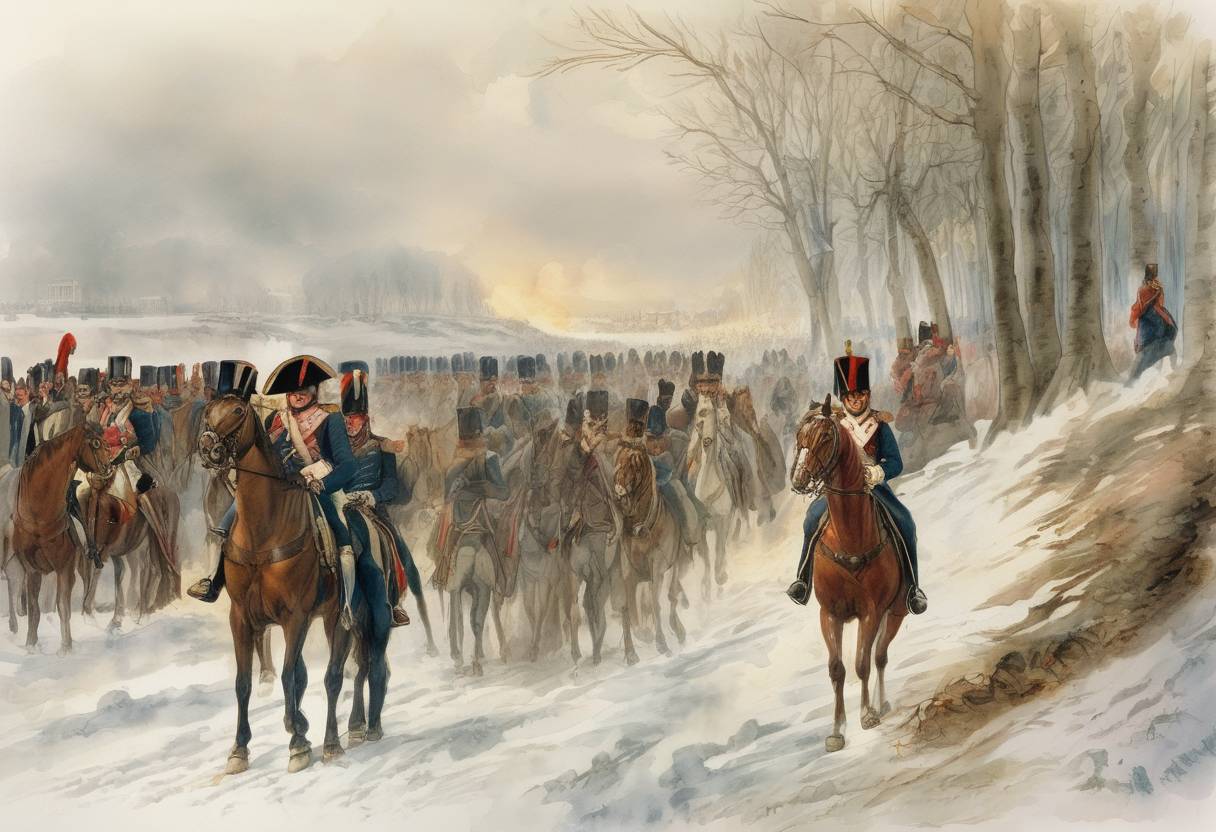
Napoleon’s Retreat from Moscow: October 19, 1812
On October 19, 1812, Napoleon Bonaparte began the infamous retreat from Moscow, a pivotal moment in the Napoleonic Wars that marked the beginning of the decline of his empire. This event followed the failed invasion of Russia, which had been a strategic disaster for the French Emperor.
Context and Prelude
The Invasion of Russia: Napoleon’s decision to invade Russia in 1812 was driven by the need to enforce the Continental System, a blockade against British trade, and to assert French dominance in Europe. The campaign began in June 1812 with the Grand Armée, comprising over 600,000 troops, one of the largest military forces ever assembled.
Initial Success and Challenges: Initially, the French forces advanced rapidly, winning several battles. However, the Russian strategy of scorched earth, retreating deeper into the vast Russian territory while destroying supplies, left the French army without resources.
The Occupation of Moscow: Napoleon entered Moscow on September 14, 1812, expecting to negotiate peace. Instead, he found the city largely abandoned and set ablaze by the Russians. With no peace offer forthcoming and winter approaching, Napoleon faced a dire situation.
The Retreat Begins
Decision to Retreat: By mid-October, with supplies dwindling and the harsh Russian winter setting in, Napoleon decided to retreat. On October 19, the French army began its withdrawal from Moscow, marking the start of a grueling and disastrous journey.
Harsh Conditions: The retreat was plagued by severe weather, lack of food, and constant harassment by Russian forces. The Grand Armée suffered catastrophic losses due to starvation, cold, and ongoing skirmishes.
Aftermath and Consequences
Decimation of the Grand Armée: By the time the remnants of Napoleon’s forces crossed the Berezina River in late November, the Grand Armée had been reduced to fewer than 100,000 men.
Turning Point in the Napoleonic Wars: The failed Russian campaign severely weakened Napoleon’s military power and emboldened his enemies. It led to the formation of the Sixth Coalition, which eventually defeated Napoleon in 1814.
Historical Significance: The retreat from Moscow is often cited as a classic example of the perils of overextension in military campaigns. It highlighted the logistical challenges of warfare and the impact of environmental factors on military operations.
In summary, the retreat from Moscow on October 19, 1812, was a critical turning point in the Napoleonic Wars, marking the beginning of the end for Napoleon’s ambitions of European domination. The event underscored the resilience of the Russian strategy and the vulnerabilities of Napoleon’s expansive military campaigns.