Collapse and Reconstruction of the Hagia Sophia Dome
558 · Constantinople, Byzantine Empire
The dome of the Hagia Sophia in Constantinople collapses; it is rebuilt by Isidore the Younger.
December 14, 0557
A major earthquake struck Constantinople, causing significant damage to the city, including the collapse of the dome of the Hagia Sophia.
Constantinople, Byzantine Empire | Byzantine Empire
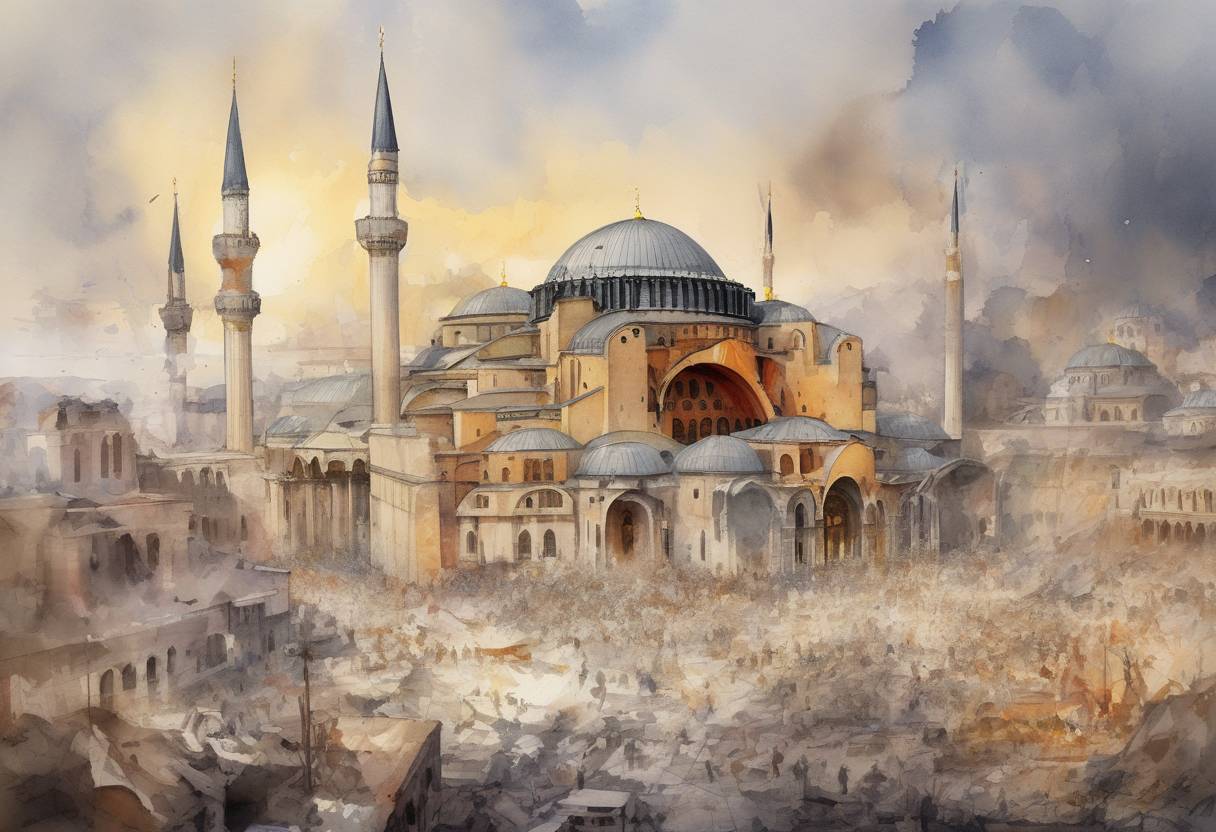
On December 14, 557, a devastating earthquake struck the city of Constantinople, the capital of the Byzantine Empire. This seismic event is notable not only for its immediate impact on the city but also for its historical significance, particularly concerning the Hagia Sophia, one of the most iconic structures of the ancient world.
Constantinople, known today as Istanbul, was a thriving metropolis and the heart of the Byzantine Empire. It was a center of trade, culture, and religion, boasting impressive architectural feats, including the Hagia Sophia, which served as the cathedral of the city. The Hagia Sophia, completed in 537 under the reign of Emperor Justinian I, was renowned for its massive dome and was considered an engineering marvel of its time.
The earthquake of December 14, 557, was one of several seismic events that affected the region during this period. It struck with considerable force, causing widespread destruction throughout Constantinople. The tremors were so severe that they led to the partial collapse of the dome of the Hagia Sophia, a significant architectural and symbolic loss for the empire.
The damage to the Hagia Sophia was particularly significant. The dome, which had been a testament to Byzantine architectural ingenuity, suffered a major collapse. This event underscored the challenges of constructing large domes in an era without modern engineering techniques. The collapse necessitated extensive repairs, which were undertaken by the renowned architect Isidore the Younger, the nephew of one of the original architects, Isidore of Miletus. The reconstruction efforts included reinforcing the structure and raising the height of the dome to improve its stability.
The earthquake had far-reaching consequences for Constantinople and the Byzantine Empire. The damage to the Hagia Sophia was a blow to the prestige of the empire, but the successful reconstruction of the dome, completed in 562, restored its status as a symbol of Byzantine resilience and ingenuity. The event also highlighted the vulnerability of the city to natural disasters, prompting future emperors to invest in more robust construction techniques and urban planning to mitigate the effects of such calamities.
The earthquake of 557 is a reminder of the challenges faced by ancient civilizations in dealing with natural disasters. It also illustrates the importance of architectural innovation and adaptation in the face of adversity. The Hagia Sophia, with its reconstructed dome, continued to stand as a beacon of Byzantine culture and religious life for centuries, influencing architectural styles and religious structures throughout the Christian and Islamic worlds.
In summary, the earthquake of December 14, 557, was a pivotal moment in the history of Constantinople, demonstrating both the fragility and resilience of one of the ancient world’s greatest cities.
Source: en.wikipedia.org