The Ratification of the 19th Amendment: August 18, 1920
1920 · Washington, D.C., United States
The 19th Amendment to the United States Constitution was ratified, granting women the right to vote.
August 26, 1920
The 19th Amendment to the United States Constitution was certified, granting women the right to vote.
Washington, D.C., United States | U.S. Government
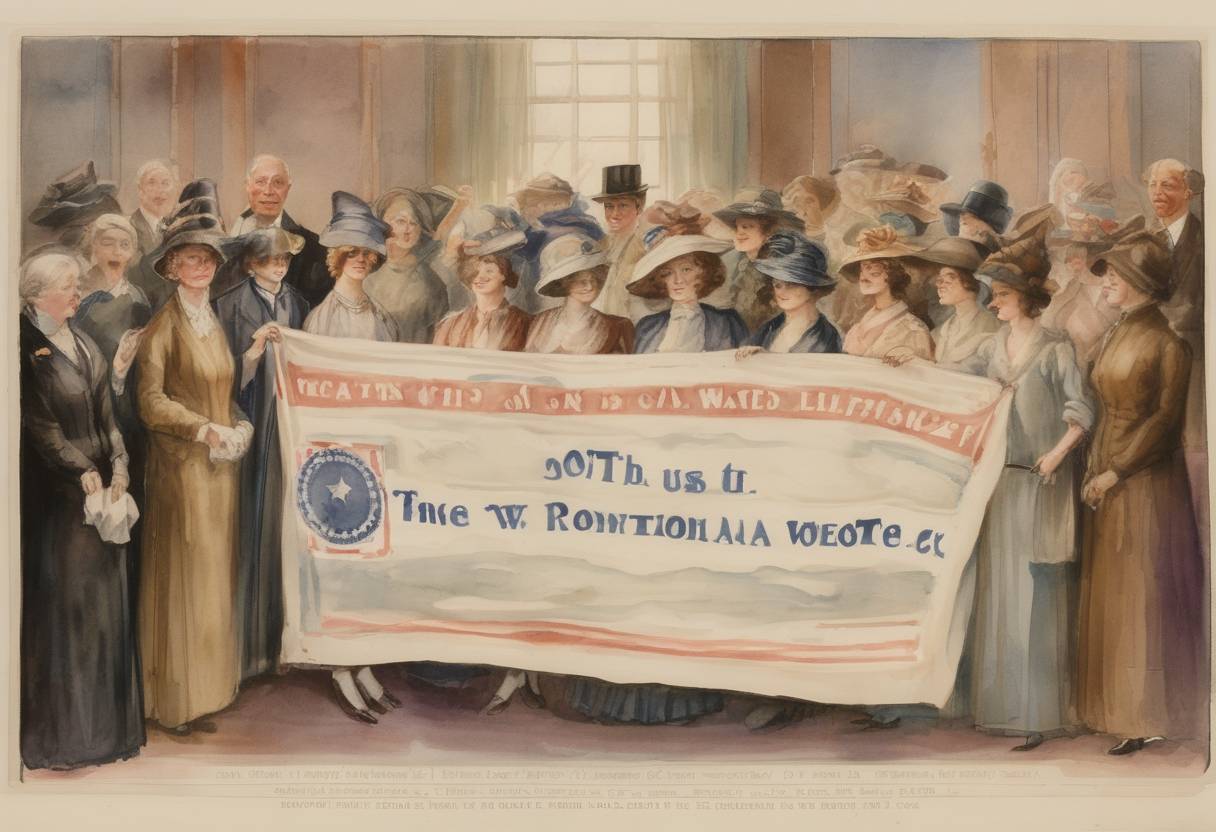
On August 26, 1920, the 19th Amendment to the United States Constitution was certified, marking a pivotal moment in American history by granting women the right to vote. This event was the culmination of a decades-long struggle for women’s suffrage, led by determined activists and organizations.
The movement for women’s suffrage in the United States began in earnest in the mid-19th century. The Seneca Falls Convention of 1848 is often cited as the starting point, where activists like Elizabeth Cady Stanton and Lucretia Mott called for equal rights for women, including the right to vote. Over the following decades, suffragists employed various strategies, from lobbying and petitioning to organizing parades and protests.
Key organizations such as the National American Woman Suffrage Association (NAWSA), led by figures like Susan B. Anthony and Carrie Chapman Catt, and the more militant National Woman’s Party, led by Alice Paul, played crucial roles in advocating for women’s voting rights.
The 19th Amendment was first introduced to Congress in 1878 but faced significant opposition. It wasn’t until after World War I, when women’s contributions to the war effort highlighted their role in society, that momentum for the amendment increased. President Woodrow Wilson eventually supported the amendment, recognizing the changing public sentiment.
The amendment passed the U.S. House of Representatives on May 21, 1919, and the Senate on June 4, 1919. It then required ratification by three-fourths of the states. Tennessee became the crucial 36th state to ratify the amendment on August 18, 1920, ensuring its adoption into the Constitution.
On August 26, 1920, U.S. Secretary of State Bainbridge Colby certified the 19th Amendment, officially granting women the right to vote. The text of the amendment is simple yet profound:
“The right of citizens of the United States to vote shall not be denied or abridged by the United States or by any State on account of sex.”
The certification of the 19th Amendment was a landmark victory for the women’s suffrage movement and a significant step toward gender equality in the United States. It enfranchised millions of women, fundamentally altering the American electorate and paving the way for future advancements in women’s rights.
The passage of the 19th Amendment had far-reaching implications. It not only empowered women politically but also inspired further social and political activism. The amendment laid the groundwork for subsequent civil rights movements and highlighted the importance of constitutional amendments as tools for social change.
While the 19th Amendment was a monumental achievement, it did not guarantee voting rights for all women, particularly women of color, who continued to face discriminatory practices. The struggle for universal suffrage and equality would persist, leading to further legislative and social reforms in the decades to follow.
The certification of the 19th Amendment remains a testament to the power of grassroots activism and the enduring fight for equality and justice in American history.
Source: en.wikipedia.org