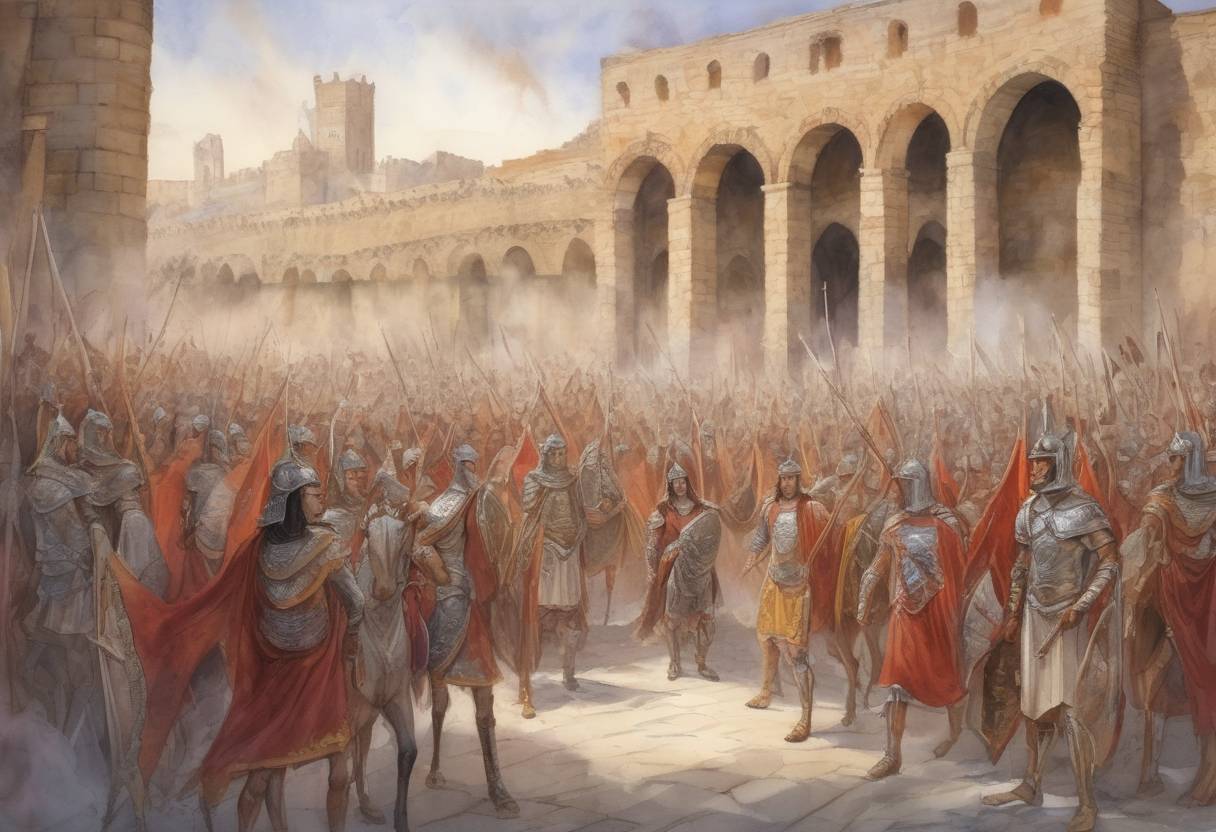
Chindasuinth Proclaimed King of the Visigoths
On April 30, 642, Chindasuinth was proclaimed king of the Visigoths in Hispania, marking a significant moment in the history of the Visigothic Kingdom. This event occurred during a period of political instability and internal strife within the kingdom, which had been a dominant power in the Iberian Peninsula since the early 5th century.
Background
The Visigothic Kingdom, established after the decline of Roman authority in Western Europe, had its capital initially in Toulouse and later in Toledo. By the 7th century, the kingdom faced numerous challenges, including internal power struggles, external threats, and religious tensions between Arian Christians and the increasingly influential Catholic Church.
Chindasuinth was a nobleman and military leader, known for his experience and capability. Prior to his ascension, the Visigothic throne had been occupied by King Tulga, whose reign was perceived as weak and ineffective in dealing with the kingdom’s challenges.
Ascension to the Throne
Chindasuinth’s rise to power was marked by a coup against King Tulga. At the age of 79, Chindasuinth was proclaimed king by a faction of nobles and military leaders who sought a strong and decisive ruler to restore stability and order. His ascension was not without controversy, as it involved the deposition of Tulga, which was a breach of the traditional hereditary succession.
Reign and Policies
Once in power, Chindasuinth implemented a series of reforms aimed at consolidating his authority and strengthening the kingdom:
- Centralization of Power: He worked to centralize power, reducing the influence of the nobility and increasing the authority of the monarchy.
- Legal Reforms: Chindasuinth is credited with initiating legal reforms that culminated in the Visigothic Code, which sought to unify the legal systems of the Visigoths and the Hispano-Roman population.
- Suppression of Dissent: His reign was marked by harsh measures against potential rivals and dissenters, including executions and confiscations of property, to eliminate threats to his rule.
Legacy
Chindasuinth’s reign laid the groundwork for a more centralized and unified Visigothic state. His efforts to strengthen the monarchy and his legal reforms had lasting impacts on the kingdom. He ruled until his death in 653, after which his son, Recceswinth, succeeded him, continuing many of his father’s policies.
Chindasuinth’s rule is often viewed as a turning point in the history of the Visigothic Kingdom, as it marked a shift towards greater royal authority and the integration of diverse populations within the kingdom. His reign is a testament to the complex dynamics of power, law, and governance in early medieval Europe.