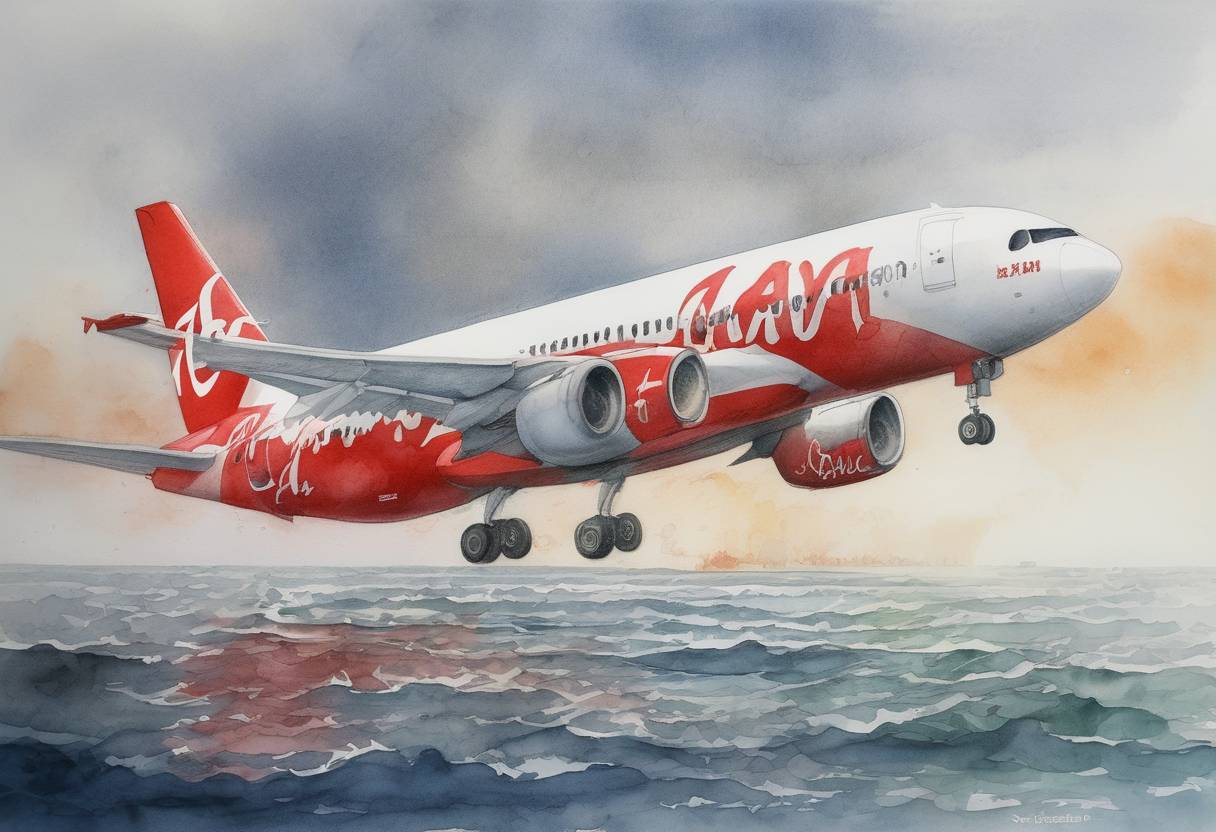
Indonesia AirAsia Flight 8501 Crash
Overview
On December 28, 2014, Indonesia AirAsia Flight 8501 tragically crashed into the Java Sea while en route from Surabaya, Indonesia, to Singapore. The disaster resulted in the loss of all 162 passengers and crew members on board.
Flight Details
- Aircraft: The flight was operated by an Airbus A320-216.
- Departure: Juanda International Airport, Surabaya, Indonesia.
- Destination: Changi Airport, Singapore.
- Passengers and Crew: 155 passengers and 7 crew members.
Sequence of Events
- Departure: The flight took off at approximately 5:35 AM local time.
- Weather Conditions: The aircraft encountered severe weather, including thunderstorms, which are common in the region during the monsoon season.
- Last Contact: The last communication from the cockpit was at 6:12 AM, when the pilots requested a deviation from their flight path to avoid the weather.
- Loss of Contact: Air traffic control lost contact with the aircraft shortly after the request.
Search and Recovery
- Search Efforts: A multinational search operation was launched, involving Indonesia, Singapore, Malaysia, and other countries.
- Wreckage Found: On December 30, 2014, debris and bodies were located in the Karimata Strait, part of the Java Sea.
- Black Boxes: The flight data recorder and cockpit voice recorder were recovered in January 2015, providing crucial information for the investigation.
Investigation and Findings
- Conducted by: The investigation was led by Indonesia’s National Transportation Safety Committee (NTSC).
- Key Findings:
- The crash was attributed to a combination of technical and human factors.
- A malfunction in the aircraft’s rudder control system was identified, which had been reported multiple times in the months leading up to the crash.
- The pilots’ response to the malfunction was inadequate, leading to a loss of control of the aircraft.
Aftermath and Impact
- Safety Recommendations: The investigation led to several safety recommendations, including improvements in pilot training and aircraft maintenance procedures.
- AirAsia’s Response: AirAsia reviewed and enhanced its operational and safety protocols.
- Regulatory Changes: The incident prompted regulatory bodies to re-evaluate safety standards and protocols for handling in-flight emergencies.
Broader Significance
The crash of Indonesia AirAsia Flight 8501 highlighted the critical importance of addressing technical faults promptly and ensuring rigorous pilot training to handle unexpected situations. It also underscored the challenges of flying in regions prone to severe weather and the need for robust communication between pilots and air traffic control during emergencies.