U.S. Military Withdrawal from Afghanistan - August 30, 2021
2021 · Kabul, Afghanistan
The United States completed its military withdrawal from Afghanistan, ending its 20-year presence in the country following the Taliban's rapid takeover.
October 21, 2001
The United States and its allies began a major military offensive in Afghanistan, targeting Taliban and al-Qaeda forces as part of Operation Enduring Freedom.
Kabul, Afghanistan | United States Armed Forces
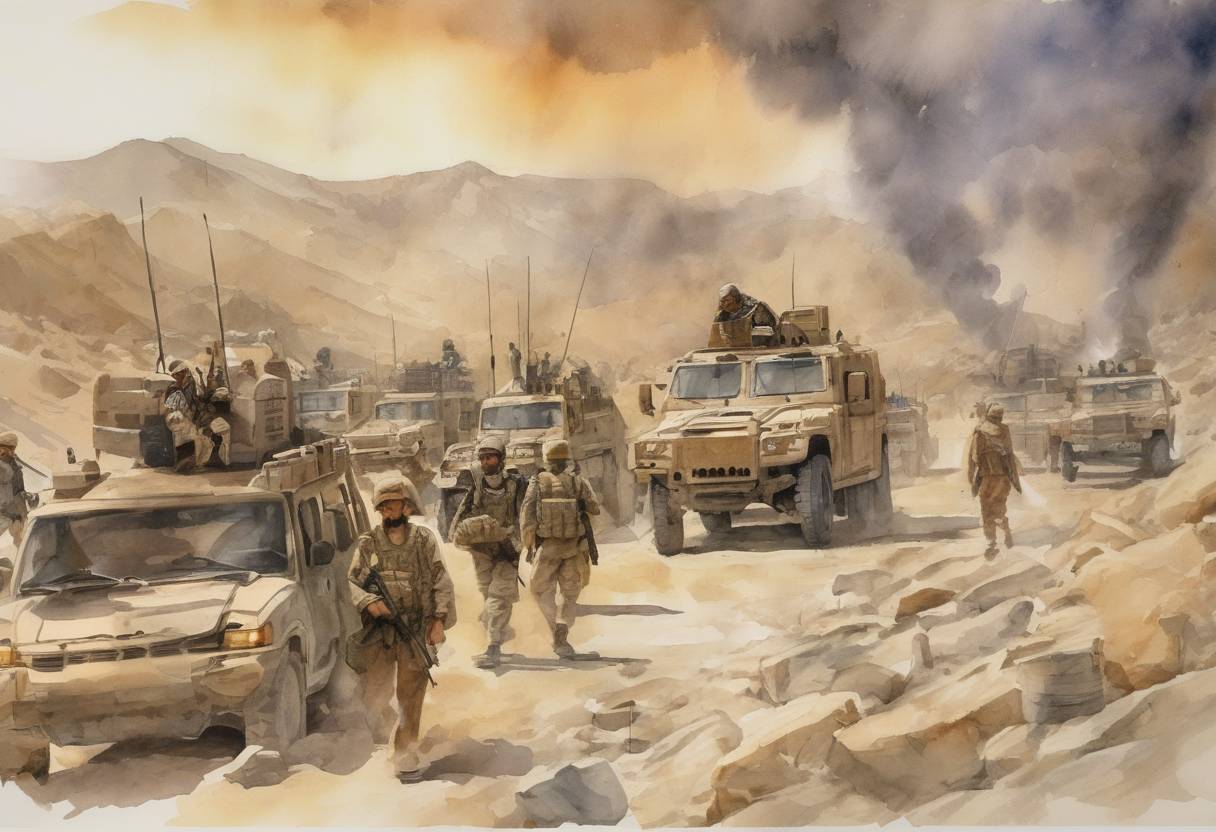
On October 21, 2001, the United States, alongside its allies, launched a significant military offensive in Afghanistan, marking the commencement of Operation Enduring Freedom. This operation was a direct response to the September 11 terrorist attacks orchestrated by the al-Qaeda network, which had found sanctuary under the Taliban regime in Afghanistan.
September 11 Attacks: On September 11, 2001, al-Qaeda terrorists hijacked four commercial airplanes, crashing them into the World Trade Center in New York City, the Pentagon in Arlington, Virginia, and a field in Pennsylvania. These attacks resulted in nearly 3,000 deaths and prompted a global outcry against terrorism.
Taliban Regime: The Taliban, an Islamist militant group, had been in control of Afghanistan since 1996. They provided safe haven to Osama bin Laden and al-Qaeda, allowing them to operate training camps within the country.
U.S. Demands: Following the attacks, the U.S. demanded that the Taliban hand over bin Laden and dismantle terrorist training camps. The Taliban’s refusal to comply led to the decision to initiate military action.
Coalition Forces: The operation was spearheaded by the United States, with significant contributions from the United Kingdom, and support from other NATO allies and non-NATO countries. The coalition aimed to dismantle al-Qaeda and remove the Taliban from power.
Airstrikes and Ground Operations: The offensive began with a series of airstrikes targeting Taliban military installations, al-Qaeda training camps, and infrastructure. This was followed by ground operations involving special forces and allied Afghan groups, such as the Northern Alliance.
Rapid Advances: The coalition forces quickly gained ground, capturing key cities like Kabul and Kandahar. By December 2001, the Taliban regime had collapsed, and al-Qaeda operatives were on the run.
Interim Government: In December 2001, the Bonn Agreement led to the establishment of an interim Afghan government, headed by Hamid Karzai. This marked the beginning of efforts to rebuild Afghanistan’s political structure.
Continued Conflict: Despite the initial success, the conflict in Afghanistan persisted for years. The Taliban regrouped and launched an insurgency against the Afghan government and coalition forces, leading to a prolonged military engagement.
Global War on Terror: Operation Enduring Freedom was a pivotal moment in the broader “Global War on Terror,” influencing U.S. foreign policy and military strategy for years to come.
Operation Enduring Freedom marked a significant shift in international relations and military strategy in the 21st century. It underscored the challenges of combating non-state actors and highlighted the complexities of nation-building efforts in post-conflict regions. The operation also had lasting implications for U.S. domestic and foreign policy, including debates over military intervention, counterterrorism strategies, and international cooperation.
The events of October 21, 2001, set the stage for a complex and enduring conflict that would shape global geopolitics for decades.
Source: www.britannica.com