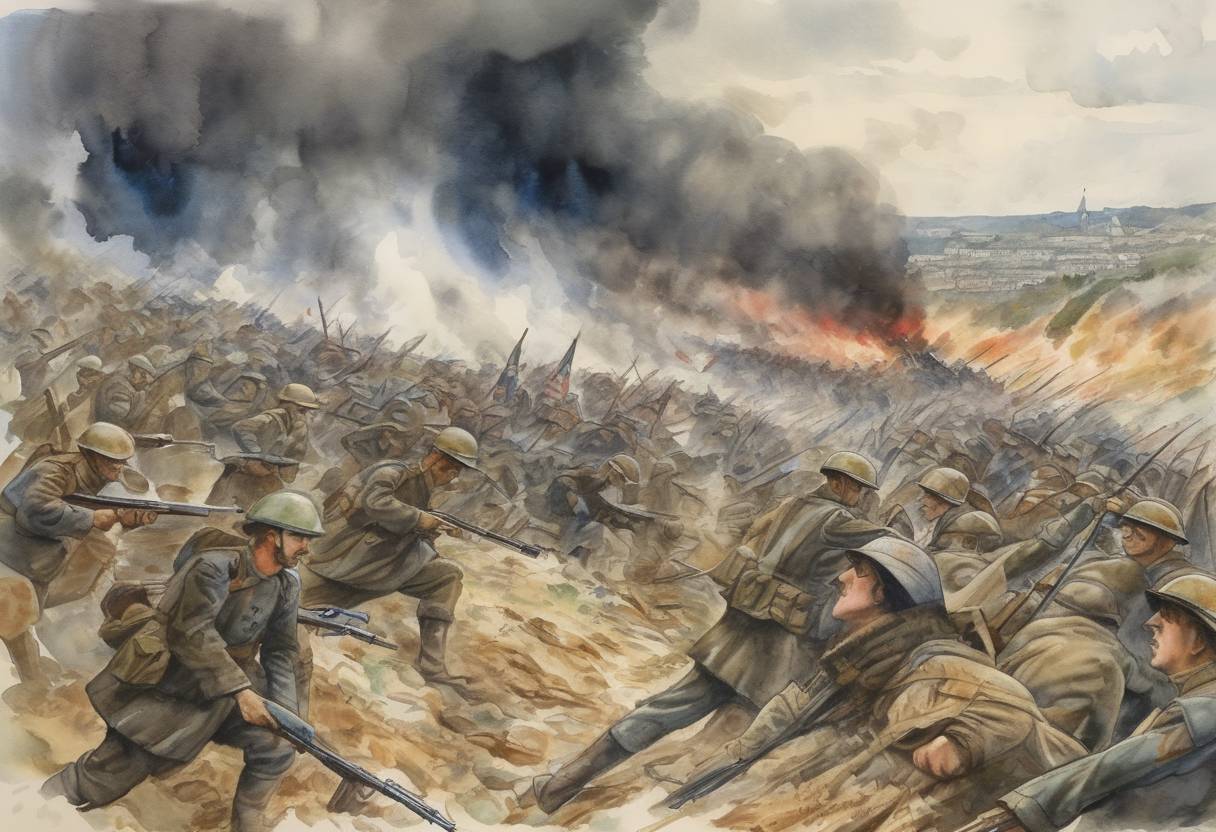
The Battle of Verdun Ends: December 18, 1916
The Battle of Verdun, one of the longest and most grueling engagements of World War I, concluded on December 18, 1916, with a French victory over German forces. This battle, which lasted for nearly 10 months, from February 21 to December 18, 1916, became a symbol of French determination and resilience.
Context and Prelude
- Strategic Importance: Verdun was chosen by the German Chief of General Staff, Erich von Falkenhayn, as the focal point of a major offensive. The city held significant strategic and symbolic value for the French, and Falkenhayn believed that capturing Verdun would bleed France white, weakening its military and morale.
- Initial Assault: The German offensive began on February 21, 1916, with a massive artillery bombardment, followed by an infantry advance. The Germans aimed to capture the high ground surrounding Verdun, which would allow them to dominate the region.
Key Events
- French Defense: Under the leadership of General Philippe Pétain, the French forces adopted a defensive strategy, famously declaring, “They shall not pass” (“Ils ne passeront pas”). Pétain organized a continuous supply line known as the “Voie Sacrée” (Sacred Way) to ensure the flow of troops and materials to the front.
- Attrition Warfare: The battle devolved into a war of attrition, with both sides suffering heavy casualties. The French and German armies engaged in relentless trench warfare, with the front lines shifting back and forth but with no decisive breakthrough.
- Counteroffensive: By the summer of 1916, the French began to regain lost ground. General Robert Nivelle, who succeeded Pétain, launched a series of counterattacks in the fall, gradually pushing the German forces back.
Conclusion and Aftermath
- French Victory: On December 18, 1916, the French forces successfully recaptured the last of the lost forts and positions, marking the end of the battle. The French victory at Verdun was a significant morale booster for the Allies.
- Casualties: The battle resulted in approximately 700,000 casualties, with both sides suffering heavily. Verdun became a symbol of the futility and horror of trench warfare.
- Historical Significance: The Battle of Verdun demonstrated the resilience of the French army and the limitations of attrition warfare. It also influenced subsequent military strategies and highlighted the need for more innovative tactics in the war.
The Battle of Verdun remains one of the most iconic and tragic episodes of World War I, remembered for its immense human cost and the indomitable spirit of those who fought there.