Bombing of Vatican City - November 5, 1943
1943 · Vatican City, Vatican City
During World War II, Vatican City was bombed and struck by a single bomb. There was no significant damage and it's unclear which side was responsible.
June 7, 1929
The Lateran Treaty was ratified, establishing Vatican City as an independent sovereign state.
Vatican City, Vatican City | Holy See
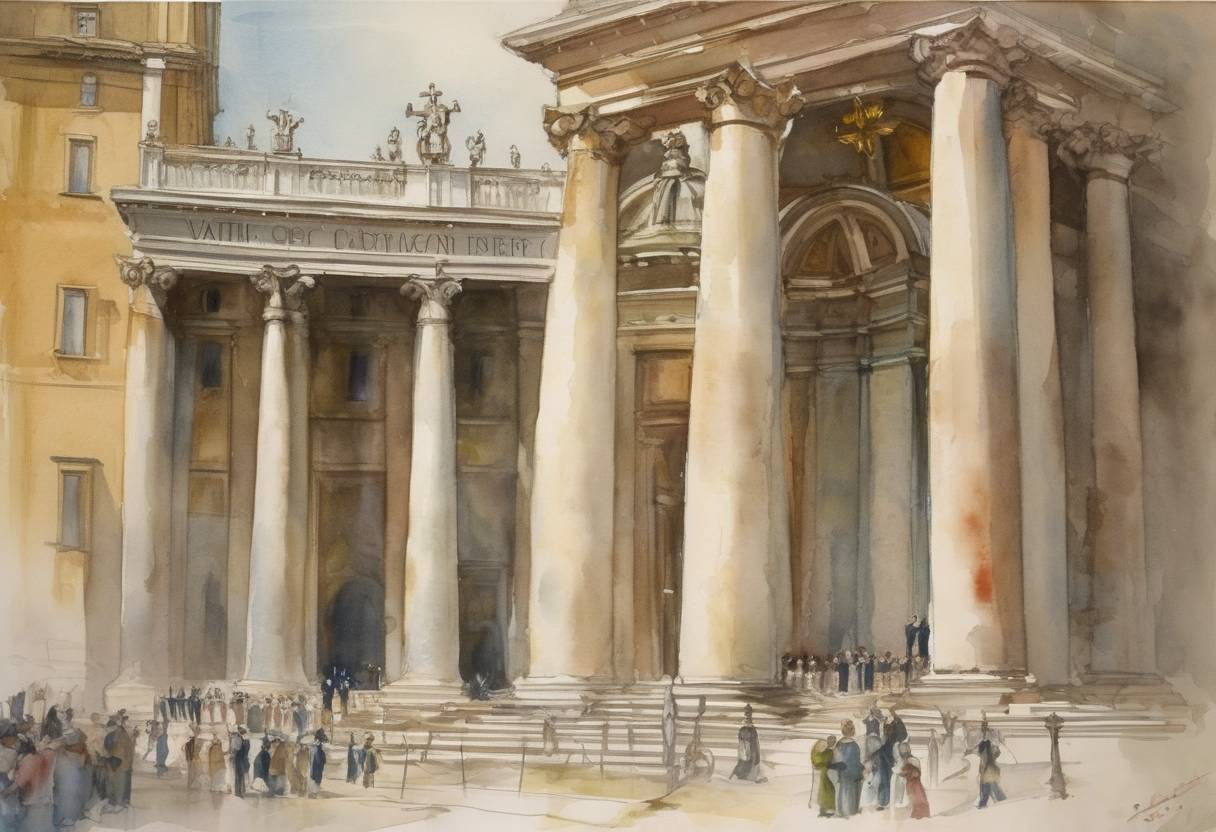
On June 7, 1929, the Lateran Treaty was officially ratified, marking a significant moment in the history of Italy and the Catholic Church. This treaty established Vatican City as an independent sovereign state, resolving the “Roman Question” that had persisted since the unification of Italy in the 19th century.
The unification of Italy in the 1860s led to the annexation of the Papal States, leaving the Pope without temporal power and creating tension between the Italian state and the Catholic Church. This situation, known as the “Roman Question,” persisted for decades, with Popes considering themselves “prisoners” in the Vatican.
The Lateran Treaty was a result of negotiations between the Holy See and the Kingdom of Italy, led by Benito Mussolini. The treaty was signed on February 11, 1929, by Cardinal Secretary of State Pietro Gasparri for the Holy See and Prime Minister Benito Mussolini for Italy. It consisted of three main components:
Treaty of Conciliation: Recognized the full sovereignty of the Holy See in the Vatican City, a territory of approximately 44 hectares (110 acres), making it the smallest independent state in the world.
Financial Convention: Provided the Vatican with financial compensation for the loss of the Papal States, amounting to 750 million lire and 1 billion lire in Italian government bonds.
Concordat: Regulated the relationship between the Italian state and the Catholic Church, granting the Church certain privileges and recognizing Catholicism as the state religion of Italy.
The ratification of the Lateran Treaty on June 7, 1929, was a landmark event that resolved longstanding tensions between the Italian state and the Catholic Church. It established Vatican City as an independent entity, allowing the Pope to exercise spiritual and temporal authority without interference from the Italian government.
The treaty also had broader implications for church-state relations in Italy, as it recognized the Catholic Church’s influence in Italian society while also delineating the boundaries of its temporal power. The Concordat remained in effect until it was revised in 1984, reflecting changes in Italian society and the Church’s role within it.
Overall, the Lateran Treaty was a pivotal moment in 20th-century history, shaping the relationship between the Catholic Church and modern nation-states and establishing a model for resolving similar conflicts elsewhere.
Source: en.wikipedia.org