Super Blood Wolf Moon: Total Lunar Eclipse on January 21, 2019
2019 · Various, Various
A total lunar eclipse, also known as a 'super blood wolf moon', was visible across North and South America, Europe, and Africa.
December 21, 2020
The Great Conjunction of Jupiter and Saturn occurs, where the two planets appear closest together in the sky since 1623, an event sometimes referred to as the 'Christmas Star'.
Various, Various | NASA
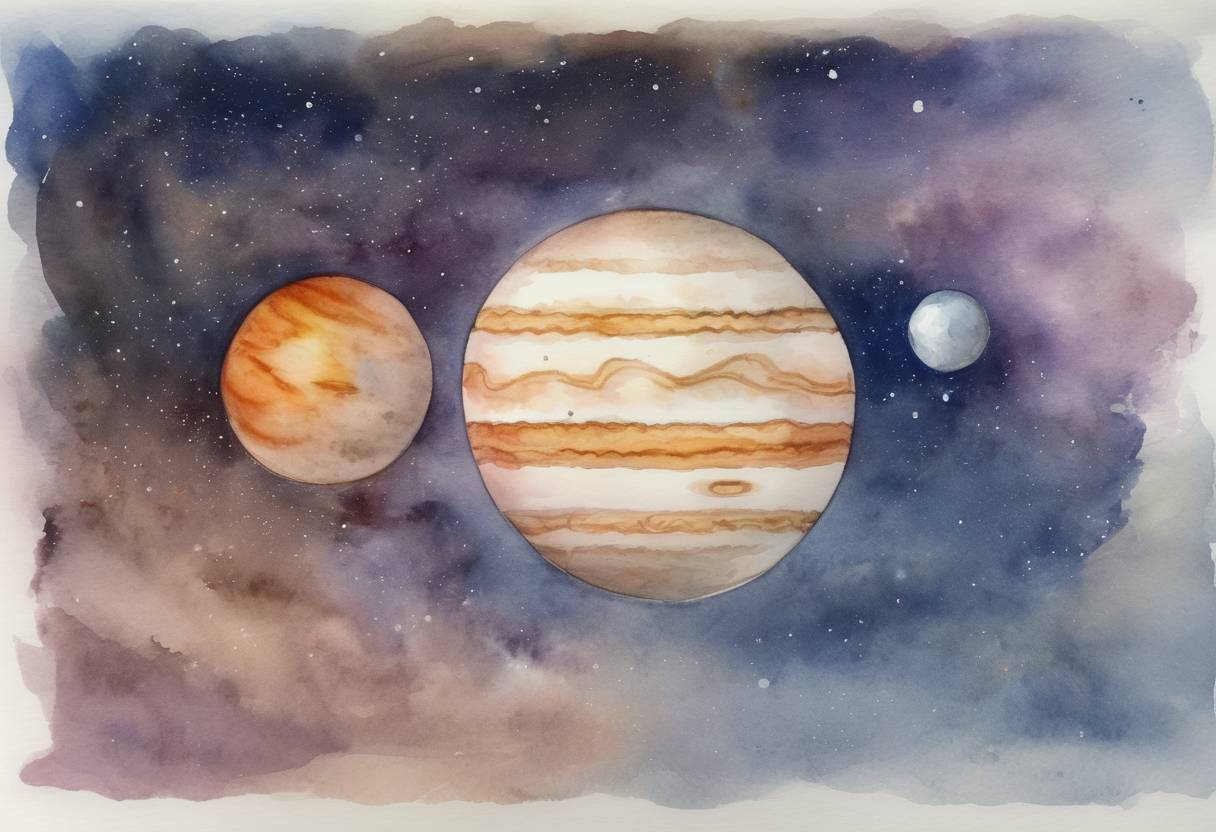
On December 21, 2020, a rare astronomical event known as the Great Conjunction occurred, where the planets Jupiter and Saturn appeared closest together in the sky since 1623. This event was sometimes referred to as the “Christmas Star” due to its proximity to the Christmas holiday and its striking appearance in the night sky.
The Great Conjunction is a celestial event that happens approximately every 20 years when Jupiter and Saturn, the two largest planets in our solar system, align closely in the sky from Earth’s perspective. While conjunctions between these two planets are not uncommon, the 2020 event was particularly notable for the closeness of the alignment.
Date and Visibility: The conjunction reached its peak on December 21, 2020. It was visible shortly after sunset in the southwestern sky, making it accessible to viewers around the world without the need for telescopes.
Proximity: During this conjunction, Jupiter and Saturn appeared just 0.1 degrees apart, which is roughly one-fifth the diameter of a full moon. This was the closest alignment since July 16, 1623, although that event was difficult to observe due to its proximity to the sun.
Significance: The 2020 conjunction was the closest observable alignment since March 4, 1226. Such close conjunctions are rare, making this event a significant occurrence for astronomers and skywatchers alike.
Previous Conjunctions: While conjunctions occur every two decades, the visibility and proximity vary. The 1623 conjunction was not widely observed due to its position in the sky. The next closest observable conjunction after 2020 will occur on March 15, 2080.
Cultural Impact: The term “Christmas Star” was popularized due to the timing of the event near the winter solstice and the holiday season. Some speculated on its resemblance to the Star of Bethlehem described in the Nativity story, although this is more of a cultural association than a scientific one.
Astronomical Interest: The 2020 Great Conjunction sparked widespread interest in astronomy, encouraging people to look up and engage with the night sky. It served as a reminder of the dynamic nature of our solar system and the periodic celestial events that have fascinated humans for centuries.
Technological Advancements: Modern technology, including telescopes and cameras, allowed for detailed observations and recordings of the event, providing valuable data for astronomers and enhancing public engagement through social media and online platforms.
In summary, the Great Conjunction of December 21, 2020, was a remarkable astronomical event that captured the imagination of people worldwide, offering a rare glimpse of two giant planets appearing almost as one in the night sky.
Source: www.nasa.gov