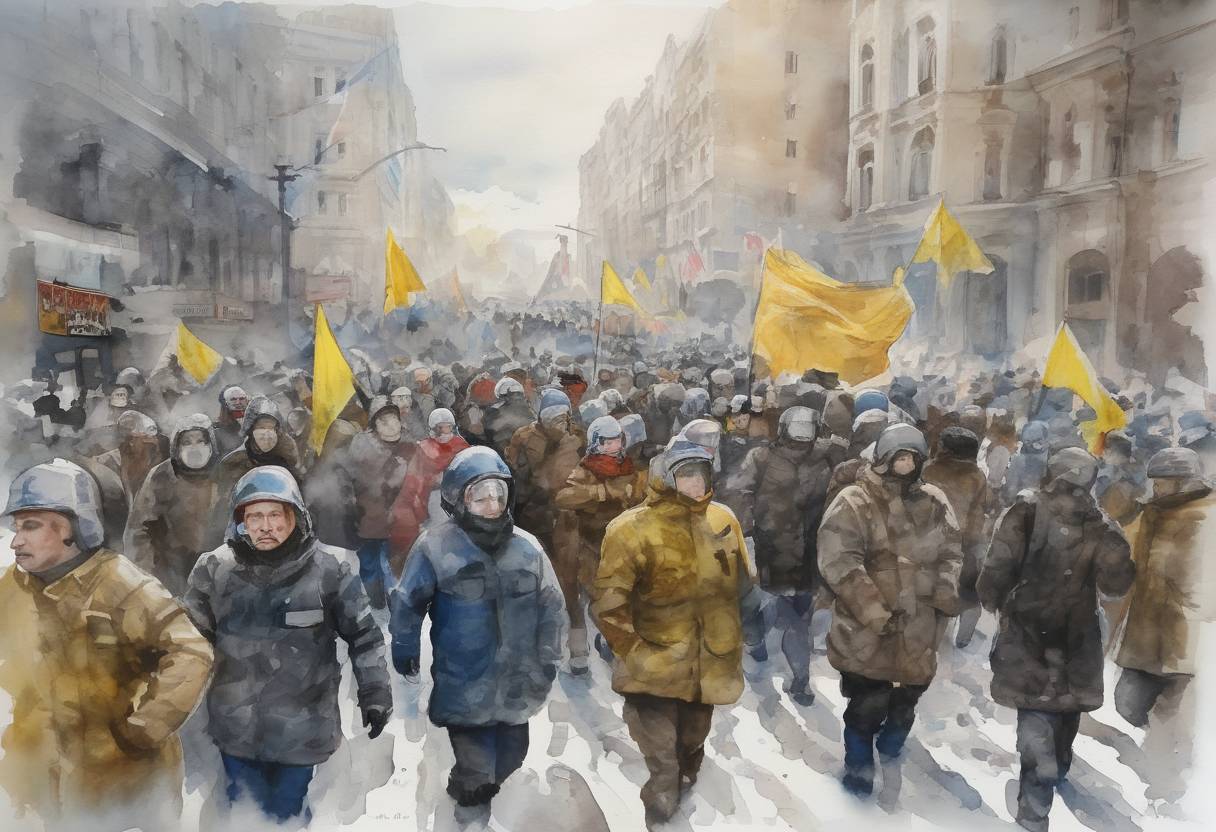
Euromaidan Protests in Kyiv - December 8, 2013
On December 8, 2013, a significant event unfolded in Kyiv, Ukraine, as part of the broader Euromaidan movement. This movement was characterized by mass protests demanding closer European integration and the resignation of then-President Viktor Yanukovych. The protests on this day were a pivotal moment in the ongoing demonstrations that had begun in late November 2013.
Background
The Euromaidan movement was sparked by President Yanukovych’s decision to suspend the signing of an association agreement with the European Union, opting instead to strengthen ties with Russia. This decision was met with widespread disapproval among many Ukrainians, who saw European integration as a path to economic growth, democratic reforms, and a break from Russia’s influence.
Key Events on December 8, 2013
Massive Demonstrations: On December 8, hundreds of thousands of protesters gathered in Kyiv’s Independence Square (Maidan Nezalezhnosti) and surrounding areas. This was one of the largest gatherings since the protests began, demonstrating the growing momentum and public support for the movement.
Symbolic Acts: Protesters toppled a statue of Vladimir Lenin on Shevchenko Boulevard, a symbolic act representing a rejection of Soviet and Russian influence in Ukraine. This act was emblematic of the protesters’ desire for a new direction for the country.
Peaceful Protests: Despite the large turnout, the protests on this day were largely peaceful. Demonstrators carried Ukrainian and EU flags, chanted slogans, and listened to speeches from opposition leaders and activists.
Broader Context
The Euromaidan protests were not just about the EU agreement; they reflected deeper frustrations with corruption, economic stagnation, and perceived authoritarianism under Yanukovych’s government. The movement attracted a diverse coalition, including students, civil society groups, and political opposition parties.
Aftermath and Consequences
The events of December 8, 2013, were part of a series of escalating protests that eventually led to significant political changes in Ukraine:
Government Response: The Yanukovych administration initially responded with attempts to suppress the protests through police force, leading to violent clashes in subsequent months.
Political Change: The sustained protests eventually culminated in February 2014 with the ousting of President Yanukovych, who fled to Russia. This led to the establishment of a new interim government and set Ukraine on a path toward greater alignment with the European Union.
Long-term Impact: The Euromaidan movement had lasting impacts on Ukraine’s political landscape, contributing to ongoing tensions with Russia, particularly regarding the annexation of Crimea and the conflict in Eastern Ukraine.
The events of December 8, 2013, were a crucial chapter in the Euromaidan movement, highlighting the Ukrainian people’s desire for change and their commitment to a European future.