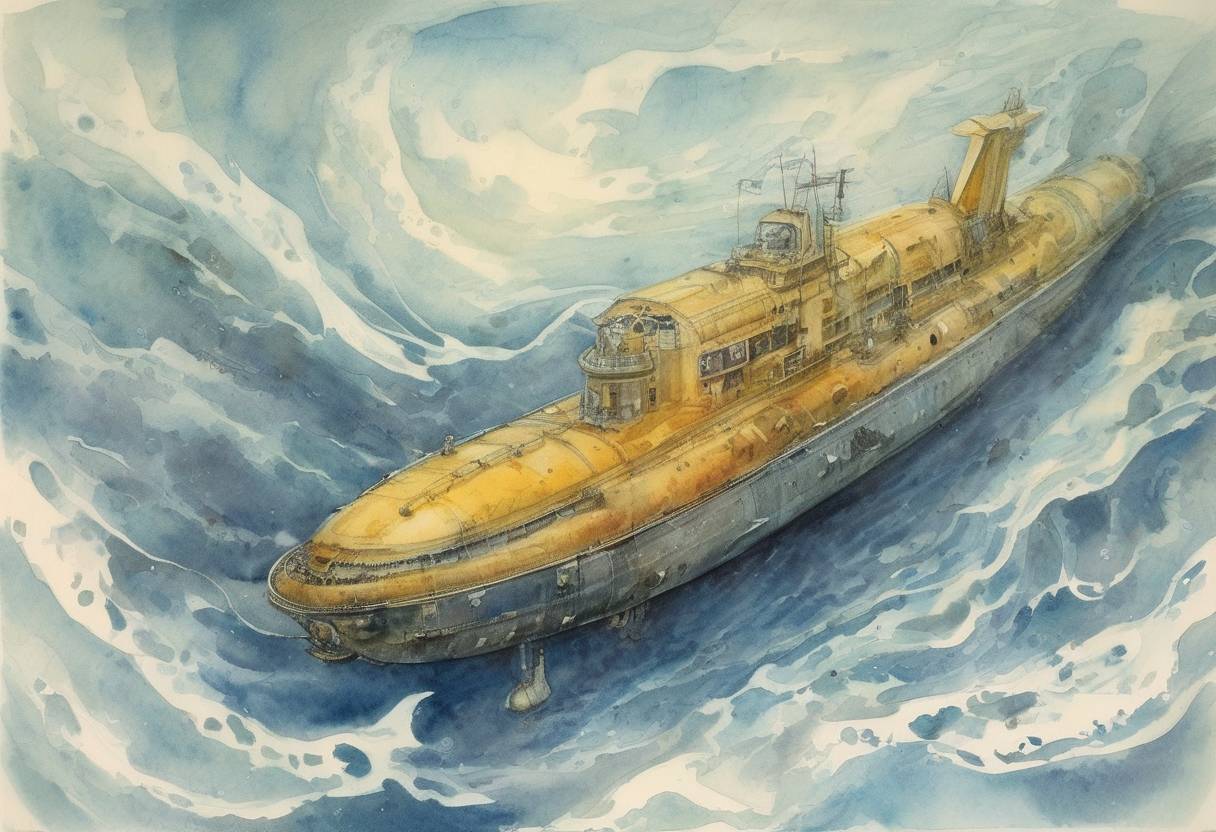
Descent of the Bathyscaphe Trieste to the Challenger Deep
On January 23, 1960, the bathyscaphe Trieste achieved a historic milestone by descending to the bottom of the Challenger Deep, the deepest known point in the Earth’s oceans, located in the Mariana Trench. This remarkable feat marked a significant achievement in the field of oceanography and deep-sea exploration.
Background
The Bathyscaphe Trieste: Designed by Swiss scientist Auguste Piccard, the Trieste was a deep-diving research submersible. It was later purchased by the United States Navy, which saw its potential for deep-sea exploration.
Challenger Deep: Situated in the western Pacific Ocean, the Challenger Deep is the deepest part of the Mariana Trench and the Earth’s oceans, with a depth of approximately 10,994 meters (36,070 feet).
The Descent
Crew: The Trieste was manned by two brave explorers, Jacques Piccard, son of Auguste Piccard, and U.S. Navy Lieutenant Don Walsh.
Journey Details: The descent began early in the morning and took nearly five hours to reach the ocean floor. The Trieste was equipped with a specially designed pressure sphere to withstand the immense pressure at such depths.
Challenges: The extreme pressure at the bottom of the Challenger Deep is over 1,000 times the standard atmospheric pressure at sea level. The Trieste had to be meticulously engineered to endure these conditions.
Achievements and Observations
Depth Reached: The Trieste successfully reached a depth of approximately 10,916 meters (35,814 feet), setting a record for the deepest manned dive.
Observations: Upon reaching the ocean floor, Piccard and Walsh observed a flat, muddy seabed and noted the presence of marine life, including a type of flatfish, which challenged existing beliefs about life at such depths.
Aftermath and Significance
Scientific Impact: The successful dive of the Trieste provided invaluable data about the deep ocean environment and demonstrated that life could exist in extreme conditions.
Legacy: The mission paved the way for future deep-sea exploration and inspired subsequent generations of oceanographers and engineers to explore the mysteries of the deep ocean.
Recognition: The achievement of Piccard and Walsh was celebrated worldwide, highlighting the potential of human ingenuity and technology in exploring the unknown.
The descent of the Trieste into the Challenger Deep remains a landmark event in the history of exploration, showcasing the spirit of adventure and the pursuit of knowledge that drives scientific discovery.