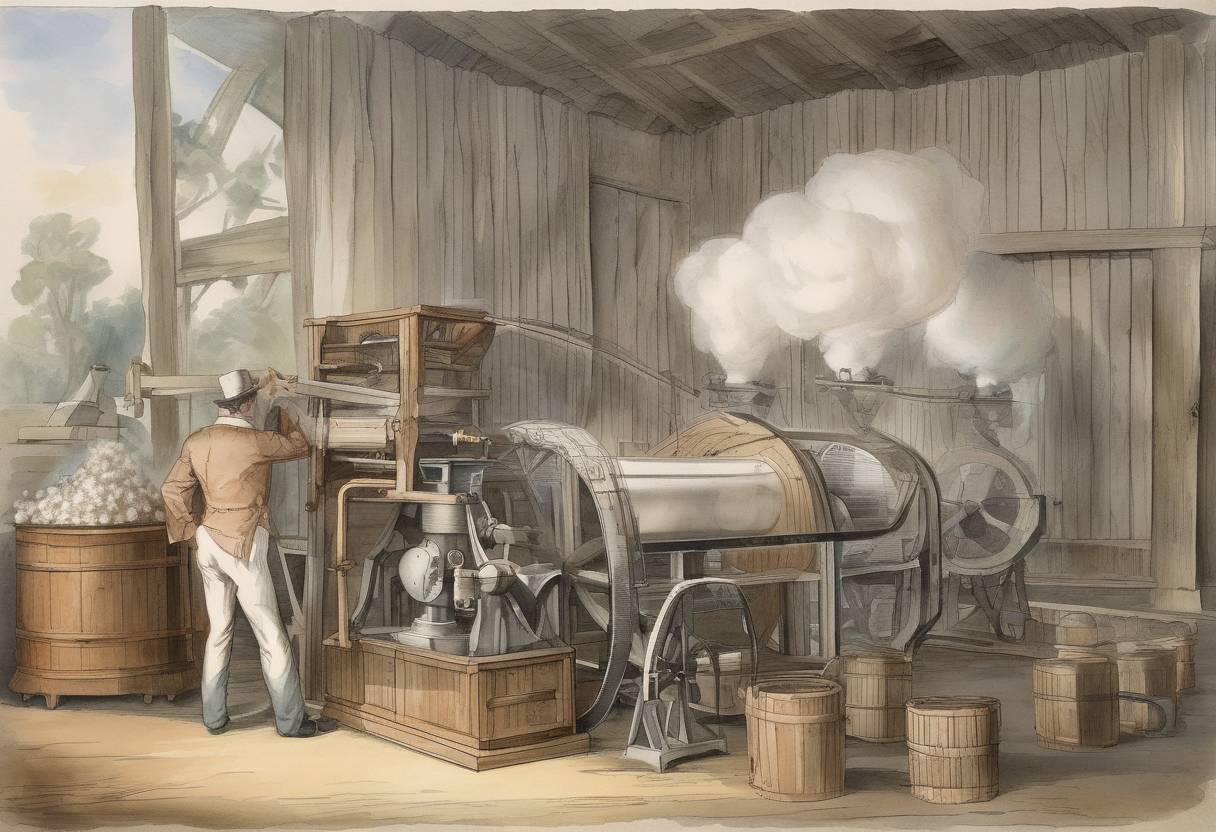
Eli Whitney and the Cotton Gin Patent: March 14, 1794
On March 14, 1794, Eli Whitney, an American inventor, was granted a patent for his invention of the cotton gin, a device that would revolutionize the cotton industry. This invention significantly expedited the process of separating cotton fibers from their seeds, transforming the agricultural landscape of the southern United States and having profound economic and social impacts.
Background
Before the invention of the cotton gin, the process of removing seeds from cotton fibers was labor-intensive and time-consuming. Workers could clean only about one pound of cotton per day by hand. This limitation restricted the production capacity and profitability of cotton as a cash crop.
Eli Whitney, born in 1765 in Massachusetts, graduated from Yale College in 1792. He moved to the South to work as a private tutor, where he learned about the difficulties faced by cotton farmers. Recognizing the need for a more efficient method of processing cotton, Whitney set out to create a machine that could automate the seed removal process.
The Invention
Whitney’s cotton gin, short for “cotton engine,” was a simple yet effective device. It used a combination of wire teeth mounted on a rotating cylinder to pull cotton fibers through a mesh. The mesh was fine enough to prevent seeds from passing through, effectively separating them from the fibers. This innovation allowed a single machine to clean as much cotton in one day as several workers could by hand.
Patent and Impact
Whitney was granted U.S. Patent No. 72-X on March 14, 1794. The cotton gin’s introduction had immediate and far-reaching effects:
Economic Boom: The cotton gin made cotton production vastly more profitable, leading to a boom in the cotton industry. The southern United States became a leading global cotton supplier, fueling the growth of the textile industry in both America and Europe.
Expansion of Slavery: Ironically, while the cotton gin reduced the need for labor in seed removal, it increased the demand for labor to plant and harvest the expanded cotton fields. This led to a significant expansion of slavery in the southern United States, as plantation owners sought to maximize their cotton output.
Industrial Growth: The increased availability of cotton as a raw material spurred industrial growth, particularly in the northern United States and Great Britain, where textile manufacturing was a major industry.
Challenges and Legacy
Despite the cotton gin’s success, Whitney faced numerous challenges in protecting his patent. The simplicity of the machine made it easy to replicate, and patent infringement was rampant. Legal battles ensued, and Whitney struggled to receive the financial rewards he deserved from his invention.
Nevertheless, the cotton gin remains a pivotal invention in American history. It not only transformed the agricultural economy but also had lasting social and economic consequences, contributing to the regional tensions that eventually led to the American Civil War.
Eli Whitney’s cotton gin exemplifies the profound impact that a single invention can have on society, shaping the course of history in ways that extend far beyond its initial purpose.