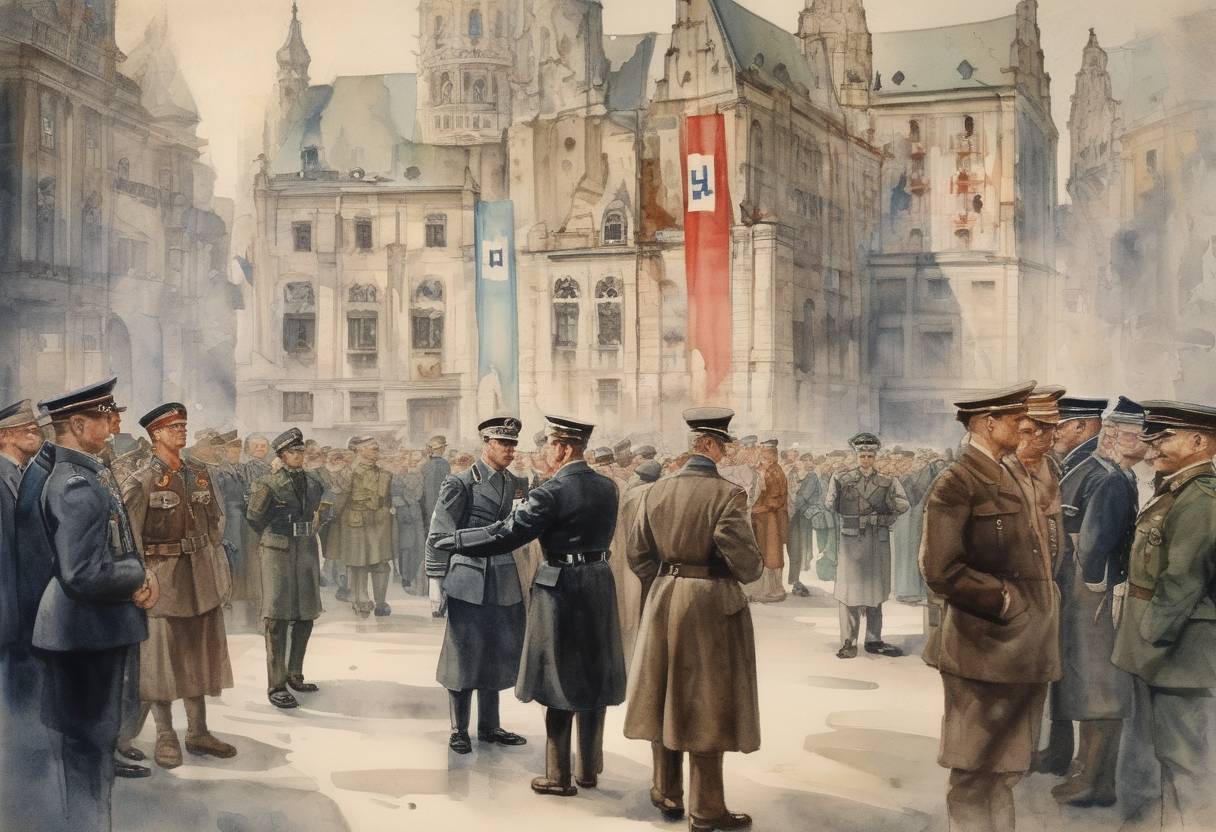
The Munich Agreement: September 30, 1938
The Munich Agreement, signed on September 30, 1938, was a pivotal moment in the lead-up to World War II. This accord was negotiated and signed by Germany, the United Kingdom, France, and Italy, and it permitted Nazi Germany’s annexation of the Sudetenland, a region of Czechoslovakia with a significant ethnic German population.
Context and Background
- Post-World War I Europe: The Treaty of Versailles (1919) had redrawn the map of Europe, creating new nations and altering borders. Czechoslovakia was one such nation, formed from parts of the former Austro-Hungarian Empire.
- Ethnic Tensions: The Sudetenland was home to approximately three million ethnic Germans, who were dissatisfied with their status in Czechoslovakia and sought greater autonomy or unification with Germany.
- Hitler’s Expansionist Policies: Adolf Hitler, who had risen to power in Germany in 1933, pursued aggressive expansionist policies aimed at uniting all ethnic Germans under the Third Reich. The Sudetenland became a focal point of his ambitions.
The Munich Conference
- Diplomatic Efforts: As tensions escalated, British Prime Minister Neville Chamberlain and French Premier Édouard Daladier sought to avoid another war by engaging in diplomacy with Hitler and Italian dictator Benito Mussolini.
- The Conference: The Munich Conference was held on September 29-30, 1938, in Munich, Germany. Notably, Czechoslovakia was not invited to participate in the discussions about its own territory.
- The Agreement: The resulting Munich Agreement allowed Germany to annex the Sudetenland. In exchange, Hitler promised no further territorial expansion. Chamberlain famously declared the agreement would bring “peace for our time.”
- Czechoslovakia’s Disintegration: The loss of the Sudetenland weakened Czechoslovakia both militarily and economically. It also emboldened separatist movements within the country.
- Appeasement Policy: The Munich Agreement is often cited as a prime example of the policy of appeasement, where concessions were made to dictatorial powers in an attempt to avoid conflict.
- False Sense of Security: While the agreement temporarily averted war, it failed to prevent further aggression. In March 1939, Hitler violated the agreement by occupying the rest of Czechoslovakia.
Historical Significance
- Prelude to World War II: The Munich Agreement is widely regarded as a failed attempt to maintain peace in Europe. It exposed the weaknesses of appeasement and demonstrated Hitler’s untrustworthiness.
- Legacy of Appeasement: The policy of appeasement has been heavily criticized for enabling Nazi expansion and is often studied as a cautionary tale in international relations.
- Impact on Allied Strategy: The failure of appeasement influenced future Allied strategies, leading to a more confrontational stance against Axis powers as World War II unfolded.
The Munich Agreement remains a significant event in 20th-century history, illustrating the complexities of diplomacy, the dangers of unchecked aggression, and the challenges of maintaining peace in a volatile international landscape.