Apollo 12 Moon Landing: November 19, 1969
1969 · Moon, United States
Apollo 12 astronauts Charles Conrad and Alan Bean became the third and fourth humans to walk on the Moon.
November 14, 1969
NASA launches Apollo 12, the second crewed mission to the Moon, from Kennedy Space Center.
Cape Canaveral, United States | NASA
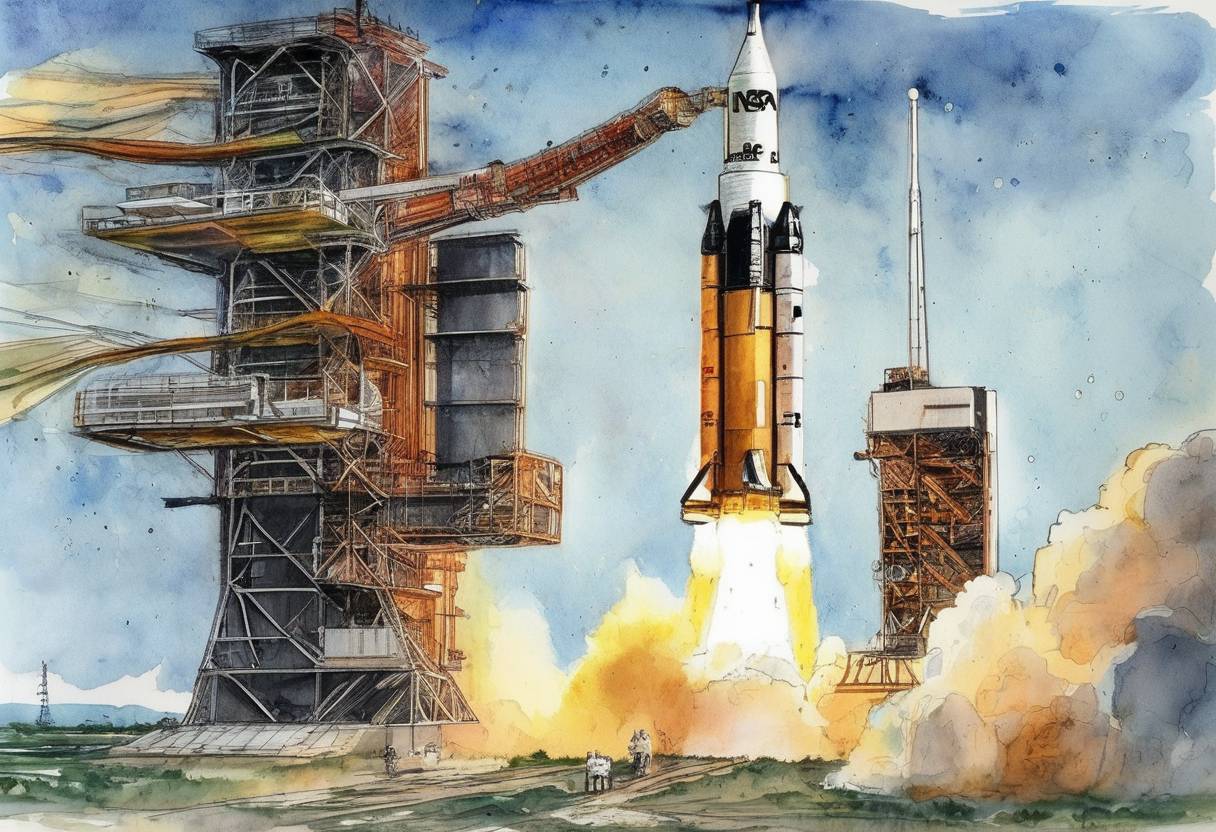
On November 14, 1969, NASA successfully launched Apollo 12, the second crewed mission to the Moon, from Kennedy Space Center in Florida. This mission was a pivotal moment in the Apollo program, building on the achievements of Apollo 11 and furthering human exploration of the lunar surface.
Launch Vehicle: Apollo 12 was launched aboard a Saturn V rocket, the same type of launch vehicle used for Apollo 11. The Saturn V was a powerful three-stage rocket designed specifically for lunar missions.
Launch Site: The launch took place at Launch Complex 39A at Kennedy Space Center, a site that had become iconic for its role in the Apollo program.
Crew Members:
Mission Objectives: The primary objectives of Apollo 12 were to perform a precise landing on the Moon, conduct scientific experiments, and collect lunar samples. The mission aimed to demonstrate the feasibility of pinpoint landings and to expand the scientific knowledge gained from Apollo 11.
Launch Day Weather: The launch faced challenging weather conditions, including rain and overcast skies. Despite these conditions, the mission proceeded as planned.
Lightning Strike: Shortly after liftoff, Apollo 12 was struck by lightning twice, causing temporary electrical issues. The quick response and problem-solving skills of the mission control team and the astronauts ensured the mission continued safely.
Lunar Landing: On November 19, 1969, the Lunar Module, named “Intrepid,” successfully landed in the Ocean of Storms, near the Surveyor 3 spacecraft, which had landed on the Moon in 1967. This precise landing demonstrated improved targeting capabilities.
Scientific Contributions: The crew conducted two moonwalks, during which they collected lunar samples and deployed scientific instruments, including the Apollo Lunar Surface Experiments Package (ALSEP). They also retrieved parts of the Surveyor 3 spacecraft for analysis.
Apollo 12 was a critical success for NASA, proving that precise lunar landings were possible and that astronauts could conduct extensive scientific work on the Moon. The mission’s achievements laid the groundwork for future Apollo missions, which would continue to explore and study the lunar surface.
The success of Apollo 12 reinforced the United States’ commitment to space exploration and demonstrated the resilience and ingenuity of NASA and its astronauts in overcoming unexpected challenges.
Source: en.wikipedia.org