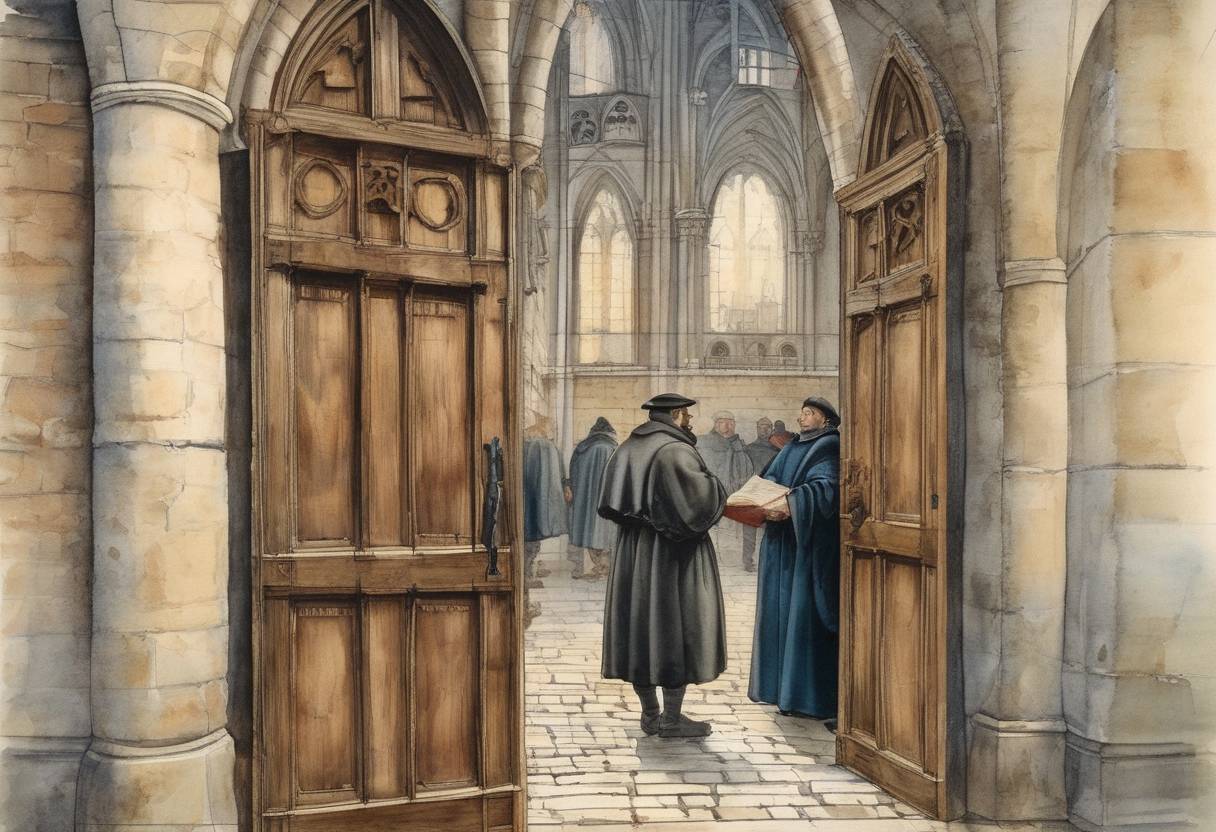
On October 31, 1517, Martin Luther, a German monk and theologian, is traditionally said to have nailed his “95 Theses” to the door of the Wittenberg Castle Church in Germany. This act is widely regarded as the catalyst for the Protestant Reformation, a monumental movement that transformed the religious, cultural, and political landscape of Europe.
Context Leading Up to the Event
The Catholic Church’s Dominance: During the early 16th century, the Catholic Church held significant religious and political power across Europe. However, it faced growing criticism for various practices, particularly the sale of indulgences, which were believed to reduce punishment for sins.
Indulgences Controversy: The Church’s practice of selling indulgences was intended to raise funds, notably for the construction of St. Peter’s Basilica in Rome. This practice was seen by many as a form of corruption, exploiting the faithful for financial gain.
Luther’s Background: Martin Luther was an Augustinian monk and a professor of theology at the University of Wittenberg. He was deeply troubled by the Church’s practices and its deviation from what he saw as true Christian teachings.
The 95 Theses
Content: Luther’s “95 Theses” were a series of propositions and questions challenging the Church’s teachings on indulgences and other practices. They emphasized the importance of repentance and faith over monetary transactions for salvation.
Publication: While the image of Luther nailing the theses to the church door is iconic, it is more likely that he sent them to Archbishop Albrecht of Mainz and other church authorities. The theses were soon printed and distributed widely, thanks to the recent invention of the printing press.
Rapid Spread: The theses quickly spread throughout Germany and Europe, igniting widespread debate and discussion about Church practices and doctrines.
Church’s Reaction: Initially, the Church dismissed Luther’s propositions, but as his ideas gained traction, he was summoned to Rome and later excommunicated in 1521.
Broader Historical Significance
Protestant Reformation: Luther’s actions and writings inspired a movement that led to the establishment of Protestant denominations, fundamentally altering the religious map of Europe.
Social and Political Changes: The Reformation contributed to the rise of religious pluralism and challenged the authority of the Catholic Church, leading to significant political and social upheaval.
Legacy: Martin Luther’s challenge to the Church’s authority laid the groundwork for modern notions of religious freedom and individual conscience.
In summary, Martin Luther’s posting of the “95 Theses” on October 31, 1517, was a pivotal moment in history that not only questioned the practices of the Catholic Church but also set in motion a series of events that reshaped the religious and political fabric of Europe.