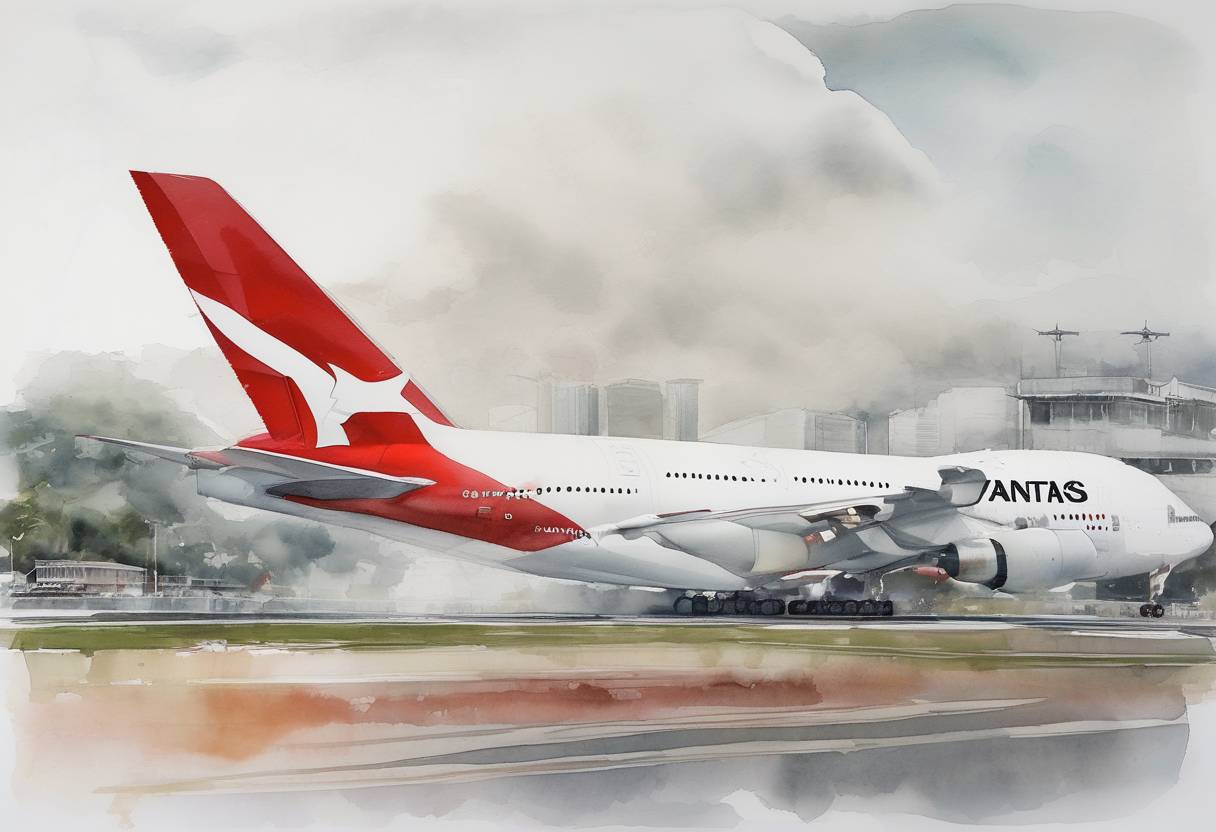
Qantas Airbus A380 Emergency Landing - November 4, 2010
On November 4, 2010, a Qantas Airbus A380, operating as Qantas Flight QF32, experienced a significant in-flight engine failure shortly after takeoff from Singapore Changi Airport. This incident marked the first major safety issue for the Airbus A380 model since its introduction into commercial service in 2007.
Incident Overview
- Flight Details: Qantas Flight QF32 was en route from Singapore to Sydney, Australia.
- Aircraft: The aircraft involved was an Airbus A380-842, registered as VH-OQA, named “Nancy-Bird Walton” after the pioneering Australian aviator.
- Engine Failure: Approximately four minutes after takeoff, one of the aircraft’s four Rolls-Royce Trent 900 engines suffered an uncontained engine failure. This resulted in debris puncturing the wing and causing significant damage to the aircraft’s systems.
- Crew Actions: The flight crew, led by Captain Richard de Crespigny, managed to stabilize the aircraft despite the extensive damage. They worked through numerous system failures and alerts to ensure the safety of all on board.
- Emergency Landing: After holding for nearly two hours to assess the situation and burn fuel, the crew successfully executed an emergency landing back at Singapore Changi Airport. The landing was completed without further incident.
Passengers and Crew
- Onboard: The flight carried 440 passengers and 29 crew members. Remarkably, there were no injuries reported among passengers or crew.
- Evacuation: Passengers were safely evacuated from the aircraft after landing.
Investigation and Aftermath
- Investigation: The Australian Transport Safety Bureau (ATSB) led the investigation, with assistance from international aviation authorities and Rolls-Royce. The investigation identified an oil fire in the engine as the cause of the failure, attributed to a manufacturing defect in an oil feed pipe.
- Impact on Qantas and Airbus: Following the incident, Qantas temporarily grounded its A380 fleet for inspections. Rolls-Royce also conducted a review and modification of the Trent 900 engines.
- Industry Response: The incident prompted increased scrutiny and safety checks across airlines operating A380s with similar engines, leading to enhanced safety protocols and maintenance procedures.
Historical Significance
The QF32 incident was a pivotal moment in aviation safety, highlighting the importance of rigorous engine testing and maintenance. It also underscored the resilience and skill of flight crews in managing complex emergencies. The successful handling of the situation by the Qantas crew received widespread commendation and reinforced confidence in the safety of the Airbus A380, despite the severity of the incident.