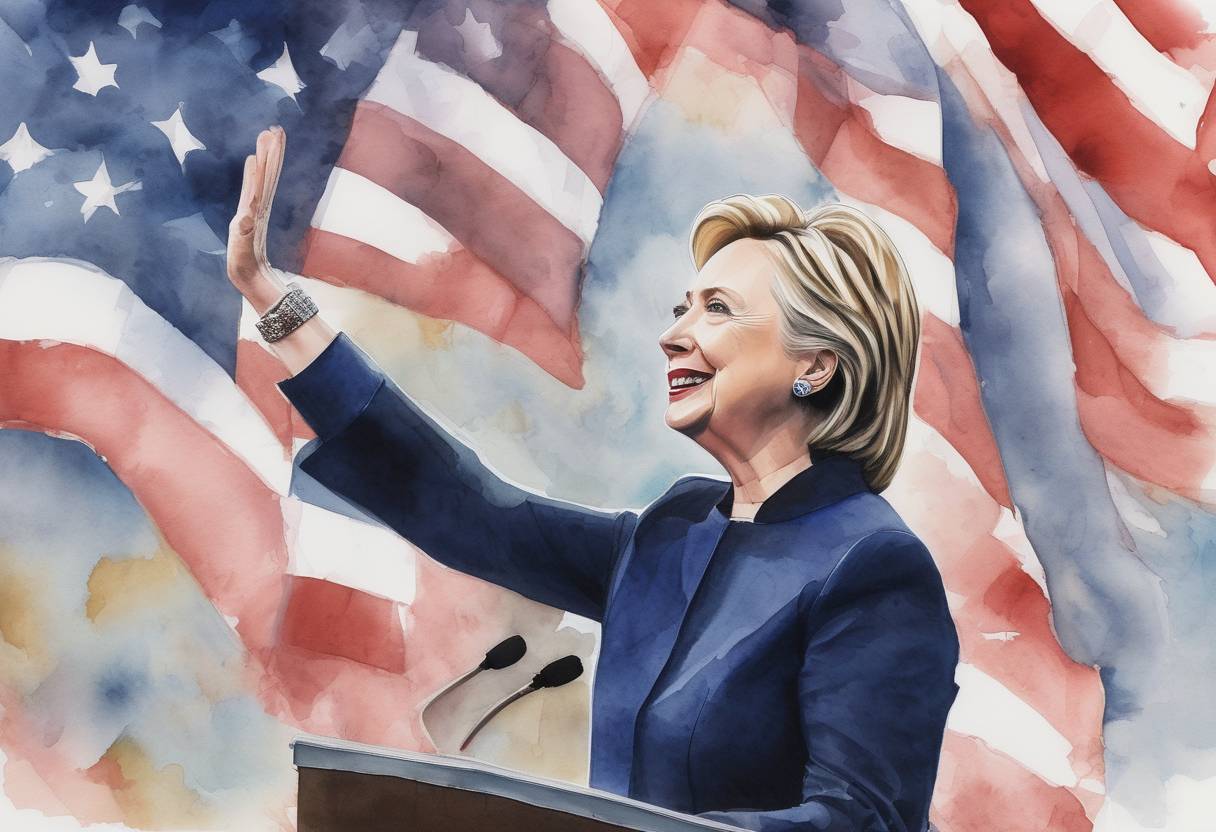
Hillary Clinton Secures Democratic Nomination - June 7, 2016
On June 7, 2016, Hillary Clinton made history by securing enough delegates to become the presumptive Democratic nominee for the 2016 United States presidential election. This achievement marked a significant milestone as she became the first woman to lead a major American political party’s ticket for the presidency.
Context and Background
Hillary Clinton, a former First Lady, U.S. Senator, and Secretary of State, announced her candidacy for the Democratic nomination in April 2015. Her campaign focused on issues such as healthcare reform, women’s rights, and economic equality. Clinton’s experience and political background made her a formidable candidate in the Democratic primaries.
Her main rival in the primaries was Senator Bernie Sanders of Vermont, who ran a vigorous campaign emphasizing income inequality and campaign finance reform. Despite Sanders’ strong grassroots support and success in several states, Clinton maintained a lead in both pledged delegates and superdelegates throughout the primary season.
Key Events Leading to June 7, 2016
- Super Tuesday (March 1, 2016): Clinton secured significant victories in several key states, establishing a strong lead over Sanders.
- April 19, 2016: Clinton won the New York primary, further solidifying her position as the frontrunner.
- May 3, 2016: After winning the Indiana primary, Sanders continued his campaign but faced an increasingly difficult path to the nomination.
June 7, 2016 - The Milestone
On June 7, 2016, Clinton won decisive victories in several states, including California and New Jersey. These wins allowed her to surpass the required 2,383 delegates needed to clinch the Democratic nomination. The Associated Press and other major news outlets declared her the presumptive nominee, acknowledging her historic achievement.
Significance and Aftermath
Hillary Clinton’s nomination was a landmark moment in U.S. history, symbolizing progress in gender equality and the breaking of a significant glass ceiling in American politics. Her nomination was celebrated by many as a step forward for women’s representation in leadership roles.
Following her nomination, Clinton faced Republican nominee Donald Trump in the general election. The campaign was highly contentious and marked by intense debates over policy and character. Ultimately, Clinton won the popular vote but lost the Electoral College to Trump in the November 2016 election.
Clinton’s candidacy and nomination remain significant in the broader context of American political history, highlighting ongoing discussions about gender, leadership, and representation in politics.