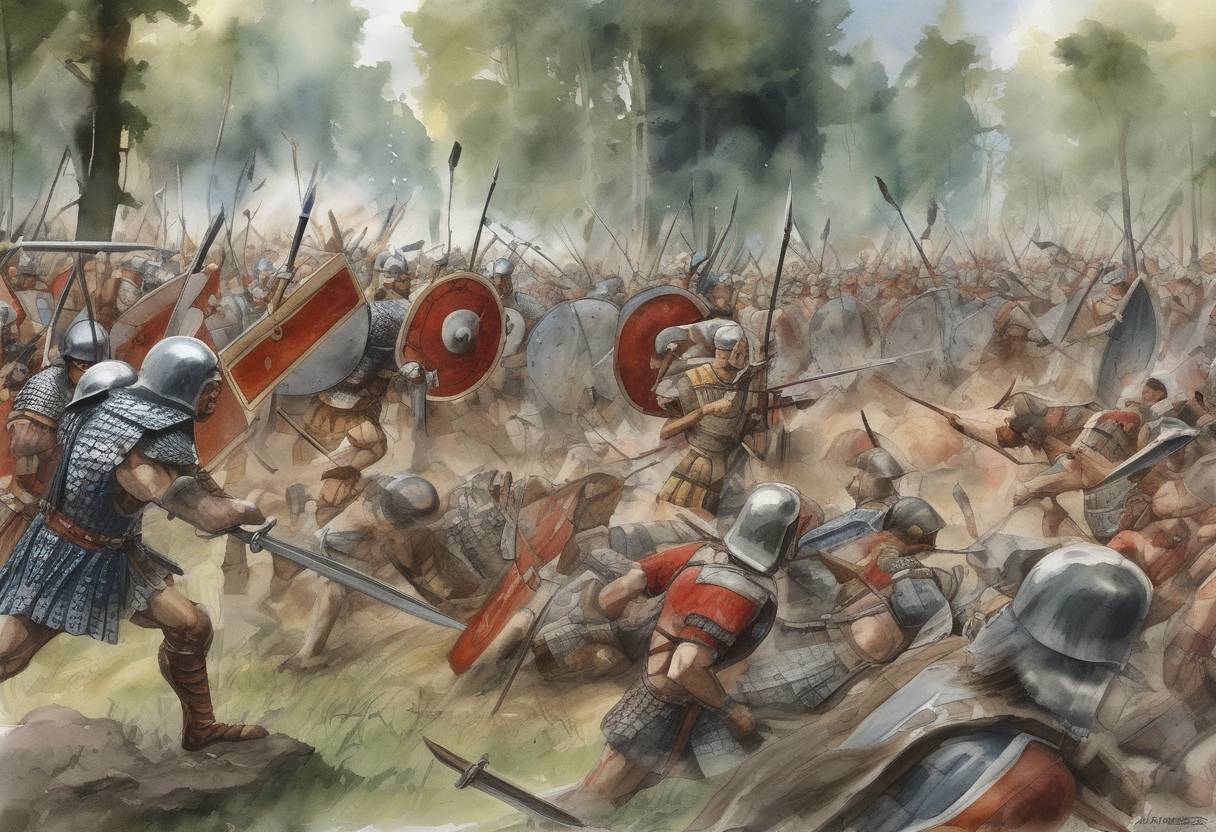
The Battle of the Teutoburg Forest
Date: September 11, 9 CE
Overview
The Battle of the Teutoburg Forest, also known as the Varian Disaster, was a pivotal conflict that took place in 9 CE. It involved an alliance of Germanic tribes ambushing and decisively defeating three Roman legions, along with their auxiliaries, led by the Roman general Publius Quinctilius Varus. This battle marked a significant turning point in Roman expansion efforts into Germania.
Context
- Roman Expansion: Prior to the battle, the Roman Empire, under Emperor Augustus, was in the process of expanding its territories into Germania, aiming to extend the Roman frontier from the Rhine to the Elbe River.
- Germanic Tribes: The region was inhabited by various Germanic tribes, who were resistant to Roman control and imposition of taxes and laws.
- Publius Quinctilius Varus: A Roman general and politician, appointed by Augustus to govern the Roman provinces in Germania.
- Arminius (Hermann): A chieftain of the Cherusci tribe, who had served in the Roman army and was familiar with Roman military tactics. He played a crucial role in organizing the Germanic tribes against the Romans.
The Battle
- Ambush: Arminius, leveraging his knowledge of Roman strategies, orchestrated a massive ambush in the dense Teutoburg Forest. The Roman legions, unprepared for the terrain and the surprise attack, were caught off guard.
- Destruction of Legions: Over the course of several days, the Roman forces were systematically destroyed. The difficult terrain and the element of surprise contributed to the overwhelming defeat of the Romans.
- Casualties: The battle resulted in the annihilation of the 17th, 18th, and 19th Roman legions, with estimates of Roman casualties reaching up to 20,000 soldiers.
Aftermath
- Roman Retreat: The defeat forced Rome to abandon its expansionist ambitions east of the Rhine River. The Rhine became the boundary of the Roman Empire in the region.
- Impact on Roman Policy: The loss led to a reevaluation of Roman military strategies and frontier policies. Emperor Augustus reportedly lamented the loss, famously exclaiming, “Quinctilius Varus, give me back my legions!”
- Legacy: The battle had long-lasting effects on Roman military and political strategies, and it is often cited as one of the greatest military defeats in Roman history.
Historical Significance
The Battle of the Teutoburg Forest is considered a defining moment in European history, as it halted Roman expansion into central Europe and preserved the cultural and political independence of the Germanic tribes. This event shaped the future of the region and influenced the development of European history for centuries to come.