Deposition of Eutychius as Patriarch of Constantinople
565 · Constantinople, Byzantine Empire
Eutychius is deposed as Patriarch of Constantinople by Byzantine Emperor Justinian I.
November 22, 0845
The Synod of Constantinople ends, which was convened to address the issue of iconoclasm within the Byzantine Empire.
Constantinople, Byzantine Empire | Byzantine Church
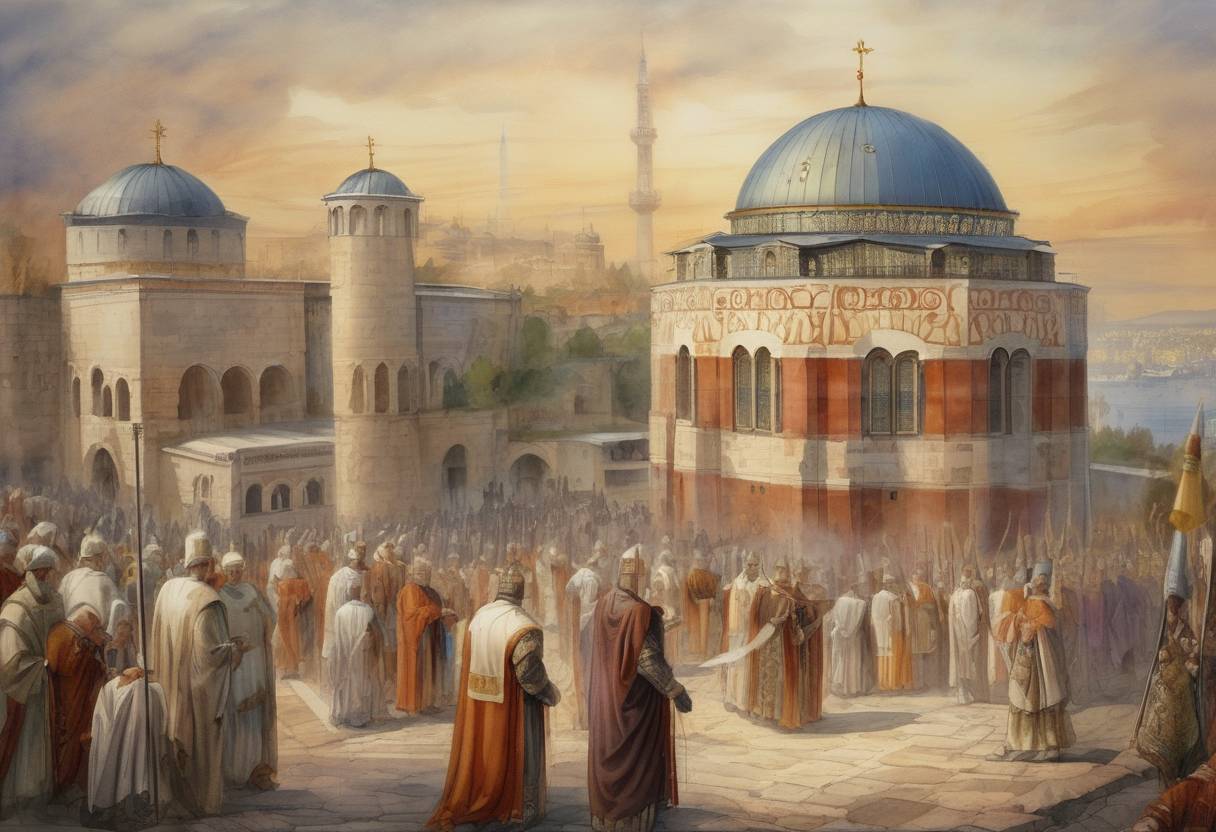
The Synod of Constantinople, which concluded on November 22, 845, was a significant ecclesiastical assembly convened to address the contentious issue of iconoclasm within the Byzantine Empire. This synod marked a pivotal moment in the ongoing conflict over the use of religious images, known as icons, in Christian worship.
Iconoclasm, the rejection and destruction of religious images, had been a source of intense theological and political conflict in the Byzantine Empire since the early 8th century. The controversy began during the reign of Emperor Leo III, who, in 726, issued a series of edicts against the veneration of icons, arguing that their use constituted idolatry. This initiated the First Iconoclast Period (726–787).
The policy of iconoclasm was temporarily reversed during the Second Council of Nicaea in 787, which restored the veneration of icons. However, the issue resurfaced in 814 under Emperor Leo V, leading to the Second Iconoclast Period (814–842).
The Synod of Constantinople in 845 was part of the broader efforts to resolve the iconoclastic controversy following the death of Emperor Theophilos in 842. His widow, Empress Theodora, who served as regent for their young son Michael III, was a staunch supporter of icon veneration. She played a crucial role in restoring the practice within the empire.
The synod was convened to solidify the decisions made at the earlier Council of Constantinople in 843, which had officially ended the second period of iconoclasm. The 843 council, often referred to as the “Triumph of Orthodoxy,” reinstated the veneration of icons and anathematized iconoclasts. The Synod of 845 reaffirmed these decisions and sought to address any remaining theological disputes and consolidate the church’s stance on the issue.
The conclusion of the Synod of Constantinople in 845 effectively ended the iconoclastic controversy within the Byzantine Empire. The restoration of icons was celebrated annually with the “Feast of Orthodoxy,” commemorating the triumph of the iconophiles over the iconoclasts.
The resolution of the iconoclasm issue had significant implications for the Byzantine Empire and the Eastern Orthodox Church. It reinforced the use of religious images in worship, which became a defining characteristic of Eastern Orthodox Christianity. The synod’s decisions also helped stabilize the empire by resolving a divisive theological and political conflict.
In a broader historical context, the end of iconoclasm contributed to the cultural and artistic flourishing of the Byzantine Empire, as the production and veneration of icons became integral to Byzantine religious and cultural life.
The Synod of Constantinople in 845 thus stands as a landmark event in the history of the Byzantine Empire, marking the definitive end of the iconoclastic controversy and shaping the future of Eastern Orthodox Christianity.
Source: en.wikipedia.org