Romulus Augustulus Proclaimed Western Roman Emperor
475 · Ravenna, Western Roman Empire
Romulus Augustulus is proclaimed Western Roman Emperor.
November 19, 0461
Libius Severus is declared Emperor of the Western Roman Empire.
Ravenna, Italy | Western Roman Empire
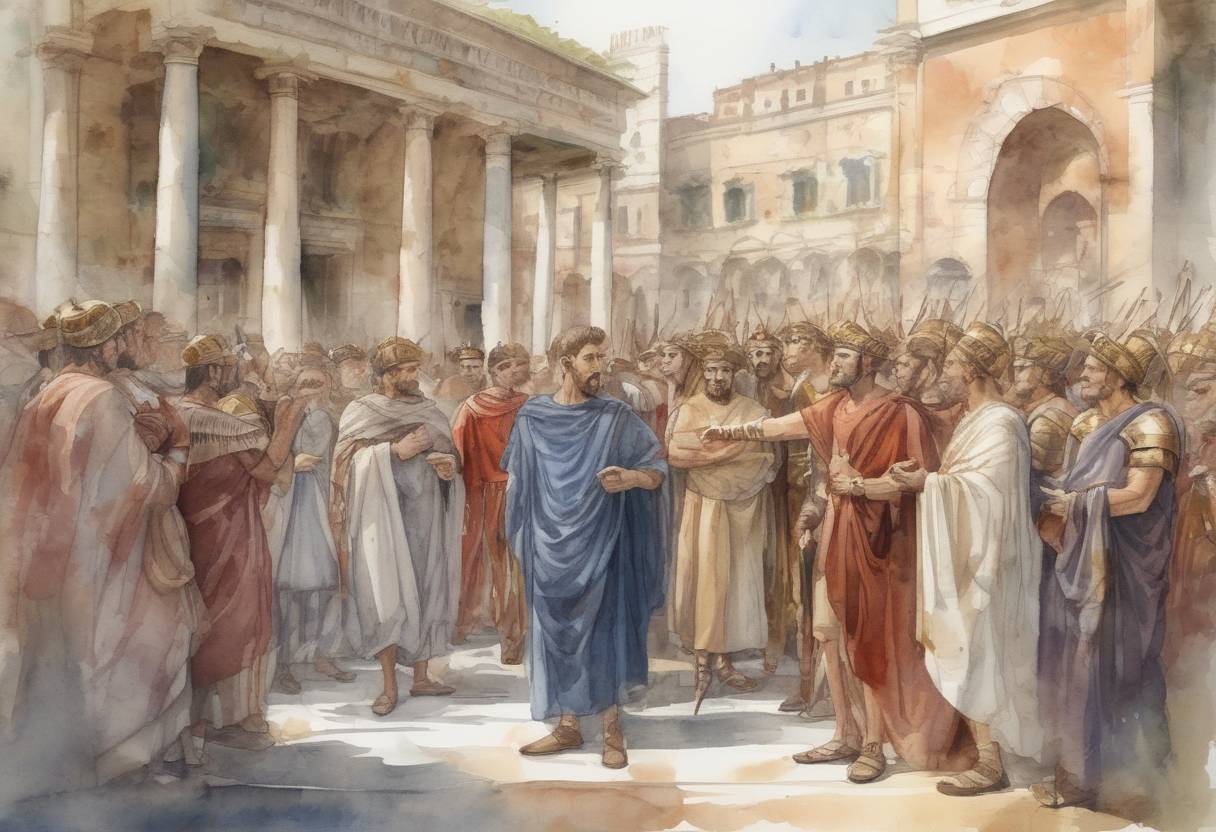
On November 19, 461, Libius Severus was declared Emperor of the Western Roman Empire, a significant event during the waning years of the Western Roman Empire. His ascension to the throne was marked by political intrigue and the influence of powerful military leaders.
The Western Roman Empire in the mid-5th century was characterized by instability and fragmentation. The assassination of the previous emperor, Majorian, in August 461, left a power vacuum. Majorian had been a competent ruler who attempted to restore the empire’s fortunes, but his reforms and military campaigns were cut short by his untimely death.
The real power behind the throne during this period was Ricimer, a powerful military general of Germanic descent. Ricimer wielded significant influence and effectively controlled the appointment of emperors, as he could not claim the throne himself due to his barbarian heritage.
Libius Severus was a relatively obscure senator from Lucania before his elevation to emperor. His selection was largely orchestrated by Ricimer, who sought a pliable figurehead to maintain his own control over the empire’s affairs. Severus’ reign, which lasted from 461 to 465, was characterized by his lack of real power and the dominance of Ricimer.
During Severus’ rule, the Western Roman Empire continued to face numerous challenges, including:
Libius Severus’ reign ended with his death in 465, under circumstances that remain unclear, though it is speculated that he may have been poisoned. His death left the Western Roman Empire without a clear successor, leading to further political turmoil.
The period following Severus’ reign saw continued decline, with the Western Roman Empire eventually collapsing in 476 when the last Roman emperor, Romulus Augustulus, was deposed by the Germanic chieftain Odoacer.
Severus’ reign is often viewed as emblematic of the broader decline of the Western Roman Empire, highlighting the erosion of imperial authority and the increasing power of military leaders like Ricimer. His time as emperor underscores the challenges faced by the late Western Roman Empire in maintaining stability and cohesion in the face of internal and external pressures.
Source: en.wikipedia.org