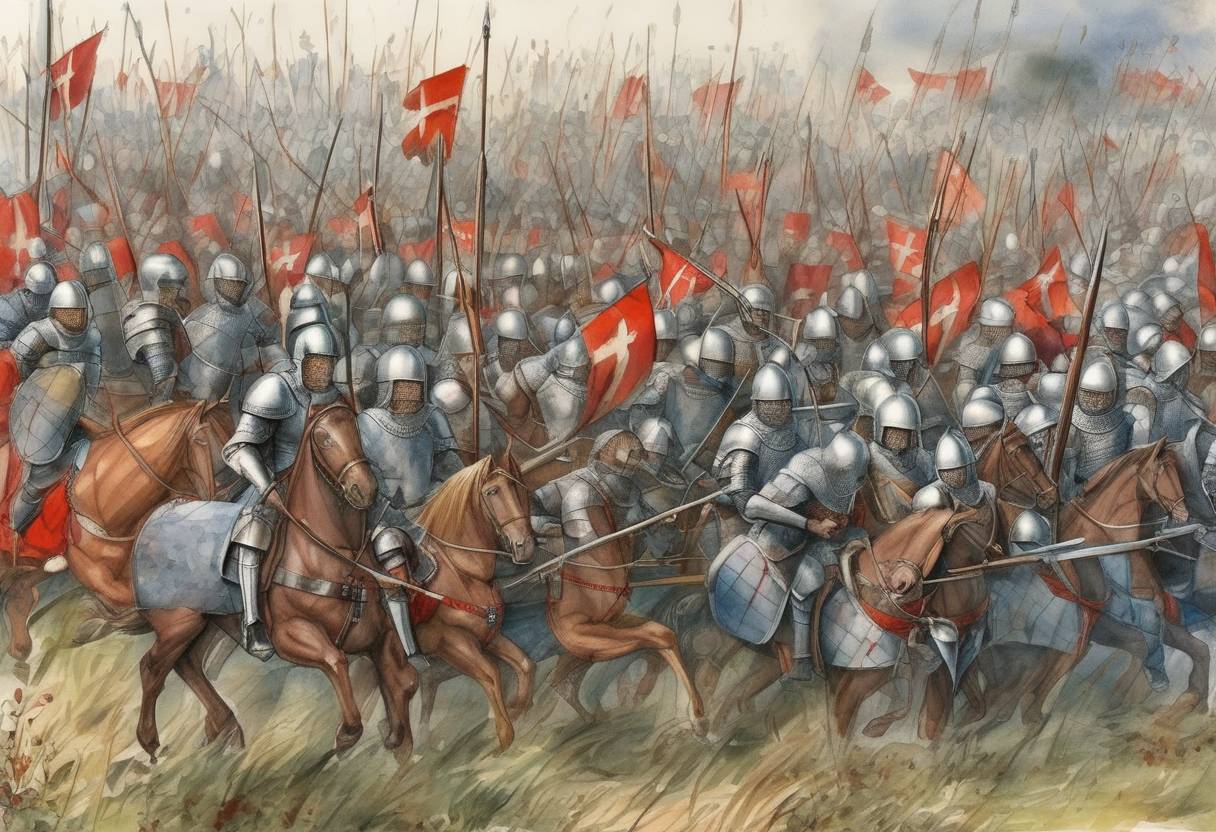
The Battle of Agincourt: October 25, 1415
The Battle of Agincourt was a pivotal conflict during the Hundred Years’ War, a series of battles waged from 1337 to 1453 between the Kingdom of England and the Kingdom of France. This battle, occurring on October 25, 1415, marked a significant English victory under the leadership of King Henry V.
Context and Prelude
- Hundred Years’ War: The war was primarily a dynastic struggle over claims to the French throne, with English monarchs asserting their right to rule over France.
- Henry V’s Campaign: In 1415, King Henry V launched a campaign to assert his claims, beginning with the siege of Harfleur. After capturing the port, his forces were weakened by disease and casualties.
The Battle
- Location: The battle took place near the village of Agincourt, in northern France.
- Forces: The English army, numbering around 6,000 men, was significantly outnumbered by the French forces, which were estimated to be between 20,000 and 30,000.
- English Strategy: The English army was composed largely of longbowmen, whose weaponry played a crucial role. The longbow’s range and rate of fire were decisive in disrupting the French cavalry and infantry.
- Terrain: The battlefield was narrow and muddy, conditions that favored the English defensive position and hindered the French cavalry and heavily armored knights.
Key Events
- Initial Engagement: The French launched a series of assaults, but the narrow battlefield and muddy conditions caused disarray in their ranks.
- Longbowmen’s Impact: English longbowmen, positioned on the flanks, unleashed volleys of arrows that decimated the advancing French troops.
- French Casualties: The French suffered heavy losses, with many nobles and knights killed or captured, including Charles d’Albret, the Constable of France.
Aftermath and Significance
- English Victory: Despite being outnumbered, the English achieved a decisive victory, capturing numerous French nobles, which provided significant ransom income.
- Impact on the War: The victory at Agincourt bolstered English morale and solidified Henry V’s reputation as a formidable military leader.
- Legacy: The battle is often cited as a classic example of the effectiveness of the longbow and the impact of leadership and tactics over numerical superiority.
Broader Historical Significance
- Cultural Impact: The Battle of Agincourt has been immortalized in literature and popular culture, notably in William Shakespeare’s play “Henry V.”
- Military Tactics: The battle demonstrated the changing nature of warfare during the late medieval period, highlighting the decline of heavily armored knights in favor of more versatile infantry tactics.
The Battle of Agincourt remains a significant event in military history, illustrating the importance of strategy, terrain, and technology in determining the outcomes of battles.