O.J. Simpson Granted Parole: July 20, 2017
2017 · Carson City, United States
O.J. Simpson is granted parole after serving nine years of a 33-year sentence for armed robbery and kidnapping in Nevada.
June 17, 1994
Following a televised low-speed car chase, O.J. Simpson is arrested for the murders of Nicole Brown Simpson and Ronald Goldman.
Los Angeles, United States | Los Angeles Police Department
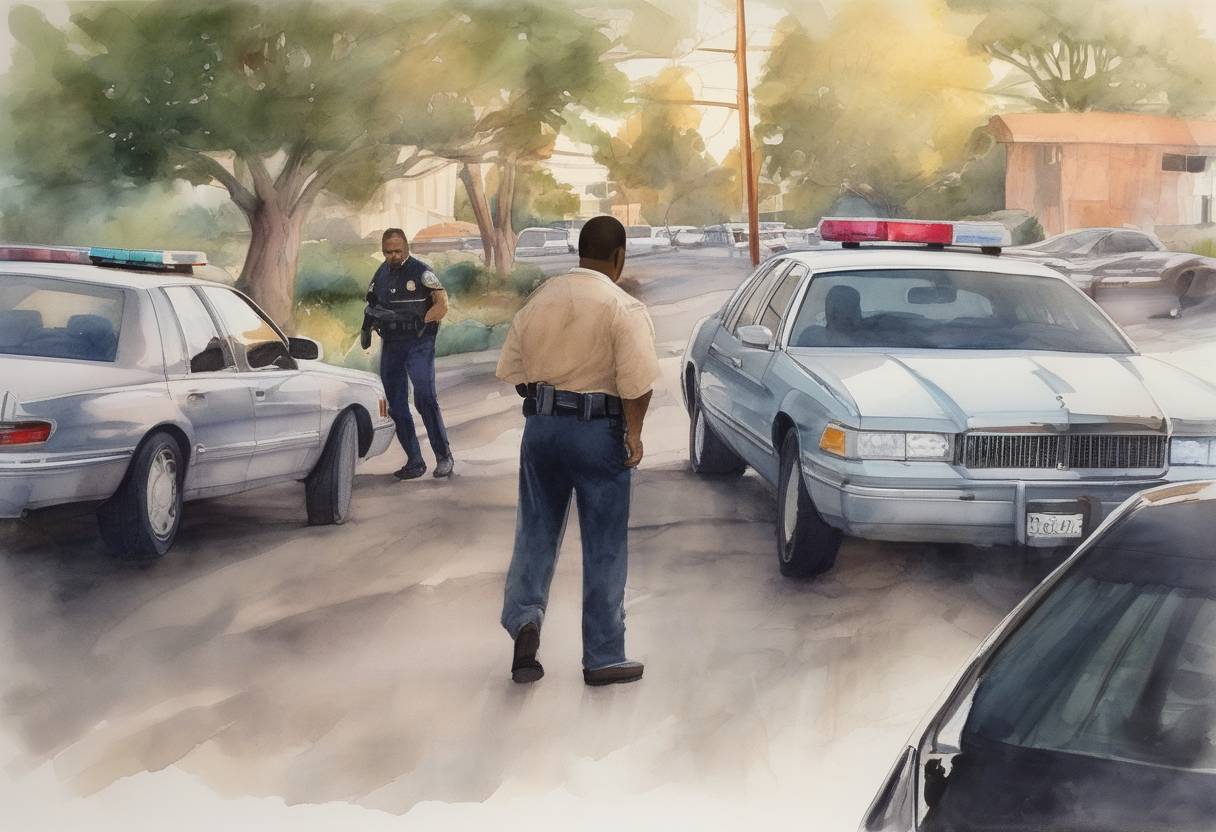
On June 17, 1994, a dramatic and highly publicized event unfolded in the United States, capturing the attention of millions of viewers across the nation. This day marked the arrest of Orenthal James “O.J.” Simpson, a former professional football player and actor, for the murders of his ex-wife, Nicole Brown Simpson, and her friend, Ronald Goldman.
The murders of Nicole Brown Simpson and Ronald Goldman occurred on the night of June 12, 1994, outside Nicole’s condominium in the Brentwood area of Los Angeles. Both victims were found brutally stabbed, and the crime scene was described as particularly gruesome. O.J. Simpson, who had a tumultuous relationship with Nicole, quickly became a person of interest in the investigation.
On the morning of June 17, Simpson was scheduled to surrender to the Los Angeles Police Department (LAPD). However, he failed to appear, prompting the police to issue an all-points bulletin for his arrest. Later that day, Simpson was spotted in a white Ford Bronco, driven by his friend Al Cowlings. What ensued was an extraordinary low-speed chase broadcast live on national television.
The Chase: The chase began in Orange County and continued along the freeways of Los Angeles. With helicopters capturing the event from above, an estimated 95 million viewers tuned in to watch the surreal pursuit. The Bronco was trailed by a convoy of police vehicles, while crowds gathered on overpasses and along the roadsides, some holding signs of support for Simpson.
Simpson’s State: During the chase, Simpson was reportedly in the back seat of the Bronco, holding a gun to his head, threatening suicide. He was in contact with the police via a mobile phone, and negotiations were ongoing to ensure his safe surrender.
The chase concluded at Simpson’s Brentwood estate, where he was finally persuaded to surrender peacefully after nearly an hour of negotiation. He was taken into custody and charged with the murders of Nicole Brown Simpson and Ronald Goldman.
Public Reaction: The event was a media sensation, highlighting the intersection of celebrity culture, race, and the criminal justice system in America. The chase and subsequent arrest were covered extensively, setting the stage for what would become one of the most famous trials in U.S. history.
The Trial: Simpson’s trial, often referred to as “The Trial of the Century,” began in January 1995 and lasted until October of the same year. It was marked by intense media scrutiny and public interest, with key issues including racial tensions, police conduct, and domestic violence.
Verdict: On October 3, 1995, O.J. Simpson was acquitted of all criminal charges, a verdict that sparked widespread debate and division across the country.
The events of June 17, 1994, and the subsequent trial had a lasting impact on American society. They highlighted issues of race, celebrity influence, and the media’s role in the judicial process. The case remains a pivotal moment in American legal and cultural history, continuing to be referenced and studied for its complex interplay of factors and its reflection of societal issues.
Source: en.wikipedia.org