The Treaty of Fredrikshamn: A Pivotal Moment in Scandinavian History
1809 · Fredrikshamn (Hamina), Finland
The Treaty of Fredrikshamn is signed, ending the Finnish War and marking the cession of Finland from Sweden to the Russian Empire.
August 30, 1721
The Treaty of Nystad was signed, ending the Great Northern War between Sweden and Russia. This treaty marked the decline of Sweden as a great power and the rise of Russia under Peter the Great.
Nystad, Finland | Sweden and Russia
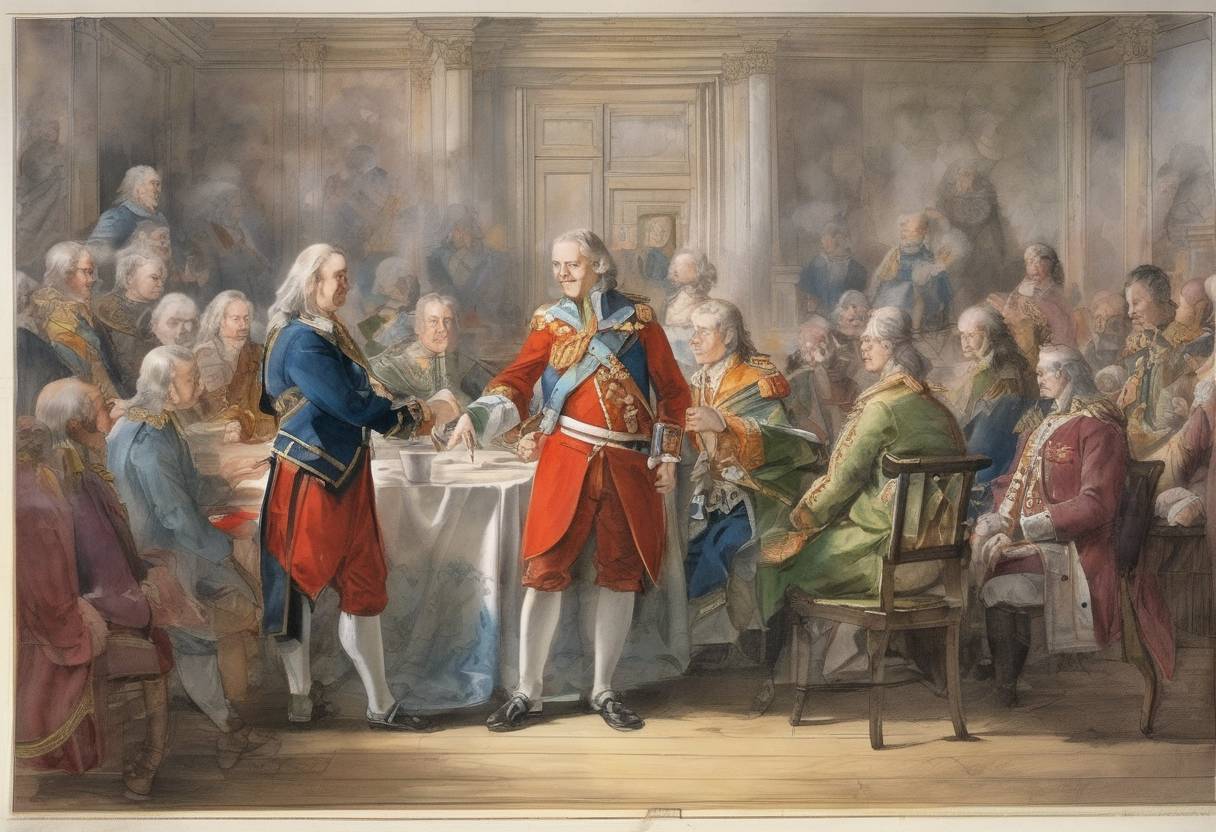
On August 30, 1721, the Treaty of Nystad was signed, marking the conclusion of the Great Northern War (1700–1721) between Sweden and Russia. This treaty was pivotal in reshaping the balance of power in Northern Europe, signaling the decline of Sweden as a dominant force and the emergence of Russia as a major European power under the leadership of Peter the Great.
The Great Northern War began in 1700 as a coalition of several European powers, including Russia, Denmark-Norway, and Saxony-Poland, sought to challenge the supremacy of the Swedish Empire in Northern and Eastern Europe. At the time, Sweden, under King Charles XII, was a formidable military power with territories spanning across the Baltic region.
Peter the Great, the Tsar of Russia, was determined to expand Russian influence and secure access to the Baltic Sea, which was crucial for trade and military strategy. The war saw numerous battles, with significant engagements such as the Battle of Narva (1700) and the Battle of Poltava (1709), the latter being a decisive Russian victory that turned the tide in favor of Peter the Great.
The Treaty of Nystad was negotiated over several months and included the following key terms:
Territorial Changes: Sweden ceded significant territories to Russia, including Ingria, Estonia, Livonia, and parts of Karelia. These acquisitions provided Russia with crucial access to the Baltic Sea and facilitated the establishment of St. Petersburg as a major port and the new Russian capital.
Swedish Retentions: Despite the losses, Sweden retained control over Finland, although it had to concede some border adjustments.
Financial Compensation: Russia agreed to pay Sweden a substantial sum as compensation for the ceded territories.
The Treaty of Nystad had profound implications for both Sweden and Russia:
Decline of Sweden: The treaty marked the end of Sweden’s era as a great power. The loss of territories and military setbacks weakened its influence in European affairs.
Rise of Russia: Under Peter the Great, Russia emerged as a dominant power in Northern Europe. The territorial gains and the establishment of St. Petersburg as a “window to the West” were instrumental in Russia’s transformation into a major European empire.
Shift in Power Dynamics: The treaty contributed to a shift in the balance of power in Europe, with Russia playing an increasingly central role in continental politics and conflicts.
The Treaty of Nystad is a significant milestone in European history, illustrating the ebb and flow of empires and the enduring impact of strategic diplomacy and military prowess.
Source: en.wikipedia.org