The End of U.S. Military Involvement in Vietnam: March 29, 1973
1973 · Saigon, Vietnam
The last United States combat troops left South Vietnam, marking the end of direct U.S. military involvement in the Vietnam War.
December 18, 1972
The United States begins Operation Linebacker II, a massive bombing campaign against North Vietnam during the Vietnam War.
Hanoi, Vietnam | United States Air Force
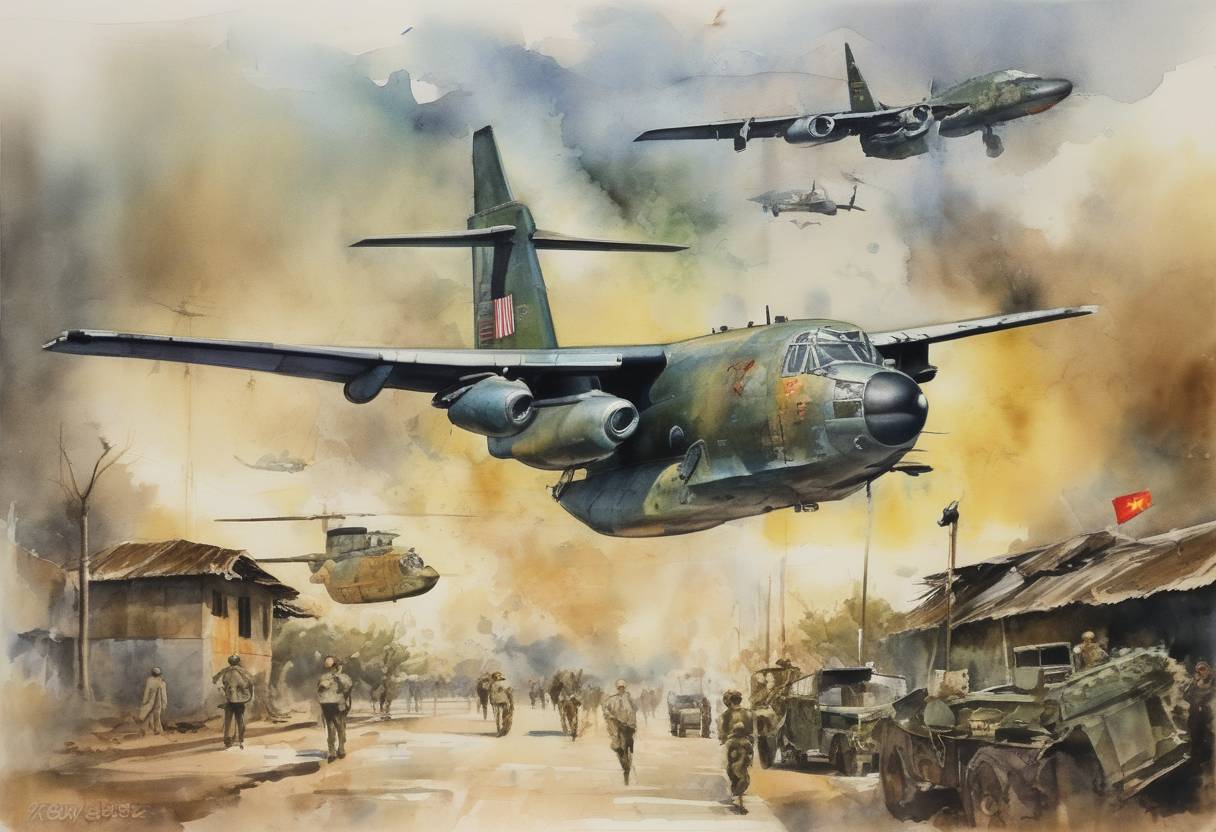
On December 18, 1972, the United States initiated Operation Linebacker II, a significant and intense bombing campaign against North Vietnam during the Vietnam War. This operation, often referred to as the “Christmas Bombing,” was a pivotal moment in the conflict, marking a substantial escalation in the U.S. military strategy.
Vietnam War Overview: The Vietnam War was a prolonged conflict that pitted the communist government of North Vietnam and its allies in South Vietnam, known as the Viet Cong, against the government of South Vietnam and its principal ally, the United States. The war was part of a larger regional conflict as well as a manifestation of the Cold War between the United States and the Soviet Union.
Peace Negotiations: By late 1972, peace talks between the United States and North Vietnam, held in Paris, had stalled. The U.S. sought to pressure North Vietnam into returning to the negotiating table and agreeing to terms favorable to the U.S. and South Vietnam.
Operation Linebacker I: Prior to Linebacker II, the U.S. had conducted Operation Linebacker I from May to October 1972, which was aimed at disrupting North Vietnamese supply lines and halting their Easter Offensive.
Objective: The primary goal of Operation Linebacker II was to compel North Vietnam to resume serious peace negotiations by demonstrating the overwhelming military capability of the United States.
Scale and Intensity: The operation involved around 200 B-52 bombers and hundreds of tactical aircraft. Over the course of 11 days, the U.S. dropped approximately 20,000 tons of bombs on strategic targets in and around Hanoi and Haiphong, including railways, airfields, and industrial sites.
Duration: The bombing campaign lasted from December 18 to December 29, 1972, with a brief pause on Christmas Day.
Impact on North Vietnam: The bombing caused significant destruction to North Vietnam’s infrastructure and military capabilities. Civilian areas were also affected, leading to international criticism and protests against the U.S. actions.
Resumption of Peace Talks: The intense bombing campaign succeeded in bringing North Vietnam back to the negotiating table. By January 1973, the Paris Peace Accords were signed, leading to a ceasefire and the eventual withdrawal of U.S. troops from Vietnam.
Historical Significance: Operation Linebacker II is often viewed as a controversial yet decisive factor in ending U.S. involvement in the Vietnam War. It highlighted the complexities of military strategy and diplomacy during the Cold War era.
In summary, Operation Linebacker II was a critical military operation that underscored the United States’ determination to achieve a favorable outcome in the Vietnam War, while also illustrating the broader geopolitical tensions of the time.
Source: en.wikipedia.org