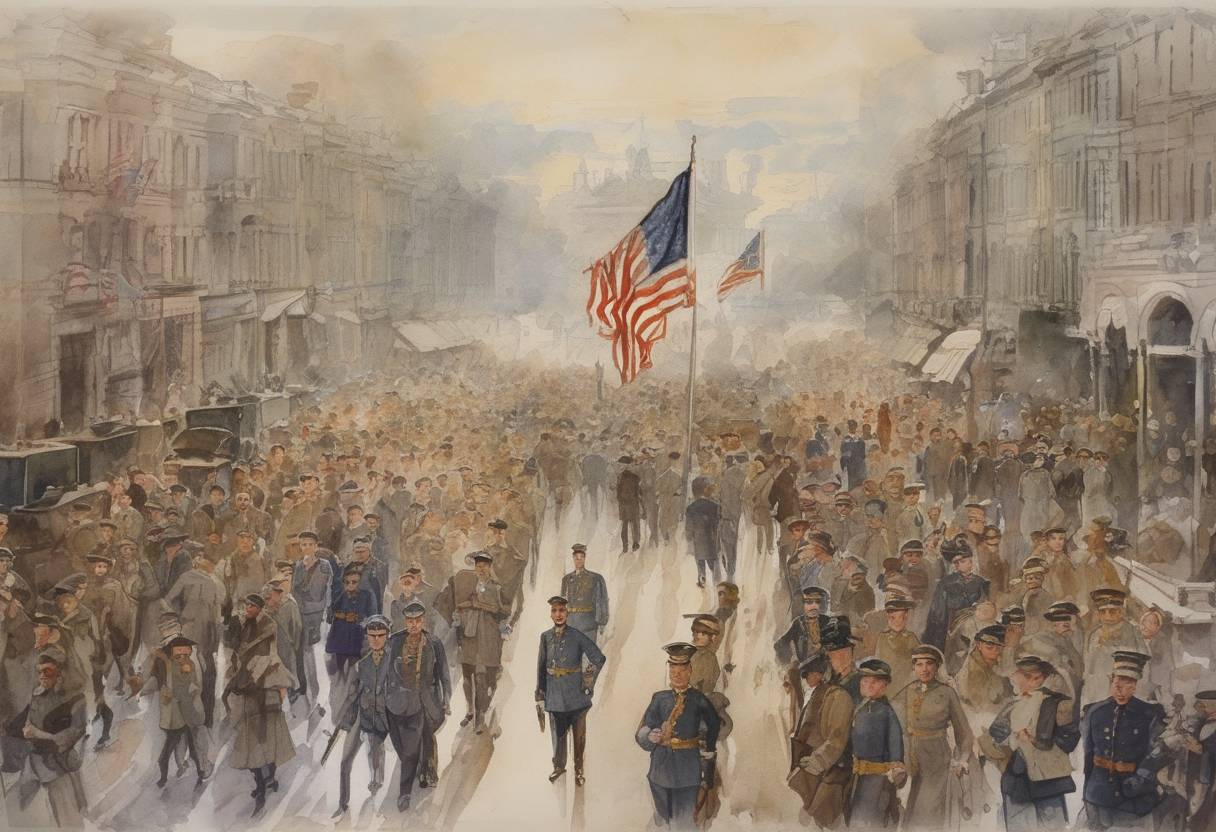
The United States Enters World War I: April 6, 1917
On April 6, 1917, the United States formally entered World War I by declaring war on Germany. This marked a significant turning point in the conflict, as the U.S. shifted from a position of neutrality to active involvement in the war. Here is a detailed account of the events leading up to this decision, the declaration itself, and its aftermath.
Context and Prelude
Neutrality and Isolationism
- Initial Stance: At the outbreak of World War I in 1914, the United States, under President Woodrow Wilson, adopted a policy of neutrality. The U.S. was determined to remain isolated from European conflicts, reflecting a long-standing tradition of avoiding entanglement in foreign wars.
- Economic Interests: Despite its neutral stance, the U.S. maintained strong economic ties with the Allies, particularly Great Britain and France. American businesses and banks provided significant loans and supplies to these nations, creating economic incentives that leaned towards the Allied cause.
Factors Leading to War
- Unrestricted Submarine Warfare: Germany’s resumption of unrestricted submarine warfare in early 1917 was a critical factor. German U-boats targeted military and civilian ships, including those of neutral nations, threatening American lives and commerce. The sinking of the British liner Lusitania in 1915, which resulted in the deaths of 128 Americans, had already strained relations.
- The Zimmermann Telegram: In January 1917, British intelligence intercepted and decoded a secret communication from the German Foreign Minister, Arthur Zimmermann, to Mexico. The telegram proposed a military alliance between Germany and Mexico against the United States, promising the return of territories such as Texas, New Mexico, and Arizona to Mexico if the Central Powers won the war. The revelation of this telegram further inflamed American public opinion against Germany.
The Declaration of War
- Wilson’s War Message: On April 2, 1917, President Wilson delivered a war message to a joint session of Congress, emphasizing the need to make the world “safe for democracy.” He cited Germany’s unrestricted submarine warfare and the Zimmermann Telegram as direct threats to U.S. security and sovereignty.
- Congressional Approval: After four days of debate, Congress overwhelmingly approved the declaration of war. The Senate voted 82 to 6 in favor, and the House of Representatives followed with a vote of 373 to 50.
Aftermath and Significance
- Mobilization and Impact: The U.S. mobilized over four million military personnel and provided crucial financial and material support to the Allies. American troops, known as the American Expeditionary Forces (AEF), played a vital role in several key battles on the Western Front.
- Turning the Tide: The entry of the United States into the war provided a significant morale boost to the Allies and contributed to the eventual defeat of the Central Powers. The influx of fresh American troops and resources helped to tip the balance in favor of the Allies.
- Post-War Influence: The U.S. emerged from World War I as a major world power, with increased influence in international affairs. President Wilson played a prominent role in the post-war peace negotiations, advocating for the League of Nations, although the U.S. Senate ultimately rejected joining the organization.
The decision to enter World War I marked a pivotal moment in American history, signaling a shift from isolationism to a more active role in global affairs. This involvement set the stage for the United States’ future engagements on the world stage throughout the 20th century.