NASA's Mars Odyssey Begins Mapping the Surface of Mars
2002 · Pasadena, United States
NASA's Mars Odyssey begins mapping the surface of Mars.
September 23, 1999
NASA announced that it had lost contact with the Mars Climate Orbiter due to a metric conversion error.
Pasadena, United States | NASA
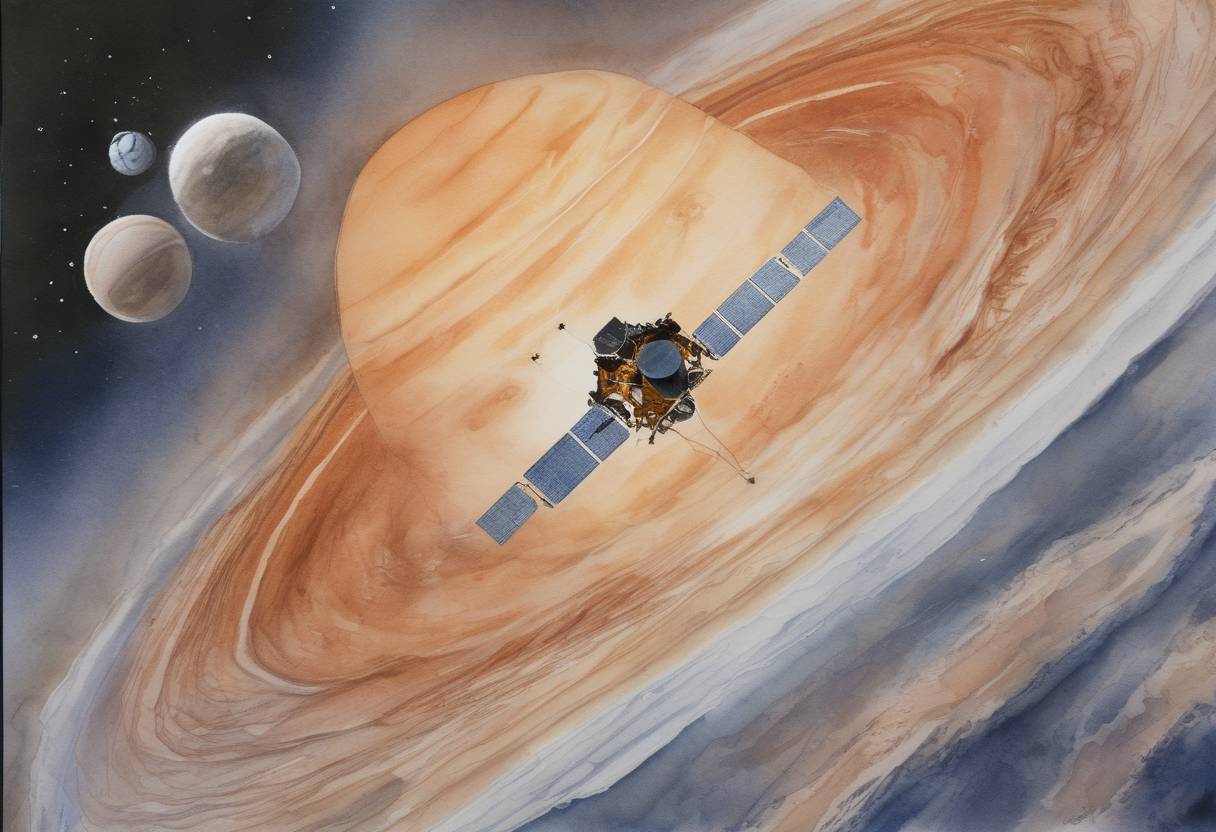
On September 23, 1999, NASA announced a significant setback in its Mars exploration program when it lost contact with the Mars Climate Orbiter. This incident was a result of a metric conversion error, which became a notable example of the critical importance of unit consistency in scientific and engineering projects.
The Mars Climate Orbiter was launched on December 11, 1998, as part of NASA’s Mars Surveyor ‘98 program. Its primary mission was to study the Martian climate, atmosphere, and surface changes, providing valuable data to understand Mars’ weather systems and potential for supporting life.
The loss of the Mars Climate Orbiter was traced back to a simple yet catastrophic error in unit conversion. The spacecraft’s navigation team at NASA’s Jet Propulsion Laboratory (JPL) used metric units (newtons) for calculations, while the spacecraft’s builder, Lockheed Martin Astronautics, used imperial units (pounds-force). This discrepancy led to a miscalculation of the spacecraft’s trajectory.
The error caused the orbiter to enter Mars’ atmosphere at a much lower altitude than planned. Instead of achieving a stable orbit, the spacecraft likely disintegrated due to atmospheric stresses or burned up upon entry. The mission’s failure resulted in the loss of a $125 million spacecraft and the scientific data it was meant to collect.
The Mars Climate Orbiter incident underscored the critical need for rigorous checks and balances in engineering and scientific processes, especially in international and multi-agency collaborations. NASA conducted a thorough investigation and implemented stricter protocols to prevent similar errors in future missions. This event also highlighted the importance of communication and standardization in scientific endeavors, serving as a cautionary tale for the global scientific community.
The loss of the Mars Climate Orbiter was a setback for NASA’s Mars exploration efforts, but it also provided valuable lessons that contributed to the success of subsequent missions, such as the Mars Exploration Rovers and the Mars Reconnaissance Orbiter.
Source: en.wikipedia.org