The First Naval Battle of Coronel: November 1, 1914
1914 · Coronel, Chile
World War I: The first naval battle of Coronel is fought between the British Royal Navy and the Imperial German Navy off the coast of Chile.
March 14, 1915
The British Royal Navy sinks the German cruiser SMS Dresden off the coast of Chile during World War I.
off the coast of Chile, Chile | British Royal Navy
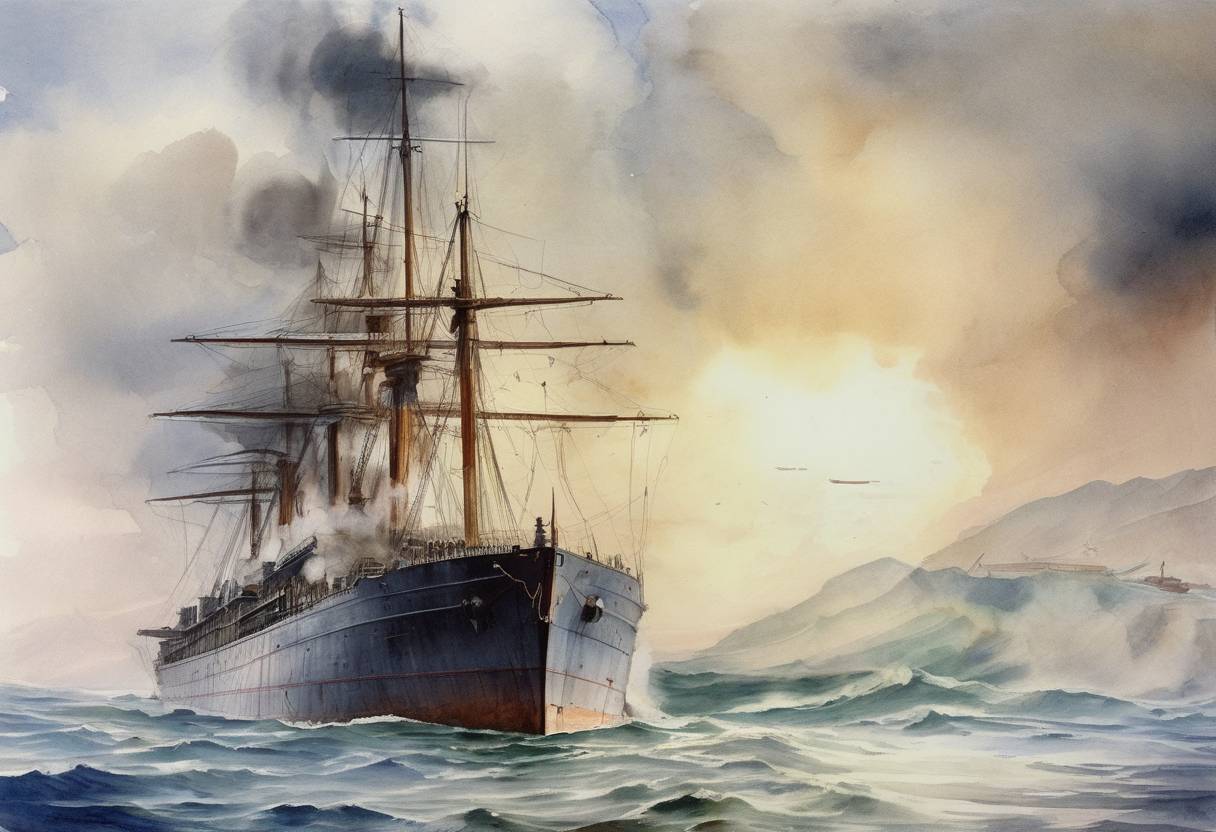
On March 14, 1915, during World War I, the British Royal Navy successfully sank the German light cruiser SMS Dresden off the coast of Chile. This event marked the end of the Dresden’s operations in the Pacific and South Atlantic, where it had been a persistent threat to Allied shipping.
The SMS Dresden was a part of the Imperial German Navy’s East Asia Squadron, which had been active in the Pacific Ocean at the outbreak of World War I. The squadron, under the command of Vice-Admiral Maximilian von Spee, had achieved a significant victory against the British at the Battle of Coronel in November 1914. However, the squadron was later defeated at the Battle of the Falkland Islands in December 1914, with the Dresden being the only major German ship to escape destruction.
After the Battle of the Falkland Islands, the Dresden managed to evade capture by seeking refuge in the remote waters of the Pacific and South Atlantic. The cruiser engaged in commerce raiding, disrupting Allied shipping routes. However, its operational capacity was limited due to dwindling coal supplies and the need for repairs.
The British Admiralty was determined to eliminate the Dresden to secure the sea lanes. The Royal Navy dispatched several ships to hunt down the elusive cruiser. The HMS Glasgow, HMS Kent, and HMS Orama were among the vessels involved in the pursuit.
On March 14, 1915, the Dresden was discovered by the British ships anchored at Cumberland Bay on Robinson Crusoe Island, part of the Juan Fernández Islands off the coast of Chile. The Dresden, unable to escape due to mechanical issues and low coal reserves, was cornered by the British squadron.
In a brief engagement, the British ships opened fire on the Dresden. Realizing the hopelessness of their situation, the crew of the Dresden scuttled the ship to prevent it from falling into enemy hands. The ship was set ablaze and eventually sank, marking the end of its service.
The sinking of the SMS Dresden effectively ended the threat posed by the German East Asia Squadron in the Pacific and South Atlantic. The crew of the Dresden was interned by the Chilean authorities, as Chile was a neutral country during the war.
The event highlighted the strategic importance of naval power and the effectiveness of the British naval blockade in restricting German naval operations. The elimination of the Dresden allowed the Allies to focus their naval resources on other fronts, contributing to their overall maritime dominance during World War I.
The destruction of the SMS Dresden underscored the challenges faced by the German Navy in maintaining overseas operations far from home bases. It also demonstrated the global reach of the British Royal Navy and its ability to project power across the world’s oceans, a critical factor in the Allied victory in World War I.
Source: en.wikipedia.org