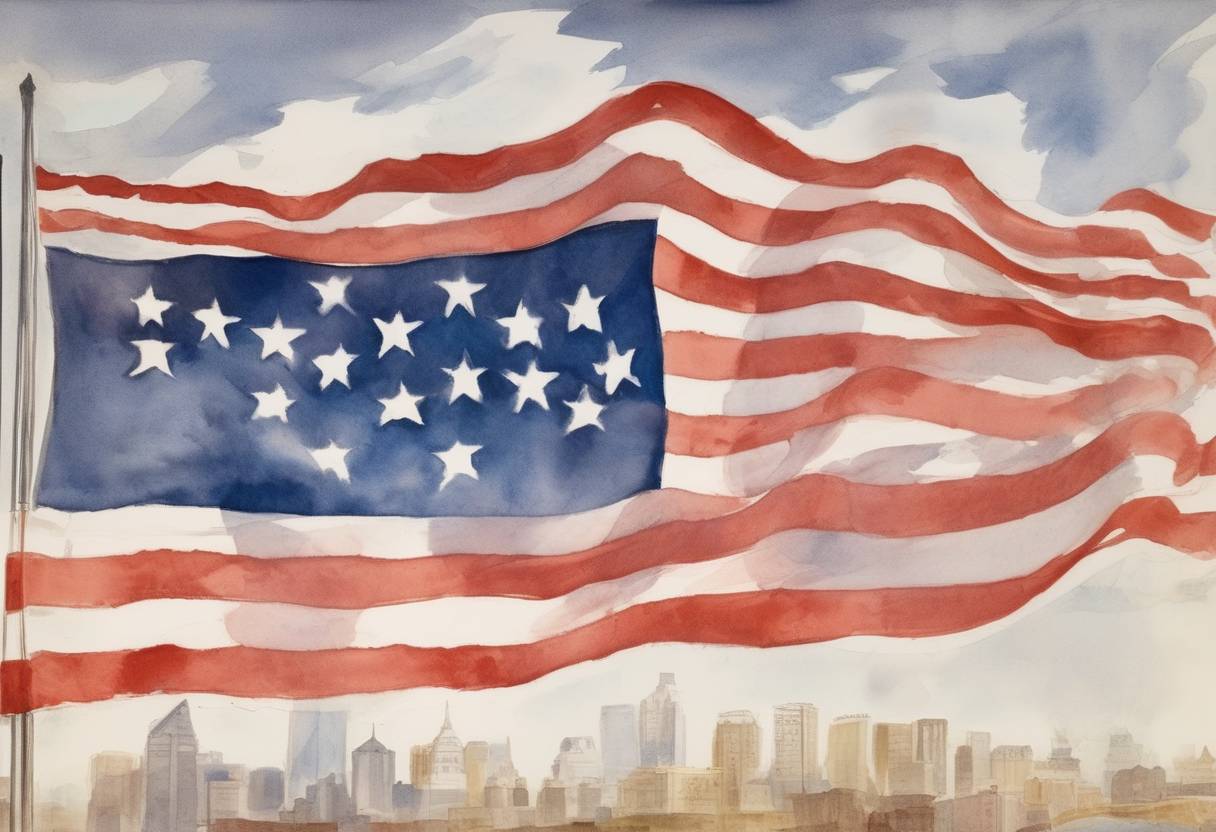
The Debut of the 50-Star Flag of the United States
On July 4, 1960, the 50-star flag of the United States was officially debuted in Philadelphia, marking a significant moment in American history. This event followed the admission of Hawaii as the 50th state on August 21, 1959, which necessitated the addition of a new star to the national flag.
Historical Context
Hawaii’s Statehood: Hawaii was admitted to the Union as the 50th state on August 21, 1959. This followed Alaska’s admission earlier that year on January 3, 1959, as the 49th state. The inclusion of these two non-contiguous states marked a significant expansion of the United States.
Flag Design: The design of the American flag, with its stars representing the states, has evolved over time with each new state’s admission. The 50-star flag was designed to accommodate Hawaii’s statehood, maintaining the traditional red and white stripes representing the original 13 colonies.
The Flag’s Debut
Ceremony in Philadelphia: The new flag was first officially raised at Independence Hall in Philadelphia, a site of profound historical significance as the location where the Declaration of Independence and the Constitution were debated and adopted.
Symbolism: The debut of the 50-star flag on Independence Day underscored the themes of unity and growth, celebrating the nation’s expansion and the inclusion of diverse cultures and peoples.
Broader Significance
Cultural Impact: The introduction of the 50-star flag symbolized a new era for the United States, reflecting its status as a global power with territories spanning the Pacific Ocean.
Legacy: The 50-star flag remains the longest-serving version of the U.S. flag, representing a period of stability and continuity in American history.
The debut of the 50-star flag was not just a ceremonial event but a reflection of the dynamic and evolving nature of the United States, embodying its principles of unity and diversity.