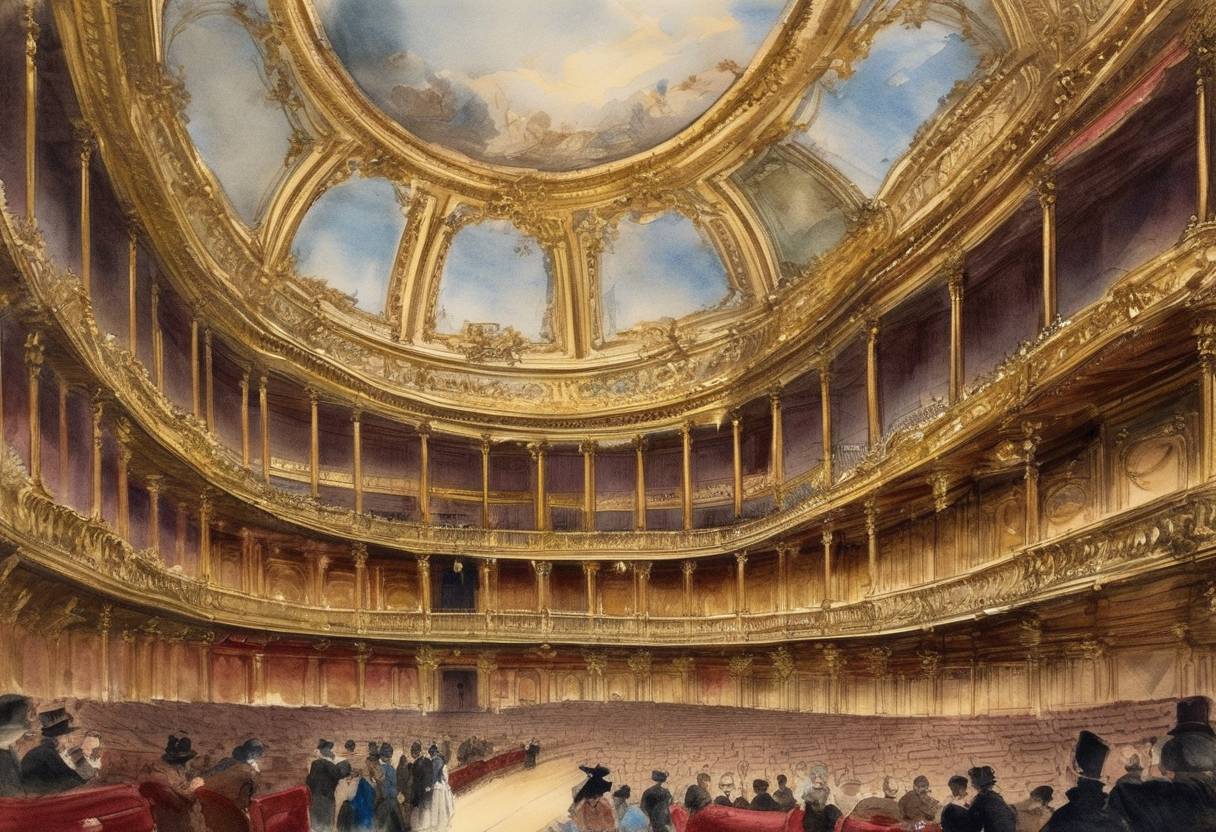
Opening of the Palais Garnier on January 5, 1875
The opening of the Palais Garnier on January 5, 1875, marked a significant cultural event in Paris and a crowning achievement of Second Empire architecture. This grand opera house, designed by architect Charles Garnier, was commissioned by Emperor Napoleon III as part of a vast reconstruction plan for Paris led by Baron Haussmann.
Architectural Marvel
- Design and Construction: Designed in a Baroque Revival style, characterized by its opulence, grandeur, and elaborate decoration, the Palais Garnier took nearly 15 years to complete after construction began in 1861. Delays were caused by financial difficulties, the Franco-Prussian War, and the fall of the Second Empire.
- Features: The building is noted for its use of “grand escalier” (the grand staircase), the intricately frescoed ceilings, the chandeliers, and the Grand Foyer, which resembles a palace gallery more than a public building.
- Capacity and Interior: It accommodates around 1,979 patrons, with lavish interiors decorated with marble, gilt baroque designs, and intricate detailing, embodying the very essence of the extravagance of the period.
- Opening Night: The inaugural performance was a major social event, attended by French high society, including members of the Third French Republic government and prominent figures from various sectors.
- Program: The gala performance included excerpts from works by various celebrated composers such as Fromental Halévy, Jacques Offenbach, and Giovanni Rossi, showcasing the rich tradition of the Parisian operatic scene.
- Significance: This event solidified Paris’s position as a central hub for the arts in Europe and reflected the city’s commitment to cultural excellence.
Cultural and Historical Impact
- Symbol of the Second Empire: Although completed and opened under the Third Republic, the Palais Garnier remains a lasting symbol of the grandeur and aspirations of the Second Empire.
- Influence on Architecture and Culture: The opera house has inspired numerous other theaters and opera houses globally. Its architectural style, often referred to as “Beaux-Arts,” left a lasting legacy on the cultural and architectural landscapes.
- Modern Relevance: Today, the Palais Garnier continues to host performances and attracts tourists from around the world, serving as both a historical monument and an active center for the performing arts.
The opening of the Palais Garnier on January 5, 1875, thus stands as not merely a cultural event but as a testament to the era’s artistic aspirations and architectural achievements.