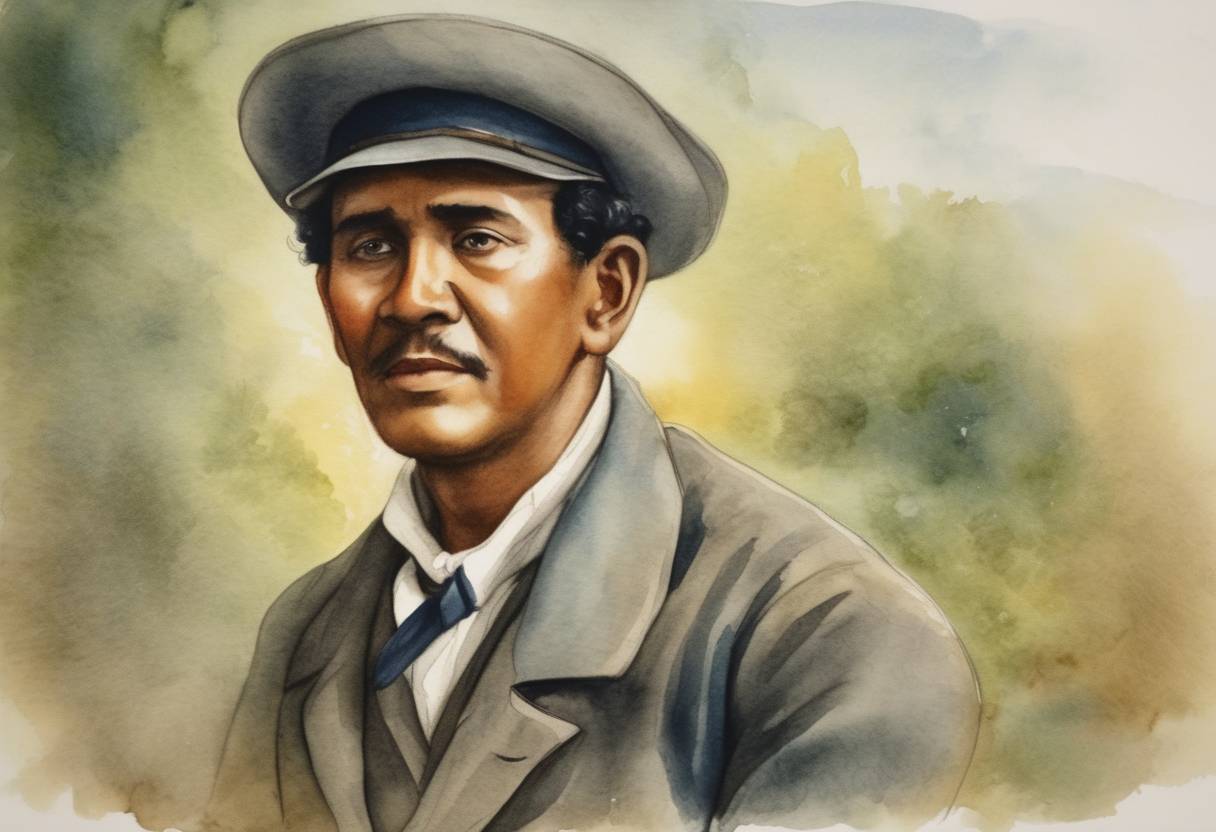
Augusto César Sandino
Date of Birth: Although the prompt suggests an incorrect date, Augusto César Sandino was actually born on May 18, 1895.
Place of Birth: Niquinohomo, Nicaragua
Significance: Augusto César Sandino is celebrated as a national hero and a symbol of resistance against U.S. military intervention in Nicaragua. His legacy has significantly influenced Nicaraguan political movements, most notably the Sandinista National Liberation Front, named in his honor.
Early Life
- Background: Born to a wealthy Spanish farmer and an indigenous domestic worker, Sandino’s early life was marked by exposure to the socio-economic disparities prevalent in Nicaraguan society.
- Education: Sandino had limited formal education but was influenced by the anti-imperialist and nationalist sentiments that were burgeoning during his youth.
Resistance and Guerrilla Warfare
- U.S. Intervention: In the context of ongoing U.S. military interventions in Central America, Sandino emerged as a vehement opponent of foreign control and influence in Nicaragua.
- Guerrilla Leader: From 1927 to 1933, Sandino led a guerrilla campaign against U.S. Marines in Nicaragua. His tactics and resilience drew international attention to the Nicaraguan struggle for sovereignty.
- Notable Tactics: Utilizing the rugged terrain of the Segovian mountains, Sandino’s forces engaged in effective guerrilla warfare characterized by mobility, surprise attacks, and localized support from peasants.
Legacy
- Martyrdom: Sandino’s assassination on February 21, 1934, under orders from the then Nicaraguan National Guard commander, Anastasio Somoza García, transformed him into a martyr for the anti-imperialist cause.
- Impact: His enduring legacy inspired various movements in Latin America seeking to resist imperialism and champion socialist ideals.
- Cultural Icon: Today, Sandino is revered across a spectrum of political ideologies as a symbol of Nicaraguan nationalism and resistance against foreign oppression.
Historical Context
- International Influence: Sandino’s struggle is contextually linked to broader geopolitical dynamics in Latin America during the early 20th century, characterized by U.S. interventionist policies like the Monroe Doctrine and Roosevelt Corollary.
- Nicaragua’s History: His uprising must be understood within the broader historical narrative of Nicaraguan efforts toward self-determination, sovereignty, and national identity.
Augusto César Sandino remains an enduring figure in Nicaraguan history and a symbol of the struggle for justice and equality in the face of external domination.