1990 · Palomar Mountain, United States
Asteroid Eureka, the first Mars trojan asteroid, is discovered by David H. Levy and Henry Holt at Palomar Observatory.
March 28, 1800
The Pallas asteroid was discovered by German astronomer Heinrich Wilhelm Olbers.
Bremen, Holy Roman Empire | Astronomical Society
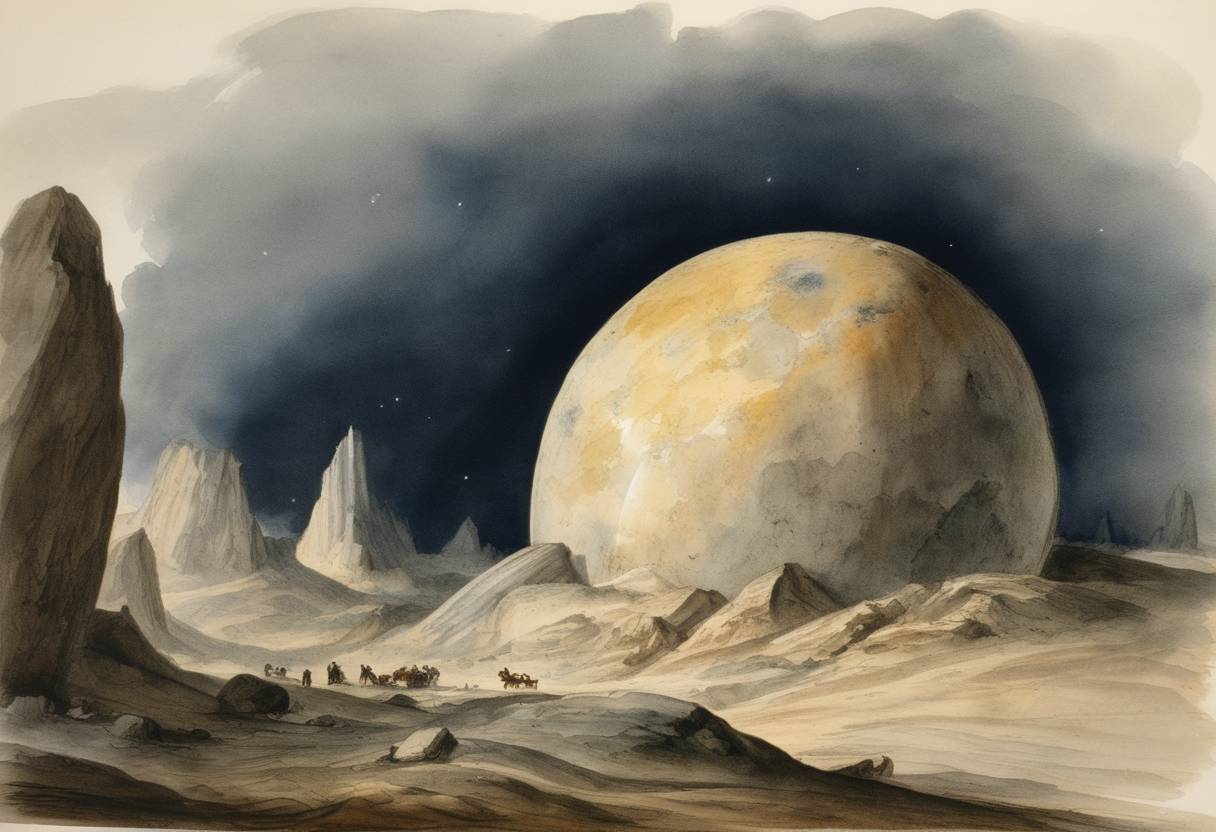
On March 28, 1802, German astronomer Heinrich Wilhelm Olbers discovered the asteroid Pallas. It was only the second asteroid ever identified, following the discovery of Ceres by Giuseppe Piazzi in 1801. The discovery played a significant role in expanding the understanding of celestial bodies within the asteroid belt between Mars and Jupiter.
Heinrich Wilhelm Olbers, a trained physician with a passion for astronomy, had a specific interest in the search for small planets, or asteroids, in the region between Mars and Jupiter. This was an era of burgeoning interest in celestial phenomena and the organization of the solar system, sparked by new telescopic technology and theoretical advances.
On the night of March 28, 1802, Olbers observed a moving object against the backdrop of fixed stars in the constellation Virgo. His observations confirmed it as a new celestial body, distinct from other known planets. Olbers’ method of diligent sky-watching and studying deviations in the position of celestial bodies led to this significant find.
The discovery of Pallas, along with Ceres shortly before it, opened a new field of study in astronomy focused on what would become known as minor planets or asteroids. Pallas, named after the Greek goddess of wisdom, Athena, demonstrated that the region between Mars and Jupiter was populated with more than just one anomalous body, as previously thought.
Olbers’ discovery contributed to the burgeoning charting of the asteroid belt. The cumulative discoveries after Pallas, including Juno in 1804 and Vesta in 1807, suggested that this zone contained numerous small celestial bodies. This realization significantly advanced the understanding of the formation and evolution of the solar system.
Heinrich Wilhelm Olbers’ discovery of the Pallas asteroid was a seminal moment in the field of astronomy. It underscored the potential for further discoveries in the solar system and elucidated the nature of the region between the orbits of Mars and Jupiter. This discovery highlighted the importance of telescopic advancements in the 19th century and laid the groundwork for modern planetary science.
Source: en.wikipedia.org