Desmond Doss Receives the Medal of Honor
1945 · Washington, D.C., United States
Conscientious objector Desmond Doss receives the Medal of Honor for his actions during the Battle of Okinawa in World War II.
February 3, 1943
The SS Dorchester, a United States Army transport ship, is torpedoed by the German submarine U-223 while crossing the North Atlantic, resulting in 675 deaths.
North Atlantic Ocean, United States | United States Army
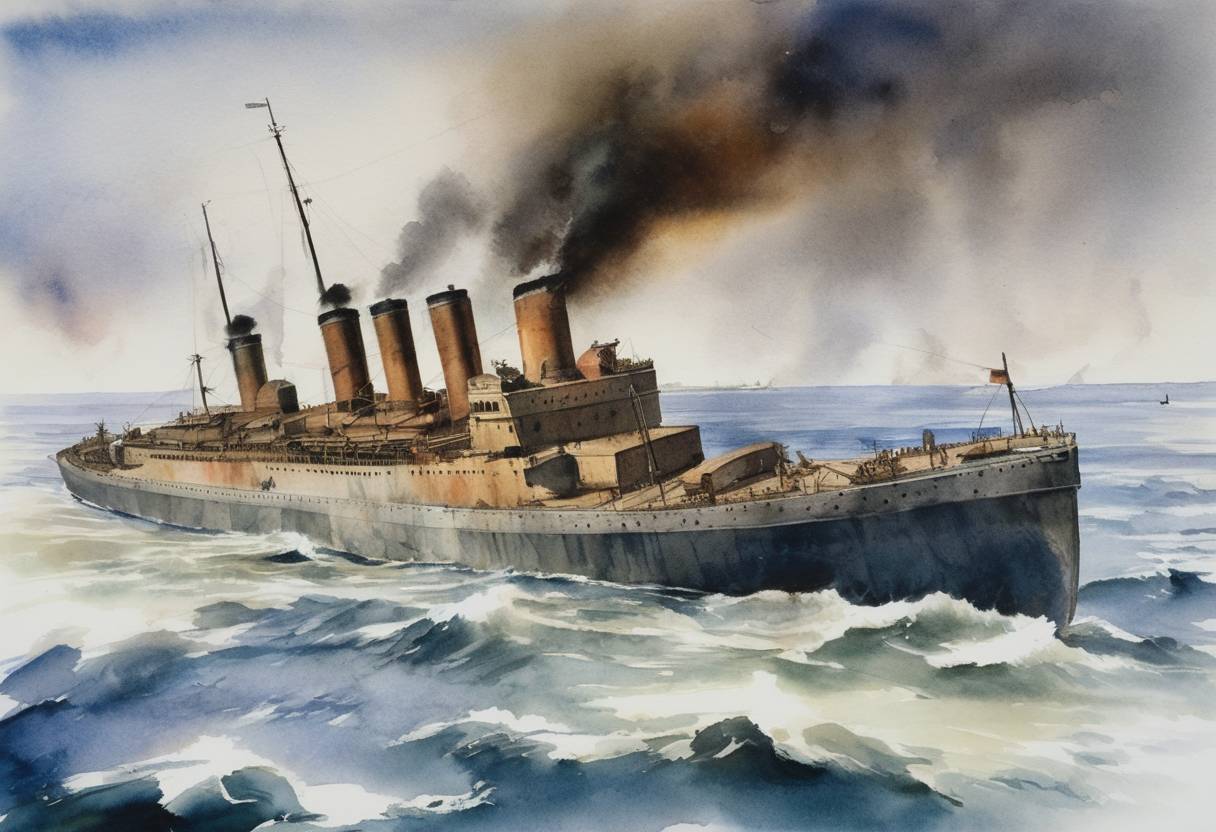
On February 3, 1943, the SS Dorchester, a United States Army transport ship, was tragically sunk by a torpedo fired from the German submarine U-223. This catastrophic event occurred during World War II in the midst of the icy waters of the North Atlantic Ocean, a perilous stretch heavily patrolled by German U-boats.
The SS Dorchester was originally a civilian vessel before being requisitioned for military service as a transport ship by the U.S. Army. Built in 1926 by the Newport News Shipbuilding and Drydock Company, the steamship had been repurposed to transport troops and cargo to support the Allied war effort. At the time of the attack, the ship was part of Convoy SG 19, which was en route from New York City to Greenland.
U-223, a German Type VIIC U-boat commanded by Oberleutnant zur See Karl-Jürg Wächter, spotted the Dorchester as it navigated through treacherous submarine-infested waters. At approximately 12:55 AM (local time), the U-boat launched a torpedo that struck the starboard side of the ship below the waterline. The explosion caused immediate damage and flooding, leading the vessel to sink in about 20 minutes.
Out of the 904 servicemen, merchant seamen, and civilian workers aboard, only 229 survived the freezing conditions of the North Atlantic. The rapid descent and night-time attack left little time for an organized evacuation, compounded by the ship’s overcrowding and lack of adequate life-saving equipment.
The sinking of the SS Dorchester is particularly remembered for the heroism displayed by the “Four Chaplains.” These men—Methodist minister George L. Fox, Jewish rabbi Alexander D. Goode, Catholic priest John P. Washington, and Reformed Church in America minister Clark V. Poling—demonstrated remarkable bravery and selflessness. Amidst the chaos, they helped organize the evacuation, provided life vests to soldiers who did not have any, and offered comfort to those gathered in fear. Ultimately, they gave up their own life jackets to save others and were last seen praying together as the ship succumbed to the waves.
The loss of the SS Dorchester was a grim reminder of the perils faced in the Battle of the Atlantic, underscoring the need for improved convoy strategies and anti-submarine tactics. The story of the Four Chaplains drew considerable attention and has been commemorated for its powerful message of faith, unity, and sacrifice in the face of overwhelming adversity.
In recognition of their valor, the Four Chaplains were posthumously awarded the Purple Heart and the Distinguished Service Cross. In 1961, Congress established February 3 as “Four Chaplains Day,” a date designated to honor their courage and the enduring legacy they left behind.
The sinking of the SS Dorchester highlights the human cost of maritime warfare during World War II and serves as a poignant tale of heroism amid one of history’s darkest times. It remains a significant chapter in both military history and the enduring narrative of altruism and duty above all.
Source: en.wikipedia.org